
 由 英语数字智库
了解更多:英语四六级分类词汇短语目录
作者:D. H. Lawrence(D·H·劳伦斯)
创作时间:约 1918 年
首发刊印:1919 年 4 月
首发刊登于英国《斯特兰德杂志》(The Strand Magazine);
1922 年收入短篇小说集《英格兰,我的英格兰及其他故事》
(England, My England and Other Stories)
创作背景:
《请买票》是劳伦斯极具代表性的短篇小说。
故事背景设置在第一次世界大战期间的英国中部工业区。
大批青壮年男子奔赴前线作战。
原本由男性承担的电车司机、检票员岗位,大量交由女性接手。
中部地区有一条单线电车线路。
电车穿行在黑色工业乡野之间,穿梭于矿工村落与集市小镇。
这条电车线路被称作英格兰最危险的电车路线。
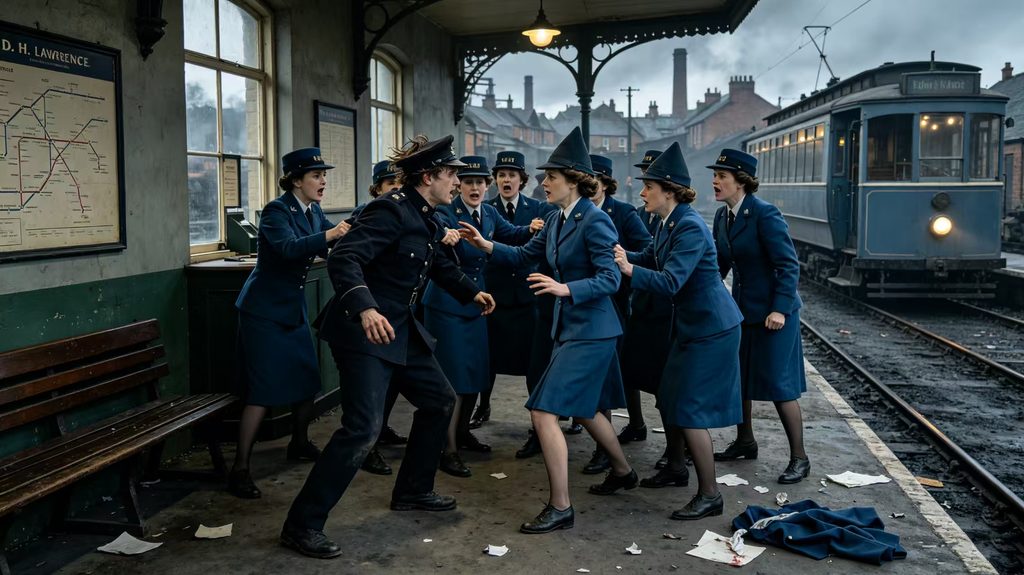
女售票员们身着蓝色制服,果敢泼辣,独立强悍。
年轻帅气的巡查员约翰·托马斯周旋在一众女售票员之间。
他不断与姑娘们调情、约会,随后又转身抽身离去。
被辜负的安妮联合一众受过伤害的女孩,设下一场报复的圈套。
故事交织工业时代的压抑环境、战争冲击之下崩塌的传统性别秩序。
本小说核心主题是两性之间的拉扯、欲望与报复、工业文明对人性的扰动。
劳伦斯以鲜活泼辣的笔触,刻画战争背景之下女性力量的觉醒与复杂人性。
没有绝对的好人与坏人。
在混乱失衡的时代里,爱、戏弄、受伤与反击轮番上演。
英文原文
NARRATOR
There is in the Midlands a single-line tramway system
which boldly leaves the county town
and plunges off into the black, industrial countryside.
Up hill and down dale, through the long,
ugly villages of workmen’s houses, over canals and railways.
Past churches perched high and nobly over the smoke and shadows.
Through dark, grimy, cold little market-places.
Tilting away in a rush past cinemas
and shops down to the hollow where the collieries are.
Then up again, past a little rural church under the ash-trees.
On in a bolt to the terminus, the last little ugly place of industry.
The cold little town that shivers on the edge of the wild,
gloomy country beyond.
NARRATOR
To ride on these cars is always an adventure.
The drivers are often men unfit for active service:
cripples and hunchbacks.
So they have the spirit of the devil in them.
The ride becomes a steeplechase.
Hurrah! we have leapt in a clean jump over the canal bridges — now for the four-lane corner!
With a shriek and a trail of sparks we are clear again.
To be sure, a tram often leaps the rails — but what matter!
It sits in a ditch till other trams come to haul it out.
NARRATOR
This, the most dangerous tram-service in England,
as the authorities themselves declare with pride.
Is entirely conducted by girls,
and driven by rash young men,
or else by invalids who creep forward in terror.
The girls are fearless young hussies.
In their ugly blue uniforms,
skirts up to their knees, shapeless old peaked caps on their heads.
They have all the sang-froid of an old non-commissioned officer.
‘Tickets, please.’
She is peremptory, suspicious, and ready to hit first.
She can hold her own against ten thousand.
NARRATOR
The inspector’s name is John Joseph Raynor.
Always called John Joseph.
His face sets in fury when he is addressed,
from a distance, with this abbreviation.
There is considerable scandal about John Joseph in half-a-dozen villages.
He flirts with the girl-conductors in the morning.
And walks out with them in the dark night
when they leave their tramcar at the depot.
Of course, the girls quit the service frequently.
Then he flirts and walks out with a newcomer.
Always providing she is sufficiently attractive,
and that she will consent to walk.
NARRATOR
Annie, however, was something of a tartar.
Her sharp tongue had kept John Joseph at arm’s length for many months.
Perhaps, therefore, she liked him all the more.
For he always came up smiling, with impudence.
She watched him vanquish one girl, then another.
She could tell by the movement of his mouth and eyes.
When he flirted with her in the morning,
that he had been walking out with this lass,
or the other the night before.
NARRATOR
When Annie realised she had been cast aside by John Joseph.
Fury, hurt and humiliation welled up inside her.
She visited one after another of the girls who had once been hurt by him.
They agreed to teach him a lesson.
They arranged for him to wait after work inside the depot waiting room.
When he stepped into the room,
the door was locked behind him.
The girls crowded around him,
forcing him to choose one girl to be his companion.
When he tried to escape, all the women flew upon him together.
They pulled his hair, tore his uniform,
knocked him down to the floor.
He lay beaten, breathless and terrified.
When at last he weakly chose Annie.
Annie stepped back, filled with disgust.
She declared she would never take him.
No one wanted him any longer.
He gathered his tattered clothes and slipped alone out into the dark night.
译文
叙述者
英国中部有一条单线电车线路,
大胆驶出郡府小城,一头扎进黝黑的工业郊野。
翻山越谷,穿过一排排难看的工人住宅村落,跨过运河与铁路。
一座座教堂高高矗立,庄严凌驾在烟尘与暗影之上。
穿过肮脏阴冷的小型集市广场。
电车猛地倾斜疾驰,掠过影院与商铺,冲向坐落着煤矿的洼地。
而后再度爬坡,经过白蜡树下的乡间小教堂。
一路疾驰抵达终点站,最后一座简陋丑陋的工业小镇。
这座冰冷的小城,颤抖地守在荒凉阴郁旷野的边缘。
叙述者
搭乘这些电车永远像是一场冒险。
司机大多是无法上前线服役的男人:残疾人、驼背之人。
他们骨子里带着一股桀骜叛逆。
整段车程如同越野赛马。
太棒啦!电车利落一跃跨过运河大桥,接下来冲向四岔路口!
伴随着刺耳尖叫与一路飞溅的火花,车子又平安脱困。
诚然,电车时常会冲出轨道。
可那又如何!车子掉进沟渠,只等别的电车过来把它拖走。
叙述者
官方都引以为傲地宣称,这是全英格兰最危险的电车线路。
售票工作全部由女孩承担。
司机要么是莽撞的年轻人,要么是胆怯蹒跚的伤病男子。
这些姑娘泼辣无畏。
穿着难看的蓝色制服,裙子短到膝盖,头上戴着没有版型的旧尖顶帽。
她们有着老兵士官一般沉着冷静的气场。
“请买票。”
她语气干脆,带着戒备,随时准备先发制人。
就算对上万人,她也完全能够守住自己。
叙述者
巡查员名叫约翰·约瑟夫·雷诺。
大家都直接叫他约翰·约瑟夫。
如果有人远远这样喊他,他会立刻满脸愠怒。
在好几个村子里,关于他的流言四起。
早上,他和女售票员们打情骂俏。
夜晚收班,电车开到车库,他又和姑娘们外出约会散步。
自然,很多女孩没多久就辞去这份工作。
之后,他又去勾搭新来的姑娘。
前提是对方足够好看,并且愿意陪他出门。
叙述者
安妮却不是好惹的性子。
她言辞锋利,好几个月一直和约翰·约瑟夫保持距离。
或许恰恰是这样,她反倒更加在意他。
因为他每次过来,总是一脸轻薄的笑意。
她看着他哄好一个又一个女孩。
从他眉眼之间的小动作,她一眼就能看明白。
早上和她调情的时候,前一晚他刚和别的姑娘出去约会。
叙述者
当安妮意识到自己被约翰·约瑟夫抛弃。
愤怒、委屈与羞辱瞬间涌上心头。
她挨个去找那些曾经被他伤害过的女孩。
大家一致决定给他一个教训。
她们约好,让他收班之后在车库等候室等候。
他一走进房间,大门立刻从身后锁死。
女孩们围上来,逼他选出一个女孩做伴侣。
当他试图逃跑,所有女孩一起扑了上去。
扯他的头发,撕碎制服,把他打倒在地。
他躺在地上,浑身酸痛,喘不上气,满心恐惧。
最后他无力地选择了安妮。
安妮往后退开,满心厌恶。
她说自己不会要他。
没有人再想要他。
他捡起破烂的衣服,独自悄悄走进沉沉黑夜。
🔍长难句赏析与拆解
原句
There is in the Midlands a single-line tramway system
which boldly leaves the county town and plunges off into the black,
industrial countryside.
句式解读
there be 存在句型,which 引导定语从句,修饰 tramway system。
boldly、plunges off 使用拟人手法,赋予电车果敢莽撞的动态感。
【句子主干】
(通俗转述)In the Midlands exists one single tram line
that runs out of the town into the dark industrial countryside.
原句
In their ugly blue uniforms, skirts up to their knees,
shapeless old peaked caps on their heads,
they have all the sang-froid of an old non-commissioned officer.
句式解读
两处独立主格结构作伴随状语,用来描写人物外貌。
sang-froid 是法语外来词,文学用词,意为冷静沉着。
【句子主干】
(通俗转述)Dressed in plain blue uniforms,
these girls stay as calm and cool as an experienced army sergeant.
原句
When at last he weakly chose Annie.
Annie stepped back, filled with disgust.
She declared she would never take him.
句式解读
when 引导时间状语从句;
filled with disgust 过去分词短语作伴随状语。
没有激烈吼叫,平静的后退与拒绝,冲击力远大于争吵。
【句子主干】
(通俗转述)After he finally picked Annie,
she moved away in revulsion and said she would not accept him.
📖全篇句式特点
本篇以第三人称全景叙述为主。
开篇大量长句铺陈环境,层层堆叠景物画面。
句子连绵不断,复刻电车一路颠簸不停的行进节奏。
描写人物的时候长短句交替切换。
描写女孩、约翰的对话与动作,短句干脆利落,泼辣直白。
没有繁复晦涩的修辞堆砌。
劳伦斯大量使用拟人、外来词、口语方言,
贴近工业区普通人的生活气息。
前面描绘电车、女工,充满鲜活热闹的烟火气。
后半段车库冲突,节奏骤然收紧。
句子短促有力,紧张感扑面而来。
人物没有多余的心理旁白。
全部依靠动作、眼神、语言,
把心底的爱恨委屈直接展现出来。
核心词汇
1. plunge
/plʌndʒ/
猛冲,纵身投入
动词(v.)
2. colliery
/ˈkɒliəri/
煤矿,煤矿场
名词(n.)
3. terminus
/ˈtɜːmɪnəs/
终点站
名词(n.)
4. steeplechase
/ˈstiːpltʃeɪs/
越野障碍赛
名词(n.)
5. sang-froid
/sɒ̃ ˈfrwɑː/
沉着,镇定自若
名词(n.)
6. peremptory
/pəˈremptəri/
断然的,专横的
形容词(adj.)
7. tattered
/ˈtætəd/
破烂不堪的
形容词(adj.)
📜文学赏析
《请买票》并不是简单的一场男女打闹故事。
一战打破了长久固定的社会分工。
男人奔赴战场,女性走出家门,
扛起原本属于男性的工作。
电车线路就是一个微型的小社会。
女售票员不再是柔弱被动的姑娘。
她们独立谋生,强势泼辣,拥有保护自己的力量。
约翰·约瑟夫代表旧时代轻浮的男性姿态。
他习惯随意挑逗、来去自由,没有顾及女孩的真心。
安妮这群女孩的报复,不是单纯的无理取闹。
是长久被戏弄、被辜负之后情绪的总爆发。
劳伦斯没有站在任何一方进行道德评判。
女孩们的反击痛快,却也带着失控的粗暴。
约翰被打倒之后狼狈不堪,令人唏嘘。
故事结尾的反转尤为精妙。
当男人被迫做出选择,
曾经渴望被选择的安妮,
突然拒绝接纳他。报复完成的瞬间,
所有迷恋全部消散,只剩下厌恶。
欲望、喜欢、受伤、报复,全部交织在一起。
工业小镇冰冷粗粝的环境,
刚好映衬这群普通人躁动复杂的内心世界。
💡主旨品读
时代秩序一旦被打破,
人与人之间原本稳定的相处模式也会随之崩塌。
感情不是可以随意戏弄的游戏。
肆意玩弄他人真心,终究会迎来反噬。
女性独立之后,不再只能被动承受伤害。
她们拥有反抗与回击的勇气。
报复可以宣泄心中积攒已久的委屈,
却未必能够换回曾经的爱意。
当迷恋在报复之中消散,
剩下的只有彼此之间的疏离与难堪。
人性从来不是非黑即白。
在混乱动荡的岁月之中,
所有人都被困在欲望、自尊与伤痛里面。
尊重是两性相处最根本的前提。
缺少尊重的追逐与调情,最终只会留下一地狼藉。
©英语数字智库 版权所有
未经权利人许可,不得转载、摘抄、复制、
二次编辑或商用分发,违者将依法追究法律责任。
请点击返回首页收录经典目录