
 由 英语数字智库
了解更多:雅思:常规本意&熟词僻义目录
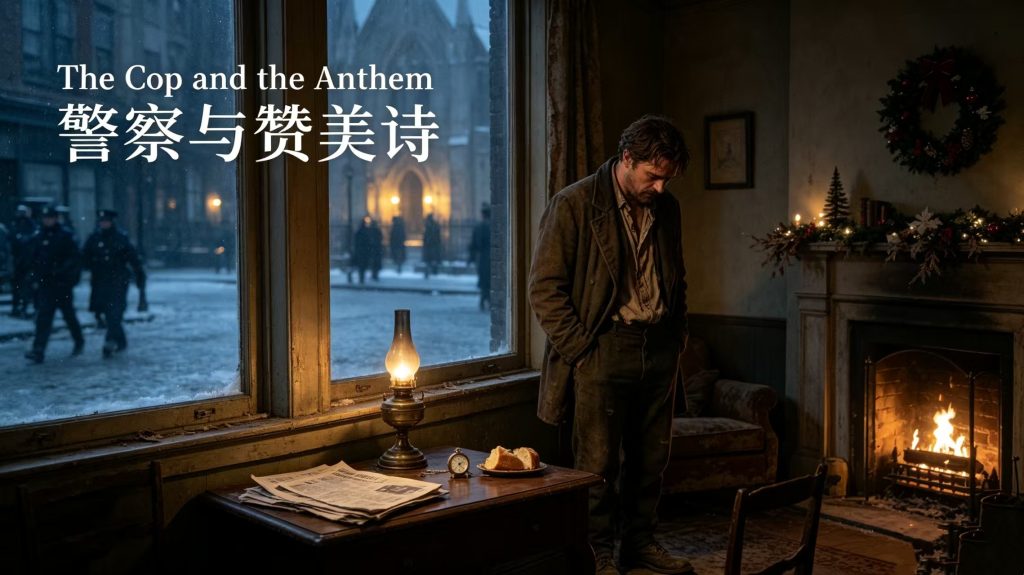
The Cop and the Anthem《警察与赞美诗》
作者:欧·亨利(O. Henry,本名 William Sydney Porter)
首次出版:1904 年 9 月于《大都会》杂志首次发表,
1906 年收入短篇小说集正式结集出版。
首次收录:收录于短篇小说集《四百万》,
英文原名 The Four Million,
首发刊物为 Cosmopolitan《大都会》杂志。
出版背景:美国纽约,最先以杂志刊载形式面世,
后以英文短篇小说集形式刊印,
后世多有英法双语选编版本流通。
收录说明:该版本为本篇故事权威原始定本,
讲述流浪汉苏比一心想进监狱过冬,屡次故意犯罪都未能如愿,
当他被赞美诗触动打算重新做人时,反倒无端被捕,
是一篇充满黑色幽默与讽刺意味、结局反转精彩的欧·亨利经典。
创作背景:
时值二十世纪初美国社会转型阶段,
美国作家欧·亨利立足都市底层视角,
借苏比荒诞曲折的遭遇,
讽刺当时美国司法与社会现实的扭曲,
用幽默外壳包裹对时代弊病的冷峻观察。
英文原文
Soapy moved restlessly on his seat in Madison Square.
When winter came, the birds flew south,
and people bought warm new clothes.
Only Soapy, a homeless man,
had no safe place to stay through the cold months.
His best hope for winter shelter was Blackwell’s Island prison.
There he would get food and a warm bed,
free from wind and snow.
He disliked charity shelters,
for they forced him to accept shame and endless questioning.
He thought the law was kinder;
it gave him shelter without prying into his private life.
Soapy planned to commit a small crime,
so the police would arrest him and send him to the island.
He walked toward a bright restaurant.
He had shined his shoes and tidied his shirt collar,
hoping to look like an ordinary guest.
But the head waiter spotted his worn trousers and old coat at a glance,
and quickly pushed him out onto the street.
Next, Soapy picked up a stone and smashed a shop window.
A crowd rushed over, followed by a policeman.
Soapy stood still, hands in pockets, waiting to be taken away.
“Who broke this glass?” the officer shouted.
“Do you not think I might be the one?” Soapy asked,
wearing a light smile.
But policemen knew that real lawbreakers never waited on the scene.
The officer ignored Soapy
and ran after a man who hurried to catch a passing car.
Soapy tried another trick.
He pretended to harass a young woman on the sidewalk.
He coughed, smiled and spoke to her,
fully expecting her to call for a nearby policeman.
To his surprise, the woman clung to his arm happily.
It turned out she also hoped to avoid the policeman’s attention.
Soapy left with a heavy heart; this plan also failed.
He saw an umbrella leaning beside a shop door.
He took it and walked slowly away.
The owner ran after him and claimed his property.
“Call the policeman,” Soapy challenged him.
“I stole this umbrella. There is an officer standing at that corner.”
The man hesitated and explained he had picked up the umbrella himself.
He dared not call the police, and Soapy lost another chance.
Night fell.
Soapy passed a small old church.
Soft, sweet anthem music drifted out through the open window.
The melody wrapped around him gently.
Years of memories rose in his mind.
He thought of his mother, his old home,
and the pure hopes he once held.
A sudden change touched his heart.
He hated his lazy, useless life.
He made up his mind to turn over a new leaf.
He would find a job, earn money, and build a real life for himself.
Just as Soapy stood there, filled with new courage,
a policeman stepped up to him.
“What are you doing here?” the policeman asked.
“Nothing,” Soapy answered.
“Come with me,” the officer said.
The next morning,
the judge sentenced Soapy to three months on Blackwell’s Island.
译文
苏比在麦迪逊广场的长椅上坐立不安。
寒冬将至,候鸟飞向南方,人们添置温暖新衣。
无家可归的苏比,却没有一处可以抵御风雪的落脚之地。
他过冬最好的去处,就是布莱克威尔岛监狱。
在那里,他能得到食物与暖和床铺,不必忍受寒风落雪。
他不愿去慈善收容所,那些地方会让他蒙受屈辱,
还要接受无休止的盘问。
在苏比看来,法律反倒更为宽厚,
它提供庇护,却不会肆意窥探一个人的私事。
苏比打算犯下一桩轻罪,
让警察逮捕自己,送他去岛上过冬。
他走向一家灯火明亮的餐馆。
他擦亮鞋子、整理衣领,想装作普通客人。
可领班一眼就看见他破旧的裤子与外套,
直接把他推到大街上。
苏比又捡起石块,砸碎一家店铺的橱窗玻璃。
路人闻声围过来,一名警察紧随而至。
苏比静静站在原地,手揣在兜里,等着被带走。
“是谁打碎了玻璃?”警察高声询问。
“您不觉得,有可能是我干的吗?”苏比淡淡笑着开口。
可警察心里清楚,真正的罪犯不会留在现场等候抓捕。
他没有理会苏比,转身去追赶一个赶车逃跑的路人。
苏比又换了办法。
他故意上前搭讪街边的年轻女子,假意纠缠,
等着对方呼喊一旁的警察。
出乎意料,女子反倒开心挽住他的胳膊。
原来她同样不想被警察注意。
苏比满心沮丧地离开,这次计划又落空了。
他看见店铺门边靠着一把雨伞,便拿起雨伞缓步走开。
伞主人追上来,说雨伞是他的。
“叫警察来吧,”苏比故意挑衅,
“伞是我拿的,拐角就站着一位警官。”
那人迟疑许久,坦言这把伞也是他捡来的,不敢报警。
苏比再次错失被逮捕的机会。
夜色慢慢笼罩城市,苏比路过一座老旧小教堂。
柔和悠扬的赞美诗旋律,从敞开的窗口缓缓飘出。
乐声轻轻包裹住他,往日回忆涌上心头。
他想起母亲、旧日家园,还有年少时那些纯粹美好的憧憬。
他的内心猛然发生转变,厌恶起自己懒散颓废的日子。
他下定决心改过自新,去找一份工作,
靠劳动挣钱,重新好好生活。
就在苏比满怀新生的勇气站在原地时,一名警察走到他面前。
“你在这里干什么?”警察问道。
“没做什么。”苏比回答。
“跟我走一趟。”警察说道。
第二天上午,法官判处苏比,在布莱克威尔岛监禁三个月。
🔍长难句赏析与拆解
原句:
He disliked charity shelters,
for they forced him to accept shame and endless questioning.
He thought the law was kinder;
it gave him shelter without prying into his private life.
句式解读:
本句由并列连词 for 引导原因状语从句。
for 属于并列连词,语气比 because 舒缓,多用于书面叙事。
主句交代苏比的主观态度,从句解释他排斥慈善救济的内在缘由。
分号衔接第二个并列分句,形成对照,
将慈善机构带来的羞辱盘问,和监狱看似简单的庇护放在一起对比,
写出苏比扭曲反常的想法,为后文讽刺结局埋下伏笔。
句子主干:
He disliked charity shelters for they brought shame.
He believed the law offered shelter without disturbing his privacy.
原句:
Just as Soapy stood there, filled with new courage,
a policeman stepped up to him.
句式解读:
just as 引导时间状语从句,表示“正当……这一刻”。
filled with new courage 是过去分词短语作伴随状语,修饰主语Soapy,
同步刻画他当下的心理状态。
这个句型把人物良知觉醒的高光瞬间,
和警察抓捕这个反转事件绑定在一起,
制造强烈的戏剧冲突,也是欧·亨利反转叙事非常典型的写法。
句子主干:
A policeman walked up to Soapy when he decided to change.
文学赏析
《警察与赞美诗》是欧·亨利极具代表性的讽刺短篇小说。
流浪汉苏比一心想要入狱过冬,他一次次刻意制造违法行为,
想方设法吸引警察的注意,可每一次尝试都落空。
教堂里飘出的赞美诗唤醒了他沉睡的良知,
让他萌生重新做人的念头。
正当他准备告别堕落、好好生活的一瞬间,
警察却毫无缘由地将他逮捕,
最终判了三个月监禁。
小说用强烈的反差,讽刺当时畸形冰冷的社会现实。
苏比刻意作恶的时候,法律视而不见;
当他内心觉醒、打算向善之时,惩罚却如期而至。
善与恶、罪与罚完全错位。
赞美诗象征精神救赎,警察代表刻板冰冷的秩序,
二者相撞,造就意料之外、情理之中的欧·亨利式结尾。
写作迁移点拨
本文适合命运无常、讽刺、救赎、善恶、
社会现实、选择与时机这类主题写作。
仿写:
Just when we decide to abandon our bad habits and chase a brighter future,
we may meet unexpected difficulties that we can hardly escape.
The world sometimes is full of irony.
Our best wishes do not always bring the results we long for.
仿写运用:
模仿原文 just as 引导的时间状语从句,制造反差感。
适合放在议论文段落,用来表达世事充满讽刺、命运难以预料,
增强文字思辨感。
📖全篇句式特点
文中大量使用时间状语从句、原因状语从句、分词作伴随状语,
将动作、心理、环境融合在一起,叙事流畅,悄悄铺垫伏笔、制造反转。
全文多处对比:刻意犯罪无人管束,决心向善反被抓捕;
底层生存需求和内心良知的对照,是讽刺效果的核心来源。
叙事节奏层层推进,前面几次失败不断蓄力,最后的反转简短有力。
语言克制内敛,不靠激烈抒情,依靠情节冲击读者,
是典型的欧·亨利现实主义风格。
核心词汇
1. homeless
/ˈhəʊmləs/
无家可归的
形容词 (adj.)
2. shelter
/ˈʃeltə(r)/
庇护所,避难
名词 /动词
3. pry
/praɪ/
窥探,打听
动词 (v.)
4. anthem
/ˈænθəm/
赞美诗,圣歌
名词 (n.)
5. sentence
/ˈsentəns/
宣判,判决
动词 (v.)
6. harass
/həˈræs/
骚扰
动词 (v.)
7. charity
/ˈtʃærəti/
慈善,救济
名词 (n.)
8. turn over a new leaf
改过自新,重新开始
固定短语
💡主旨品读
苏比最初把监狱当成安稳过冬的避风港,主动去追逐惩罚,
却始终求而不得。
赞美诗带来精神上的救赎,唤醒了他沉睡的良知,
让他想要挣脱浑浑噩噩的生活。
可这个社会秩序充满荒诞,惩罚到来的时机完全错位。
当人主动作恶,秩序选择视而不见;
当人心向善,惩罚却骤然降临。
良知觉醒本身无比珍贵,可底层小人物的命运,
常常不由自己掌控。
这份黑色幽默背后,藏着作者对不公社会无声的叩问。
©英语数字智库 版权所有
未经权利人许可,不得转载、摘抄、复制、
二次编辑或商用分发,违者将依法追究法律责任。
请点击返回首页收录经典目录