
 由 英语数字智库
了解更多:雅思:常规本意&熟词僻义目录
首次出版:1888 年 5 月
首次收录:由 David Nutt(Alfred Nutt)出版社出版,
收录于童话集《快乐王子及其他故事》,
英文原名 The Happy Prince and Other Tales。
出版背景:英国伦敦,以英文精装童话集形式刊印,
后世多有英法双语选编版本流通,本篇篇名 The Happy Prince。
收录说明:该版本为《快乐王子》原始定本,
同集一并收录《夜莺与玫瑰》《自私的巨人》等名篇,
是唯美主义童话的经典代表作。
创作背景:
时值维多利亚时代晚期,
爱尔兰作家奥斯卡·王尔德(Oscar Wilde),
在为人父的经历中萌发创作灵感,
将唯美主义文风与对社会苦难的体察相融,
写下这组既适合孩童、也适合保有童心成年人阅读的童话。
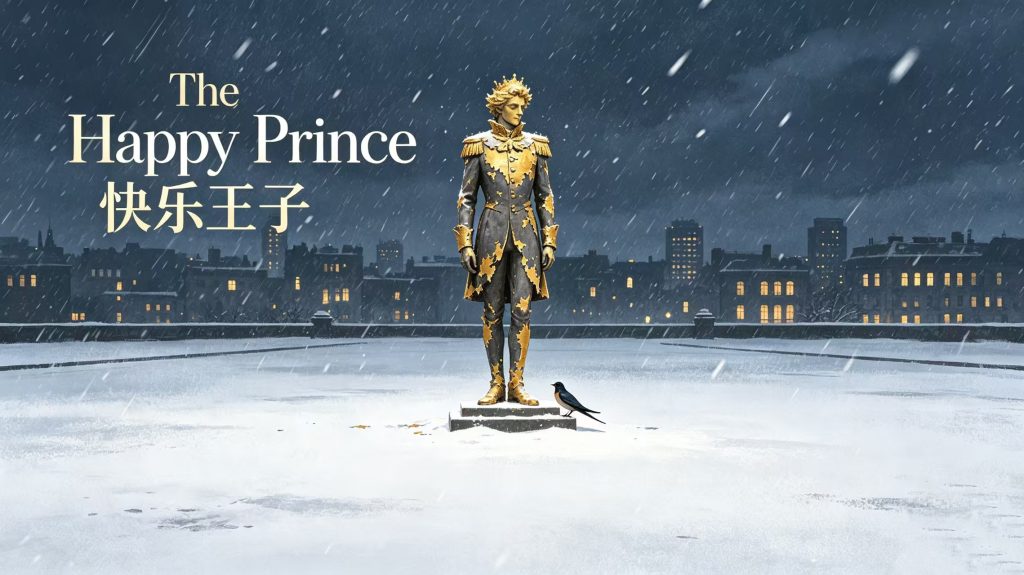
英文原文
High above the city,
on a tall column,
stood the statue of the Happy Prince.
He was gilded all over with thin leaves of fine gold,
for eyes he had two bright sapphires,
and a large red ruby glowed on his sword-hilt.
He was called the Happy Prince,
because when he was alive and human,
he lived in the palace where sorrow was never allowed to enter.
He danced and feasted all day long,
knowing nothing of hardship, poverty or tears.
He thought the world was always bright and joyful,
and he believed every person lived a happy and peaceful life.
But after he died,
his statue was erected high above the noisy city.
From his great height,
the Happy Prince could see all the suffering and misery of the world.
He saw the poor people struggling at the bottom of the city,
the hungry children shivering in the cold wind,
the exhausted workers trapped in endless toil,
and the lonely people weeping silently in the dark night.
His golden heart of lead
could not bear the coldness and cruelty of the mortal world.
Tears streamed down his golden cheeks,
and his gentle heart was filled with endless sorrow and pity.
One cold winter night,
a little swallow lost his way and stayed under the statue.
The prince saw the trembling little bird,
and asked the swallow to be his messenger.
He hoped to use his luxurious decorations
to warm the desperate and suffering people in the city.
The prince first gave away the bright ruby on his sword,
to a poor seamstress whose child was lying sick in bed.
The mother had no money to buy medicine or warm food,
and the little boy was burning with fever,
weak and helpless.
Then he plucked out his two sapphire eyes one by one,
and sent them to a starving young writer
who could not afford firewood or bread in the freezing winter,
and to a poor little match girl
who was wandering on the street with bare frozen feet.
As time went by,
the prince tore off all his golden leaves piece by piece,
and scattered every inch of his golden glory
to the countless poor and suffering civilians.
Gradually,
the brilliant and gorgeous statue became dim and plain.
He lost his ruby,
lost his bright sapphire eyes,
and lost all the golden luster that once made him glorious.
He was no longer the shining prince admired by everyone,
only a dull, empty and ordinary stone statue left in the wind.
The little swallow accompanied the prince through the coldest winter.
Although the weather was freezing and harsh,
the bird refused to leave the lonely prince.
He understood the prince’s tenderness and compassion,
and chose to guard him silently until the end.
When the cruelest cold wave came,
the swallow could no longer resist the bitter frost.
He fell at the feet of the impoverished statue quietly,
using his tiny life to accompany the selfless prince.
After witnessing all the warmth and sacrifice,
the cold world showed no mercy.
The city officials thought the broken statue was ugly and useless,
so they pulled it down and melted it in the furnace.
Yet the leaden heart of the Happy Prince
would never melt in the raging fire.
It remained complete and firm,
just like the eternal kindness hidden in the most ordinary mortal world.
译文
在整座城市的高空之上,
高高的石柱顶端,
伫立着快乐王子的雕像。
他周身贴满纯粹细腻的金箔,璀璨夺目,
双眼镶嵌着两颗澄澈透亮的蓝宝石,
剑柄之上,一枚鲜红的红宝石灼灼生辉,华贵无比。
世人称他为快乐王子,
因为他在世为人的岁月里,
一直安居在无忧的宫殿之中,
悲伤与苦难从未踏足他的世界。
他终日歌舞盛宴、安逸享乐,
从未见识过人间疾苦、贫穷与泪水。
他天真地以为,世间永远明媚欢愉,
所有人都过着安稳幸福、无忧无虑的生活。
可当他离世之后,
雕像被高高竖立在喧嚣的城市上空。
立于万丈高空,
快乐王子终于看清了人世间所有的苦难与破败。
他看见底层百姓在泥泞生活里苦苦挣扎,
看见饥寒交迫的孩童在寒风中瑟瑟发抖,
看见疲惫不堪的工人困在无尽劳作之中,
看见无数孤独的灵魂在黑夜里默默落泪、无人慰藉。
那颗铅铸的赤诚之心,
再也无法承受世间的冰冷与残酷。
泪水顺着鎏金的脸颊缓缓滑落,
温柔的心底,盛满了无尽的悲悯与心酸。
一个凛冽的冬夜,
一只迷途的小燕子停歇在雕像之下。
王子看见瑟瑟发抖的小鸟,
恳请小燕子做他的信使,奔赴人间。
他想倾尽自己一身华贵装饰,
去温暖这座城市里所有深陷绝境、饱受苦难的人。
王子首先取下剑柄上耀眼的红宝石,
赠予一位贫苦的缝纫女工。
女工的孩子重病卧床、高烧不退,
母亲穷困潦倒,没钱买药、无粮充饥,
弱小的孩童孱弱无助,在病痛中苦苦煎熬。
随后,他亲手剜出自己两颗蓝宝石眼眸,
一颗送给寒冬里缺衣少食、饥寒交迫的青年作家,
让困顿的读书人得以熬过凛冬、续写理想;
一颗送给赤脚游走街头、冻得瑟瑟发抖的卖火柴小女孩,
让孤苦的孩童拥有一丝活下去的希望。
日复一日,
王子一片片剥离自己满身的金箔,
把一身璀璨耀眼、人人艳羡的荣光,
尽数散给世间千千万万挣扎在苦难里的普通人。
慢慢的,
曾经华美耀眼的雕像,变得黯淡无光、朴素破败。
他失去了珍贵的红宝石,
失去了澄澈明亮的蓝宝石双眼,
褪去了一身熠熠生辉的金色光华。
他不再是万众瞩目、华丽尊贵的王子,
只剩一具空洞斑驳、平凡普通的石像,
孤零零伫立在凛冽寒风之中。
小燕子陪着王子熬过了最漫长、最寒冷的冬天。
纵使天寒地冻、风雪刺骨,
小鸟始终不愿独自离去。
它读懂了王子极致温柔的悲悯与无私,
选择默默相守,不离不弃,直至生命尽头。
当极致的寒潮席卷整座城市,
弱小的燕子再也抵挡不住刺骨寒霜。
它静静坠落在破败的王子脚下,
以微小的生命,陪伴了倾尽温柔渡世的王子。
可这世间所有温柔的牺牲,
终究没能换来世俗的善待。
城市官员只觉得残破的雕像丑陋无用,
毫无价值,便下令将其推倒、熔炉销毁。
可熊熊烈火之中,
快乐王子那颗质朴赤诚的铅心,
始终无法融化、永不破碎。
那颗坚韧纯粹的心,
恰似人世间最珍贵、永不消亡的善意与温柔。
🔍长难句赏析与拆解
原句:
He thought the world was always bright and joyful,
and he believed every person lived a happy and peaceful life.
句式解读:
本句为并列复合宾语从句,是初高中核心重点句式,结构规整、极易仿写。
1. 整句由 and 连接两个并列主句,形成对称句式,节奏工整;
2. 前半句:He thought 后省略引导词 that,
嵌套宾语从句,用来陈述王子生前单纯的认知;
3. 后半句:he believed 后同样嵌套宾语从句,
延续人物心理,前后语义递进、层层呼应;
4. 语法作用:
用生前天真片面的认知,与后文所见人间苦难形成强烈对比反衬,
为王子后续的悲悯、牺牲、蜕变做足铺垫,
既具备应试语法价值,又承担文章结构铺垫作用。
句子主干:
He thought the world was bright and joyful,
and he believed people lived happily.
文学赏析
《快乐王子》是一篇温柔到极致、悲伤到心碎的人生寓言。
它没有轰轰烈烈的剧情,
却用最纯粹的善意、最彻底的牺牲,
写尽了人世间最珍贵、也最稀缺的人间大爱。
王子生前坐拥荣华富贵、一世安稳,
不知疾苦、不懂心酸,
活在世人最羡慕的圆满境遇里。
可他死后立于高空,俯瞰人间百态,
才看清世俗繁华背后,藏着数不尽的贫穷、苦难与无助。
于是他选择倾尽所有,以身渡人。
献珠宝、剜双眼、碎金身、散荣光,
把自己一生所有的华贵、荣耀、光彩,
全部赠予素不相识的苦难陌生人。
他从万人敬仰的璀璨王子,
一步步变成破败空洞的普通石像,
褪去所有光环,耗尽全部所有。
他明明看清了世间冷漠、人性凉薄,
却依旧选择温柔悲悯、无私成全。
最催人泪下的从来不是苦难本身,
而是看透人间疾苦,依然心怀善意;
见过世间凉薄,依旧倾尽所有温柔。
世间多数人都是利己而行、趋利避害,
困在自我的得失与悲欢里。
而快乐王子活成了最高级的人生:
不为自己享乐,只为众生温暖;
不求自身圆满,只求人间少一点苦难。
最后的结局更是直击人心:
善意不被世俗珍惜,牺牲无人感念,
金身被毁、形体消散,
可赤诚之心永不融化。
这恰恰告诉我们:
真正的善良从不是为了换取赞美与回报,
而是明知人间不值得,依然值得温柔以待。
写作迁移点拨
本文适配无私善意、人间大爱、牺牲与成全、
看透世事依然温柔、平凡的伟大、人性光辉
等三观拔高、人生格局类记叙文、议论文写作。
仿写:
True kindness is not blind innocence in comfort,
but persistent tenderness after seeing all the sufferings of the world.
仿写运用:
句式短小高级、立意深刻,
精准适配作文结尾升华主旨,
区分普通浅层的善良立意,
写出“历经世事、依旧温柔”的高级人生格局,
大幅度提升文章思想深度。
📖全篇句式特点
1. 全文大量运用宾语从句、并列复合句,
句式对称工整,叙事舒缓深情,适配课堂语法教学;
2. 全程采用前后对比结构,
生前安逸无知 VS 死后悲悯牺牲,
外在华贵 VS 内在赤诚,世俗冷漠 VS 主角温柔,
多重对比强化主旨,感染力极强;
3. 以时间线推进人物蜕变,
从懵懂认知、心生悲悯、默默牺牲到结局升华,
人物成长脉络清晰,情感层层递进;
4. 环境描写与心理描写深度结合,
以寒冬萧瑟的环境烘托温柔无私的内核,
情景交融,氛围感拉满;
5. 结尾留白升华,悲剧外壳包裹大爱内核,
悲情治愈、后劲十足,文学审美极高。
核心词汇
1. gilded
/ˈɡɪldɪd/
鎏金的,镀金的
形容词 (adj.)
2. misery
/ˈmɪzəri/
苦难,悲惨
名词 (n.)
3. compassion
/kəmˈpæʃn/
悲悯,同情
名词 (n.)
4. desperate
/ˈdespərət/
绝望的,绝境的
形容词 (adj.)
5. sacrifice
/ˈsækrɪfaɪs/
牺牲,奉献
动词/名词 (v./n.)
6. dim
/dɪm/
黯淡的,失去光泽的
形容词 (adj.)
7. erect
/ɪˈrekt/
竖立,建造
动词 (v.)
8. eternal
/ɪˈtɜːnl/
永恒的,不朽的
形容词 (adj.)
💡主旨品读
《快乐王子》用一场极致的自我牺牲,
诠释了人生最高级的活着的意义。
真正的快乐,从来不是独享荣华、安逸度日,
而是照亮黑暗、温暖他人、成全世间。
人生最大的格局,
是看过人间疾苦,依然选择善良;
看透人性凉薄,依然选择赤诚。
世俗之人追逐光鲜、贪恋拥有,
而真正高贵的灵魂,一生都在学着奉献与成全。
形体可以破败,荣光可以消散,
但心底的善意与温柔,永远滚烫、永不消亡。
平凡的我们或许无法拯救世间苦难,
但可以守住心底纯粹的悲悯与善良。
不负世事,不负本心,
以温柔渡人,以赤诚渡己,
便是人生最珍贵的修行。
©英语数字智库 版权所有
未经权利人许可,不得转载、摘抄、复制、
二次编辑或商用分发,违者将依法追究法律责任。
请点击返回首页收录经典目录