
 由 英语数字智库
了解更多:世界主流周刊精选目录
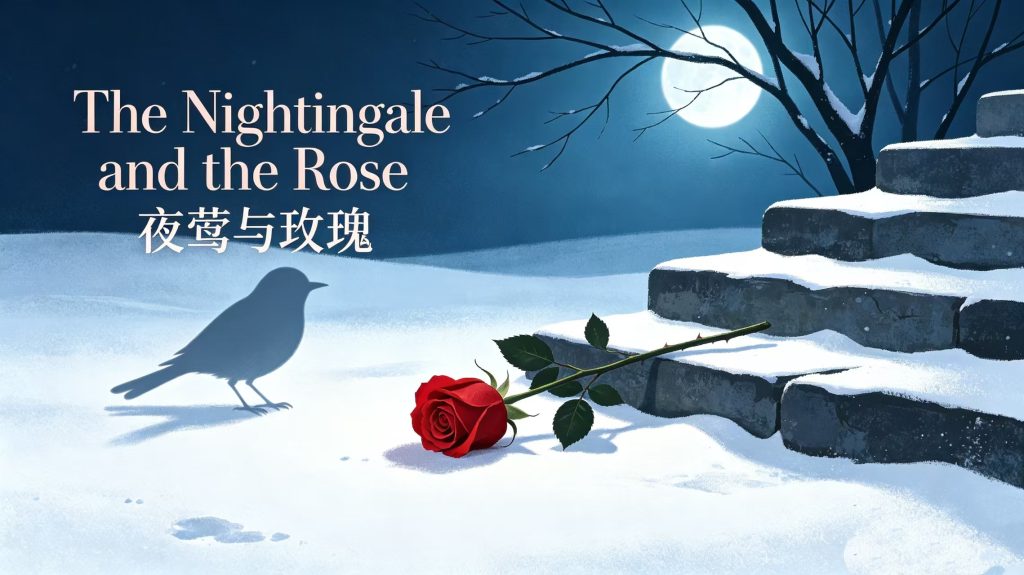
The Nightingale and the Rose:夜莺与玫瑰
作者:奥斯卡·王尔德(Oscar Wilde)
首次出版:1888 年
首次收录:由 David Nutt(Alfred Nutt)出版社出版,
收录于童话集《快乐王子及其他故事》,
英文原名 The Happy Prince and Other Tales.
出版背景:英国伦敦,以英文精装童话集形式刊印,
后世多有英法双语选编版本流通,
收录说明:该版本为本篇故事原始定本,
以夜莺用生命染红玫瑰的悲剧,
诠释唯美主义对纯粹之爱的思考,
是王尔德童话中极具悲剧色彩的名篇。
创作背景:
时值维多利亚时代晚期,
爱尔兰作家奥斯卡·王尔德(Oscar Wilde),
受唯美主义“为艺术而艺术”理念熏陶,
借童话外壳批判当时社会盛行的功利与拜金风气,
用诗意文字书写美、牺牲与幻灭。
英文原文
A young Student sat weeping on the grass,
his heart heavy with sorrow.
He longed to dance with the professor’s daughter
at the prince’s ball the coming night.
But she had told him
she would only dance with him,
if he brought her a bright red rose.
The student searched his whole garden,
yet no red rose could he find.
He buried his face in his hands and cried,
for happiness seemed to rest
upon such a tiny, unattainable thing.
A Nightingale, nesting in the oak tree,
heard every word of his grief.
She had sung of love beneath the moon for years,
and she believed this boy
was a true lover worthy of her song.
To her, love was more precious than jewels and gold,
something no merchant could buy,
no scale could weigh.
She flew from bush to bush,
begging every rose-tree for a crimson bloom.
But winter had frozen the veins of the roses,
frost had killed the buds,
and no red flower could grow.
At last, the old rose-tree spoke.
There was one terrible way,
it whispered to the Nightingale.
She must sing all night long beneath the moon,
press her breast against its sharp thorn,
and let her warm heart’s blood
stain the pale white petals red.
It would cost her her life.
Death is a heavy price,
and life is sweet for every living creature.
The Nightingale hesitated for a moment.
She loved the soft woodland,
the golden sunlight,
the quiet peace of the world.
But love, she thought,
is greater than life itself.
When the moon climbed high into the dark sky,
the Nightingale pressed her chest to the thorn.
All through the cold night,
she sang,
while the thorn sank deeper and deeper into her heart.
She sang of love born in death,
of love that outlives the tomb.
Bit by bit,
the white rose blushed into rich, glowing crimson.
As the first pale light of dawn touched the sky,
the Nightingale’s song faded away.
She fell dead into the tall grass,
and the thorn still rested in her breast.
The Student stepped out and saw the beautiful rose.
He plucked it happily,
and hurried to the professor’s house.
But the girl frowned when she saw the flower.
It could not compare with her jewels,
she said.
She preferred the rich gifts from a wealthy suitor.
The Student’s heart turned cold.
He tossed the red rose into the street.
A cart rolled over it,
crushing the stained petals into mud.
He walked away,
muttering that love was foolish and useless.
He would go back to his books,
to logic and philosophy,
things that were practical and sensible.
No one ever knew
what price that perfect red rose had cost.
The Nightingale’s sacrifice was unseen,
unthanked,
and wasted in a world that measured everything by gain.
译文
年轻的学生坐在草地上默默哭泣,
满心都是难以排解的哀愁。
明晚王子将举办盛大舞会,
他一心盼望能和教授的女儿共舞。
可姑娘对他说,
只有他送来一朵鲜红的玫瑰,
她才愿意与他相伴起舞。
学生找遍了整座花园,
却寻不到一朵红玫瑰。
他双手掩面,失声落泪,
原来幸福与否,
竟系在这样一件渺小又难以得到的事物之上。
橡树枝头,夜莺正筑巢栖息,
她听见了少年全部的悲伤。
长久以来,她总在月光下吟唱爱情,
她认定,眼前这个落泪的少年,
便是她歌声里苦苦歌颂的、真挚的爱人。
在夜莺心中,爱远比珠宝黄金珍贵,
它无法在集市买卖,
不能用天平称量。
她穿梭在树丛之间,
向每一株玫瑰树恳求一朵红花。
可寒冬冻僵了玫瑰的脉络,
寒霜扼杀了花苞,
世间再也开不出红色的花朵。
终于,老玫瑰树开口告诉她一个办法,
一个惨烈无比的办法。
她必须在月光下整夜歌唱,
将胸膛紧紧抵住尖锐的花刺,
让自己滚烫的心血,
把素白的花瓣染成绯红。
而这份交易的代价,是她的生命。
死亡是无比沉重的代价,
活着,对万物而言都何其美好。
夜莺短暂迟疑。
她眷恋温柔的林间,
眷恋金色暖阳,
眷恋这世间安静鲜活的一切。
可她心底认定,
爱,重于生命本身。
当圆月高悬沉沉夜幕,
夜莺把胸膛狠狠贴上花刺。
整整寒夜,她不停歌唱,
尖刺一点点扎进她的心脏。
她歌唱经由死亡圆满的爱恋,
歌唱墓穴也无法磨灭的深情。
一点一点,
素白的玫瑰慢慢晕开浓烈、耀眼的红色。
当黎明第一缕微光漫上天际,
夜莺的歌声缓缓消散。
她坠落在深深野草之中,
那根花刺,依旧留在她的胸膛。
学生走出门,看见了那朵绝美的红玫瑰。
他欣喜地摘下花朵,
匆匆奔向教授家中。
可姑娘看见玫瑰,只是淡淡皱眉。
这一朵花,怎么比得上璀璨珠宝?
她说,她更愿意接受富家追求者贵重的礼物。
少年的心瞬间冷却。
他随手把红玫瑰丢在街上。
一辆马车碾过花瓣,
将这朵浸染生命的花,碾碎在泥土里。
少年转身离开,
嘴里念叨爱情荒唐又虚无。
他要重新埋首书卷,
研习逻辑与哲学,
那些实实在在、有用的学问。
从来没有人知晓,
这朵完美红玫瑰背后付出了什么代价。
夜莺的牺牲无人看见,
无人感念,
在一个凡事都要权衡利弊的世界里,悄然落空。
🔍长难句赏析与拆解
原句:
She had sung of love beneath the moon for years,
and she believed this boy
was a true lover worthy of her song.
句式解读:
本句是由and连接的并列复合句,
后半句嵌套省略that的宾语从句,
同时带有形容词后置结构,
是文学文本高频长难句,适合精读仿写。
1. 前半句为简单句:
She had sung of love beneath the moon for years ,
使用过去完成时,交代在少年哭泣这件事发生之前,
夜莺长久以来的状态,烘托她对爱情理想长久的向往。
2. 后半句主句 she believed 之后,省略引导词that,
嵌套宾语从句:this boy was a true lover。
3. worthy of her song 是形容词短语作后置定语,
修饰a true lover,
相当于定语从句who was worthy of her song,
句式凝练优美,充满文学感。
4. 深层逻辑:这一句是悲剧的源头。
夜莺以自己浪漫纯粹的理解去定义爱情,
她相信少年的悲伤源于赤诚深情;
这个美好的误判,推动她走向献祭,
和结尾少年轻易抛弃玫瑰形成尖锐、心碎的反差。
句子主干:
She had long sung of love,
and believed the boy was a true lover.
文学赏析
很多人把这个故事简单读成“为爱牺牲的悲剧”,
但它真正戳人的内核,是一场理想撞上功利世界的错位挽歌。
夜莺的牺牲,从来不是为了少年的爱情,
她是为自己心中那一份美的信仰献祭。
夜莺活在歌声与月光里,
她相信爱情至高无上,纯粹无价。
她看不懂人间的交易、虚荣与权衡。
少年的眼泪骗过了她,
她以为自己在成全一份滚烫的真心,
可少年只懂书本里的理论,不懂爱的重量;
教授的女儿只看重珠宝与财富,
根本不在意一朵用生命换来的玫瑰。
最残忍的地方就在这里:
牺牲本身足够盛大、足够凄美,
可这份献祭,从一开始就交付给了一个不懂珍惜的世俗世界。
玫瑰是心血凝成的艺术品,
在夜莺眼里是信仰,
在世人眼里,只是一件可以被轻易丢弃、碾进尘土的小东西。
它和《快乐王子》的牺牲完全不一样:
快乐王子的善意实实在在温暖了苦难里的穷人,牺牲落地,微光有归处;
夜莺的献祭是一场无人读懂的独角戏。
没有谁记住她的歌声,没有谁心疼她的死亡,
她所守护的美好,在世俗价值面前一文不值。
但王尔德没有否定夜莺。
哪怕被辜负、被践踏,
她在寒夜里伴着刺痛唱出的歌,
依旧是这个功利冰冷的世界里,最干净的光亮。
世间大多数人习惯用用处衡量一切,
可总有少数灵魂,愿意为美、为信念不计回报。
不是所有真诚都能被善待,
但愿意奔赴美好的那颗心,本身自有重量。
写作迁移点拨
本文适配理想与功利、真诚被辜负、
美的代价、理想主义、信仰的坚守、价值的错位
等思辨类作文,适合提升文章的悲剧美感与思想深度。
仿写:
True beauty cannot be measured by gold or gain,
though the worldly crowd often judges everything by its use.
仿写运用:
采用让步复合句式,对比世俗功利与纯粹之美,克制凄美,
适合放在作文结尾升华,跳出浅层“爱情”主题,
落脚到理想主义的坚守,立意高级,氛围感极强。
📖全篇句式特点
1. 大量运用并列复合句、宾语从句、后置定语、
过去完成时,语言自带诗意,适合语法赏析、背诵;
2. 双线强烈对比:
夜莺心中神圣纯粹的爱 VS 人类世界物质化、功利化的爱情;
生命献祭的崇高 VS 随手抛弃的轻薄;
3. 高潮描写极具画面感:
月夜、尖刺、流血歌唱,慢节奏铺陈痛苦与美感,
情感层层推向心碎的顶点;
4. 结尾留白克制,没有激烈控诉,
只用一句丢弃、碾压完成反转,
后劲绵长,是典型王尔德式唯美悲剧;
5. 视角独特:主角不是少年,而是夜莺,
以理想者的眼睛旁观世俗,引导学生思考:
我们该如何看待真诚与被辜负。
核心词汇
1. crimson
/ˈkrɪmzn/
绯红的,深红色的
形容词 (adj.)
2. sacrifice
/ˈsækrɪfaɪs/
牺牲
动词/名词 (v./n.)
3. precious
/ˈpreʃəs/
珍贵的
形容词 (adj.)
4. thorn
/θɔːn/
刺,荆棘
名词 (n.)
5. attainable
/əˈteɪnəbl/
可得到的
形容词 (adj.)
6. practical
/ˈpræktɪkl/
功利的,实用的
形容词 (adj.)
7. grief
/ɡriːf/
悲伤,哀痛
名词 (n.)
8. idealism
/aɪˈdiːəlɪzəm/
理想主义
名词 (n.)
💡主旨品读
一朵玫瑰,承载一条生命;
一腔赤诚,败给世俗权衡。
夜莺的悲剧告诉我们一件残酷却真实的事:
真诚与美好,未必能换来珍惜,
崇高的牺牲,也未必会被世人看见、感念。
人间很多价值,本就无法用利弊、得失去衡量。
这个世界永远分成两种人:
一种人看事物先问“它有什么用、值多少钱”;
还有一种人,愿意为美、为信念、为心中的月光,义无反顾。
理想主义或许注定孤独,甚至常常落空。
可正是这些明知可能被辜负,依旧愿意奔赴美好的灵魂,
才在遍地实用与算计的人间,留住了诗意。
不必因为真诚被辜负,就收起心底的温柔;
只是我们终要明白:
世间最痛,不是付出本身辛苦,
而是你捧出一颗滚烫真心,
世人却只看见一件无关紧要的物件。
©英语数字智库 版权所有
未经权利人许可,不得转载、摘抄、复制、
二次编辑或商用分发,违者将依法追究法律责任。
请点击返回首页收录经典目录