
 由 英语数字智库
了解更多:考研英语:伦理道德价值观词汇目录
Romeo and Juliet《罗密欧与朱丽叶》节选
作者:威廉·莎士比亚(William Shakespeare)
首次出版:1597 年
首次发表刊物:第一四开本(Q1)
出版背景:英国原版刊印,后世多次校勘再版。
多国译本与双语选编版本广泛流传。
收录说明:该版本为原著定本节选,
讲述世代仇家的一对青年男女冲破家族仇恨、
热烈相爱,最终以悲剧收场的故事。
阳台告白等段落脍炙人口,
诗一般的台词盛放着不顾一切的爱恋,
是爱情悲剧的不朽范本。
创作背景:
文艺复兴时期人文思潮兴起,
人们开始重视个体情感与自由意志。
莎士比亚借这段悲情之恋,歌颂真挚热烈的爱情,
控诉偏见、世仇与顽固的封建桎梏。
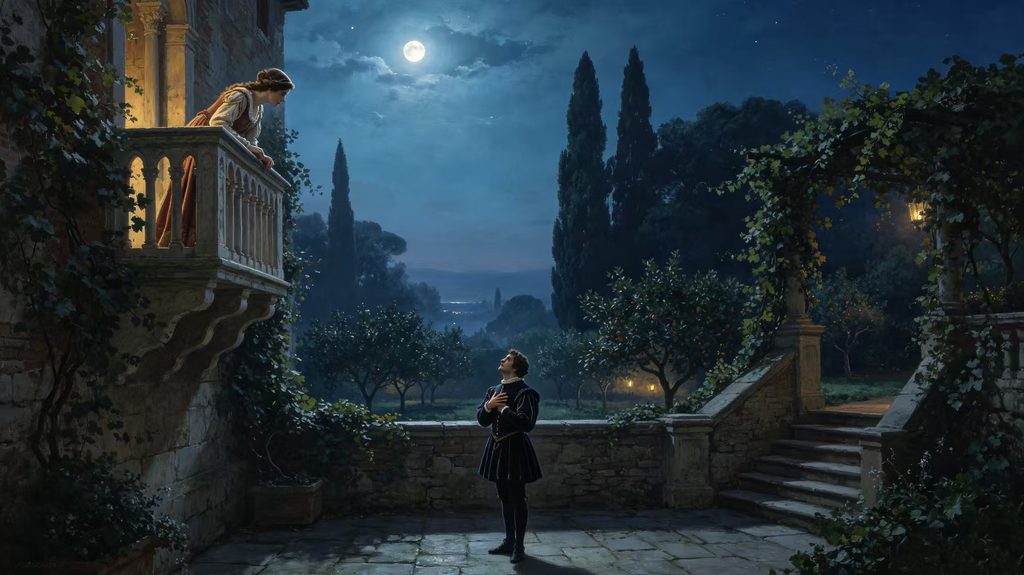
英文原文
But soft! what light through yonder window breaks?
It is the east, and Juliet is the sun.
Arise, fair sun, and kill the envious moon,
Who is already sick and pale with grief,
That thou her maid art far more fair than she.
Be not her maid, since she is envious;
Her vestal livery is but sick and green,
And none but fools do wear it; cast it off.
It is my lady, O, it is my love!
O, that she knew she were!
She speaks yet she says nothing: what of that?
Her eye discourses; I will answer it.
I am too bold, ’tis not to me she speaks.
Two of the fairest stars in all the heaven,
Having some business, do entreat her eyes
To twinkle in their spheres till they return.
What if her eyes were there, they in her head?
The brightness of her cheek would shame those stars,
As daylight doth a lamp; her eyes in heaven
Would through the airy region stream so bright
That birds would sing and think it were not night.
See, how she leans her cheek upon her hand!
O, that I were a glove upon that hand,
That I might touch that cheek!
Ay me!
She speaks:
O, speak again, bright angel! for thou art
As glorious to this night, being o’er my head
As is a winged messenger of heaven
Unto the white-upturned wondering eyes
Of mortals that fall back to gaze on him
When he bestrides the lazy-pacing clouds
And sails upon the bosom of the air.
O Romeo, Romeo! wherefore art thou Romeo?
Deny thy father and refuse thy name;
Or, if thou wilt not, be but sworn my love,
And I’ll no longer be a Capulet.
’Tis but thy name that is my enemy;
Thou art thyself, though not a Montague.
What’s Montague? It is nor hand, nor foot,
Nor arm, nor face, nor any other part
Belonging to a man. O, be some other name!
What’s in a name? That which we call a rose
By any other name would smell as sweet;
So Romeo would, were he not Romeo call’d,
Retain that dear perfection which he owes
Without that title. Romeo, doff thy name,
And for that name which is no part of thee
Take all myself.
I take thee at thy word:
Call me but love, and I’ll be new baptized;
Henceforth I never will be Romeo.
What man art thou that thus bescreen’d in night
So stumblest on my counsel?
By a name
I know not how to tell thee who I am:
My name, dear saint, is hateful to myself,
Because it is an enemy to thee;
Had I it written, I would tear the word.
My ears have not yet drunk a hundred words
Of that tongue’s utterance, yet I know the sound:
Art thou not Romeo and a Montague?
Neither, fair maid, if either thee dislike.
How camest thou hither, tell me, and wherefore?
The orchard walls are high and hard to climb,
And the place death, considering who thou art,
If any of my kinsmen find thee here.
With love’s light wings did I o’er-perch these walls;
For stony limits cannot hold love out,
And what love can do that dares love attempt;
Therefore thy kinsmen are no let to me.
If they do see thee, they will murder thee.
Alack, there lies more peril in thine eye
Than twenty of their swords: look thou but sweet,
And I am proof against their enmity.
I would not for the world they saw thee here.
I have night’s cloak to hide me from their sight;
And but thou love me, let them find me here:
My life were better ended by their hate,
Than death prorogued, wanting of thy love.
By whose direction found’st thou out this place?
By love, who first did prompt me to inquire;
He lent me counsel and I lent him eyes.
I am no pilot; yet, wert thou as far
As that vast shore wash’d with the farthest sea,
I would adventure for such merchandise.
Thou knowest the mask of night is on my face,
Else would a maiden blush bepaint my cheek
For that which thou hast heard me speak to-night.
Fain would I dwell on form, fain, fain deny
What I have spoke: but farewell compliment!
Dost thou love me? I know thou wilt say “Ay,”
And I will take thy word: yet if thou swear’st,
Thou mayst prove false; at lovers’ perjuries
They say, Jove laughs. O gentle Romeo,
If thou dost love, pronounce it faithfully:
Or if thou think’st I am too quickly won,
I’ll frown and be perverse and say thee nay,
So thou wilt woo; but else, not for the world.
In truth, fair Montague, I am too fond,
And therefore thou mayst think my ’havior light:
But trust me, gentleman, I’ll prove more true
Than those that have more cunning to be strange.
I should have been more strange, I must confess,
But that thou overheard’st, ere I was ware,
My true love’s passion: therefore pardon me,
And not impute this yielding to light love,
Which the dark night hath so discovered.
Lady, by yonder blessed moon I swear
That tips with silver all these fruit-tree tops—
O, swear not by the moon, the inconstant moon,
That monthly changes in her circled orb,
Lest that thy love prove likewise variable.
What shall I swear by?
Do not swear at all;
Or, if thou wilt, swear by thy gracious self,
Which is the god of my idolatry,
And I’ll believe thee.
If my heart’s dear love—
Well, do not swear: although I joy in thee,
I have no joy of this contract to-night:
It is too rash, too unadvised, too sudden;
Too like the lightning, which doth cease to be
Ere one can say “It lightens.” Sweet, good night!
This bud of love, by summer’s ripening breath,
May prove a beauteous flower when next we meet.
Good night, good night! as sweet repose and rest
Come to thy heart as that within my breast!
译文
轻声!那边窗子里亮起的是什么微光?
那便是东方,而朱丽叶,就是璀璨的朝阳。
升起吧,明媚的旭日,驱散善妒的月亮。
月色早已因心生嫉妒而憔悴苍白,
只因你这月下侍女,远比月华更加动人。
不要再做月亮的侍女,它满心狭隘妒忌。
它清冷苍白的贞洁装束,沉闷又黯淡,
只有愚昧之人才甘愿坚守。尽数舍弃吧。
那是我的心上人,那是我挚爱的姑娘!
多希望她知晓,我满腔炽热的情意!
她似在低语,却未曾出声,可这又何妨?
她的眼眸诉说万般情愫,我甘愿用心回应。
是我太过冒昧,这番言语本不是对我而言。
天上一对最美的星辰因公暂时离去,
恳请她的双眸暂代星光,在天际熠熠闪烁,
直至星辰归位。
倘若她的双眼化作天际星辰,星辰化作她的眼眸,
她面颊的明媚光彩,足以让群星黯然失色,
如同白昼天光熄灭微弱灯火。
她的眼眸高悬长空,洒落万丈清辉,
飞鸟会误以为白昼降临,放声啼鸣。
看啊,她正将脸颊轻靠在掌心!
我多愿化作她手上的一只手套,
得以轻抚她温柔的脸颊!
唉!她出声了。
继续诉说吧,光明的天使!
夜色之中,你高悬于我的头顶,耀眼圣洁,
如同展翅翱翔的天国信使,
让凡间世人仰头凝望、满心惊叹。
世人目送你踏过悠然流云,
遨游在辽阔澄澈的长空之上。
啊,罗密欧,罗密欧!你为何偏偏名为罗密欧?
背弃你的家族,舍弃你的姓氏。
若你不愿如此,只需宣誓予我真心,
我便即刻斩断血缘,不再做凯普莱特族人。
真正与我为敌的,唯有你的姓氏而已。
即便剥离蒙太古的名号,你依旧是纯粹的你。
蒙太古是什么?它不是手足,不是身躯,
不属于人的分毫血肉与风骨。
不如换一个无名无姓的全新身份!
姓名究竟有何意义?
我们唤作玫瑰的繁花,
纵使更换万千名号,依旧芬芳馥郁。
罗密欧亦是如此,褪去专属的姓名,
依旧保有与生俱来的纯粹与美好。
罗密欧,抛开这不属于你的名号,
以完整的你,接纳完整的我。
我遵从你的心意。
只需唤我一声爱人,我便重获新生,
从今往后,世间再无蒙太古·罗密欧。
深夜潜藏的何人,
悄然偷听我心底的告白?
我无法凭借姓名告知我的身份。
我厌恶自己的姓氏,
因为它是你与生俱来的仇敌。
倘若我将名字落笔成文,我定会将它彻底撕碎。
我尚未听完你的只言片语,
却已然辨识出你的声音。
你便是蒙太古家的罗密欧,对吗?
美丽的姑娘,
若这个名号让你心生不悦,我便弃之不用。
你如何闯到此地,为何冒险前来?
果园高墙高耸陡峭,难以翻越。
你身负世仇,一旦被我的族人发现,
便是死路一条。
我借着爱意的轻翼,飞跃重重高墙。
坚硬的石墙阻隔不了真挚的深情,
爱敢于尝试一切心之所向的奔赴,
你的族人,根本无法将我阻拦。
一旦被他们撞见,你必定难逃一死。
唉,你眼眸中流转的情愫,
远比二十柄利刃更加让我心动沉溺。
只需你温柔相待,
我便无惧所有人的敌意与加害。
我万万不愿族人在此窥见你的身影。
沉沉夜幕为我披上隐身的斗篷,
足以遮蔽所有人的视线。
只要你心悦于我,生死便无足轻重。
与其失去你的爱意、苟活于世,
不如死于族人的仇恨,了结余生。
是谁指引你,寻到这隐秘之地?
是爱意率先指引我奔赴寻觅。
它为我谋划前路,我借它看清真心。
我并非航海的舵手,
可纵使你远在沧海尽头的彼岸,
我也愿乘风破浪,奔赴这世间唯一的珍宝。
夜色遮蔽了我的容颜,遮掩了少女的羞怯。
否则,你今夜听闻的赤诚告白,
早已让我面红耳赤、羞赧难当。
我本想恪守礼教、故作矜持,
否认方才吐露的真心。
可所有虚礼客套,在此刻尽数作废!
你是否心悦于我?我知晓你定会应允,
我甘愿深信你的告白。
可恋人的誓言往往虚妄无常,
世人都说,天神都会嘲笑恋人的伪誓。
温柔的罗密欧,若你真心爱我,
便以赤诚之心郑重宣告。
若你觉得我太过轻易倾心,
我便蹙眉矜持、假意拒绝,
让你慢慢追逐、细细珍惜。
若非真心相爱,我绝不会故作姿态。
说实话,尊贵的蒙太古少年,我已然深陷深情。
或许你会觉得我轻浮草率,
但请你相信,我的心意忠贞不渝,
远比那些故作高冷、假意矜持的女子更加真挚。
我本该恪守少女的矜持与端庄,
只怪我未曾防备,被你偷听了满腔爱意。
恳请你原谅我的直白,
不要将我的坦诚,视作浅薄的轻浮,
是无边夜色,泄露了我最纯粹的深情。
姑娘,我以天边皎洁神圣的明月起誓,
月光为满园树梢镀上银辉——
不要以月亮起誓!月亮阴晴圆缺、反复无常,
月月更迭、变幻不定。
我不愿你的爱意,如月色一般摇摆多变。
那我该以何物起誓?
不必立下任何誓言。
若你执意许诺,便以你自身起誓。
你是我心中唯一的信仰与神明,
唯有你自身,值得我全然信服。
若我满腔赤诚的爱意——
够了,不必起誓。
我虽满心欢喜与你相逢相爱,
却不认可今夜仓促的盟约。
这份爱意太过鲁莽、太过仓促、太过突然,
如同转瞬即逝的闪电,
世人尚未反应,便已然消散无踪。
亲爱的,晚安。
这颗初生的爱之蓓蕾,
待夏日暖风滋养、时光沉淀,
下次相见之时,必会绽放成绝美繁花。
晚安,晚安!
愿你心底拥有与我一般,温柔安稳的安眠。
🔍长难句赏析与拆解
原句:
What’s in a name? That which we call a rose
By any other name would smell as sweet;
So Romeo would, were he not Romeo call’d,
Retain that dear perfection which he owes
Without that title.
句式解读:
that which 引导主语从句,指代事物本质;
were he not Romeo call’d 是虚拟语气倒装句式,
还原为正常语序为 if he were not called Romeo。
which 引导定语从句,修饰人物本身的美好品性。
整句层层递进,由玫瑰引申到人,
打破世俗对姓名、身份的刻板定义,哲理深厚、感染力极强。
句子主干:
A rose smells sweet by any name.
Romeo retains his perfection without his title.
原句:
It is too rash, too unadvised, too sudden;
Too like the lightning, which doth cease to be
Ere one can say “It lightens.”
句式解读:
排比句式强化语气,层层点出爱情的仓促感。
which 引导非限制性定语从句修饰 lightning,
ere 为古英语词汇,意为“在……之前”。
以闪电为喻,生动写出这份深夜爱恋绚烂短暂、暗藏危机的特质。
句子主干:
The love is rash, unadvised and sudden.
文学赏析
本段选自《罗密欧与朱丽叶》第二幕第二场经典阳台告白片段,
是莎士比亚爱情悲剧中最浪漫、最具哲理的核心篇章。
故事背景设定在维洛那城,蒙太古与凯普莱特两大家族世代宿仇,
根深蒂固的家族恩怨,让两家人永世对立、水火不容。
罗密欧与朱丽叶分属敌对家族,
他们的相遇相爱,从一开始就挣脱了世俗的规则与家族的枷锁。
全文没有激烈的冲突与厮杀,
以静谧的夜色、窗台、月光、果园为温柔背景,
勾勒出两个少年纯粹炽热的爱恋。
罗密欧满腔热烈、大胆赤诚,
甘愿抛弃身份、跨越高墙、无惧生死,奔赴心中所爱。
朱丽叶温柔细腻、清醒通透,
敢于质疑流传百年的家族仇恨,否定姓名带来的刻板偏见。
莎士比亚以浪漫的诗性语言,
提出了贯穿全文的核心哲理:
外在的名号、出身、标签,都无法定义人的本质。
玫瑰不因姓名改变芬芳,
真心不因家族仇恨褪色。
世俗世人执着于门第恩怨、血缘对立,
却看不见人心的善良与真情的可贵。
同时作者并未一味歌颂狂热的爱情,
而是暗藏理性与悲悯。
朱丽叶清醒意识到,
深夜滋生的爱意太过仓促、太过炽热,
如同转瞬即逝的闪电,美好却极不稳定。
这份跨越仇恨的爱恋,
始于极致的浪漫,也注定毁于极致的冲突,
为后续全员悲剧的结局埋下完整伏笔。
全篇以抒情对白推进情节,
融浪漫意象、人性思考、社会批判于一体,
既歌颂了冲破世俗的纯粹爱情,
也控诉了封建家族仇恨的愚昧与残酷,
是西方文学史上永恒的经典抒情篇章。
写作迁移点拨
适合写作主题:打破刻板标签、表象与本质、世俗偏见与自我本心、
真爱无惧阻碍、冲动与理智、仇恨与和解、挣脱世俗枷锁。
高分仿写:
True beauty and sincerity lie in the soul, not in external labels.
No prejudice or inherited hatred can deny the purity of true feelings,
and genuine love always dares to break through all worldly barriers.
仿写运用:
适配高中议论文升华段落,
用于论证拒绝刻板印象、坚守本心、突破世俗偏见等主题。
📖全篇句式特点
全篇采用莎士比亚经典无韵诗体裁,句式优美、韵律自然。
大量使用倒装、虚拟语气、定语从句、比喻排比,
兼具古典英语的严谨与诗歌的浪漫。
人物对话分工鲜明,
罗密欧句式热烈奔放,满含抒情色彩;
朱丽叶句式冷静克制,暗藏深度思考。
整体长短句交替,抒情与哲理相融,
画面感、思辨性、文学性高度统一。
核心词汇
1. envious
/ˈenviəs/
妒忌的,艳羡的
形容词 (adj.)
2. vestal
/ˈvestl/
贞洁的,纯净的
形容词 (adj.)
3. counsel
/ˈkaʊnsl/
心声,心事
名词 (n.)
4. peril
/ˈperəl/
危险,祸患
名词 (n.)
5. enmity
/ˈenməti/
敌意,仇恨
名词 (n.)
6. variable
/ˈveəriəbl/
多变的,无常的
形容词 (adj.)
7. idolatry
/aɪˈdɒlətri/
挚爱,尊崇
名词 (n.)
8. rash
/ræʃ/
鲁莽的,仓促的
形容词 (adj.)
9. contract
/ˈkɒntrækt/
约定,盟约
名词 (n.)
10. ripen
/ˈraɪpən/
成熟,圆满
动词 (v.)
💡主旨品读
这篇经典独白,道尽了世俗偏见与人性真心的永恒对抗。
世间所有人都被家族姓氏、世代仇恨束缚,
盲目对立、无端争斗,被刻板的标签操控一生。
但罗密欧与朱丽叶挣脱了这份愚昧的枷锁,
他们看透了,仇恨来自名号,而非人心。
真正珍贵的感情,从无关出身、门第与血缘,
只关乎两颗赤诚相待、彼此契合的灵魂。
少年人纯粹的爱意,
是对封建世俗、固化偏见最温柔也最勇敢的反抗。
但热烈的热爱之下,藏着无法规避的现实悲剧。
爱情可以冲破人心的隔阂,
却难以对抗沉淀百年的世俗仇恨与家族桎梏。
仓促萌生的深情纯粹又美好,
却也因冲动与鲁莽,缺少沉淀与包容。
莎士比亚借这段浪漫告白警示世人:
刻板的偏见、无端的仇恨,是世间最大的悲剧。
所有外在的标签与对立都是虚无的,
真诚、善良与包容,
才是人与人之间最珍贵的本质。
©英语数字智库 版权所有
未经权利人许可,不得转载、摘抄、复制、
二次编辑或商用分发,违者将依法追究法律责任。
请点击返回首页收录经典目录