
 由 英语数字智库
了解更多:考研英语:法律政治政策类词汇目录
《The Death of a Small Civil Servant》《小公务员之死》节选
作者:Anton Chekhov(安东·契诃夫)
首次发表日期:1883年7月2日
首次发表刊物:《花絮》Oskolki
收录集子:《契诃夫短篇小说精选》
英文原文
One fine evening,
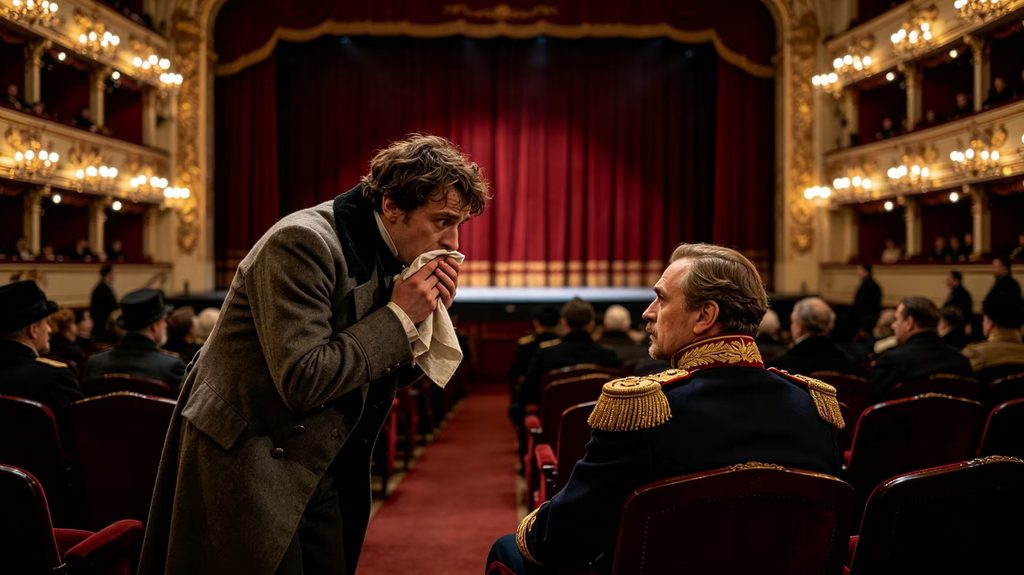
a mild-mannered small civil servant named Cherviakov
sat quietly in the theatre stalls,
enjoying an opera performance with a relaxed mood.
His life was extremely ordinary and monotonous.
Every single day of his life was repetitive and unchanged.
He worked diligently copying official documents in the government office,
lived a simple life with his wife,
and never had any grand ambitions or extravagant desires.
He was humble, timid, and extremely cautious in social life,
always afraid of offending people of higher status.
On this pleasant evening,
the theatre was warm and bright,
the music was melodious,
and all the audience were immersed in joyful entertainment.
Cherviakov felt utterly comfortable and satisfied.
He leaned back gently in his seat,
appreciating the wonderful stage performance wholeheartedly,
with no worries or unease in his mind at all.
Suddenly and accidentally,
a slight sneeze burst from his nose and mouth.
It was just a common, physiological instinct of the human body.
Every ordinary person may sneeze at any time and any place,
and such a trivial incident should never cause any trouble.
Cherviakov wiped his nose with a clean handkerchief casually,
glanced around politely,
and prepared to continue watching the opera peacefully.
However,
he suddenly discovered an unexpected situation.
An elderly senior general sitting right in front of him
was slowly wiping his bald head and neck with a formal glove.
Cherviakov instantly recognized this noble official.
It was General Brizzhalov,
a prestigious senior officer from another government department.
In an instant,
all the peace and joy in Cherviakov’s heart disappeared completely.
A strong sense of panic and unease flooded his mind.
He was extremely frightened that his casual sneeze
had splashed saliva on the distinguished general’s body.
He immediately leaned forward slightly,
lowered his head respectfully,
and whispered a sincere apology to the general.
“Excuse me, Your Excellency,” he said nervously.
“I accidentally sneezed just now.
I sincerely hope I did not disturb you.”
The general was in a good mood while watching the play.
He simply waved his hand casually,
signaling that it was no big deal,
then turned his eyes back to the stage
and continued to enjoy the opera performance.
Ordinary people would regard this trivial matter as over,
but Cherviakov could never let it go.
He was deeply trapped in endless self-doubt and fear.
In the rigid hierarchical society of Russia at that time,
the gap between officials of different ranks was enormous.
Small civil servants were humble and insignificant,
while senior generals held supreme power and status.
He firmly believed that his impolite sneeze
had offended the general’s dignity,
and the general must have harbored anger and dissatisfaction in his heart.
He worried that the general would bear a grudge against him,
deliberately suppress his future career,
or even punish him severely for this tiny mistake.
Unable to calm his anxious heart,
Cherviakov leaned forward again after a short while,
and repeated his humble apology nervously.
“I beg your pardon again, Your Excellency.
I had no intention of offending you at all.”
The general gradually felt impatient and annoyed.
He frowned slightly and told the petty official firmly
that he had already forgotten this meaningless incident.
After the opera ended,
Cherviakov walked home with a heavy and gloomy heart.
He told his wife the whole frightening experience in detail.
His wife, also living in fear of power,
thought that the apology in the theatre was not formal enough.
She advised him to visit the general’s residence the next day
to make a serious and formal apology in person.
Early the next morning,
Cherviakov tidied up his official uniform carefully,
adjusted his appearance nervously,
and hurried to the general’s mansion.
In the reception room full of distinguished guests,
he bowed deeply to General Brizzhalov
and repeatedly apologized for his inappropriate behavior.
The general was extremely confused.
He had already completely forgotten the trivial sneezing incident.
Faced with the repeated and redundant apologies,
he felt extremely bored and disturbed.
Seeing the general’s cold attitude,
Cherviakov’s inner fear became even more intense.
He mistakenly believed that the general’s indifference
was a sign of deep resentment and deliberate coldness.
In the following days,
he could not eat well or sleep peacefully.
His mind was full of endless speculation and panic.
He could not free himself from this trivial matter.
He went to apologize to the general many times in a row,
which finally irritated the dignified general completely.
Faced with his endless pestering,
the general shouted angrily and drove him out of the house.
Stunned and terrified,
Cherviakov stumbled out of the general’s mansion.
His spirit completely collapsed,
and all hope in his life vanished in an instant.
He dragged his exhausted body back home,
lay down on the sofa weakly,
and died in extreme fear and despair.
译文
一个天气宜人的傍晚,
性情温和的小公务员切尔维亚科夫,
安静地坐在剧院正厅座位上,
放松地欣赏着歌剧演出。
他的一生平淡无奇、枯燥乏味。
日复一日的生活单调重复、毫无变化。
他在官府勤恳抄写公文,
和妻子过着朴素平淡的日子,
一生没有远大的抱负,也无奢靡的欲望。
他为人卑微怯懦、处事谨小慎微,
待人接物时刻小心翼翼,
生怕得罪任何地位高于自己的人。
这个惬意的夜晚,
剧院屋内温暖明亮,
乐曲悠扬动听,
全场观众都沉浸在愉悦的观影氛围中。
切尔维亚科夫内心无比舒适满足。
他悠然靠在座椅上,
全心欣赏精彩的舞台表演,
心中无忧无虑、分外安然。
突然之间,
他无意间打了一个轻微的喷嚏。
这只是人体最寻常的生理本能。
普通人随时随地都有可能打喷嚏,
这样微不足道的小事,本不该引发任何麻烦。
切尔维亚科夫随手用干净手帕擦了擦鼻子,
礼貌地环顾四周,
准备继续平静地观看歌剧。
可就在这时,
他发现了一件始料未及的事。
坐在他正前方的一位年迈高级将军,
正用制式手套轻轻擦拭自己的光头和脖颈。
切尔维亚科夫立刻认出了这位显贵。
他就是任职于其他部门的布里兹扎洛夫将军,一位地位尊崇的高级军官。
刹那之间,
切尔维亚科夫心中所有的安逸与愉悦荡然无存。
浓烈的惶恐与不安瞬间席卷了他的思绪。
他极度害怕,自己刚刚不经意的喷嚏,
将唾沫溅到了尊贵的将军身上。
他立刻微微俯身,
恭敬地低下头,
忐忑地向将军低声致歉。
“非常抱歉,大人,”他紧张地说道。
“我刚才不慎打了喷嚏。
恳请您原谅,无意惊扰您。”
将军正沉浸在观影的愉悦中,
只是随意摆了摆手,示意无关紧要,
随后便将目光重新转回舞台,
继续欣赏歌剧演出。
换作常人,定会将这件小事就此翻篇,
可切尔维亚科夫始终无法释怀。
他深陷无尽的自我猜忌与惶恐之中。
在当时等级森严的俄国社会,
官员层级之间的差距悬殊巨大。
底层小公务员卑微渺小、微不足道,
而高级将军手握大权、地位尊贵。
他固执地认为,自己失礼的举动,
冒犯了将军的威严,
认定将军心中一定暗藏怒火与不满。
他终日忧心忡忡,害怕将军怀恨在心,
日后刻意打压他的仕途,
甚至会因这件小事严惩自己。
内心的焦虑久久无法平复,
片刻之后,他再次俯身,
忐忑地重复着谦卑的致歉。
“再次恳请大人宽恕,
我绝无丝毫冒犯您的心意。”
将军的心底渐渐生出不耐与厌烦。
他微微蹙眉,郑重告知这名小公务员,
自己早已忘记这件无足轻重的小事。
歌剧散场后,
切尔维亚科夫心情沉重、郁郁寡欢地走回家里。
他将整场惊魂未定的经历详细告知妻子。
常年畏惧权贵的妻子,
也认为剧院中的道歉不够正式、不够诚恳。
她叮嘱丈夫次日专程前往将军府邸,
当面进行正式郑重的道歉。
第二天清晨,
切尔维亚科夫认真整理好官服,
忐忑地收拾仪容,
匆匆赶往将军的宅邸。
宾客云集的会客室内,
他对着布里兹扎洛夫将军深深鞠躬,
一遍遍为自己失礼的行为致歉。
将军满心困惑。
他早已彻底遗忘了这场微不足道的喷嚏风波。
面对一次次多余且反复的道歉,
内心倍感烦躁、不胜其扰。
看着将军冷漠疏离的态度,
切尔维亚科夫心底的恐惧愈发浓烈。
他错误地认为,将军的冷淡漠视,
是心怀怨怼、刻意疏远的表现。
在接下来的日子里,
他食不知味、夜不能寐。
脑海中无时无刻不在胡思乱想、惶恐焦虑。
他始终无法从这件小事中解脱出来。
他接连数次登门道歉,
最终彻底激怒了尊贵的将军。
面对他无休止的纠缠打扰,
将军勃然大怒,厉声呵斥,将他赶出府邸。
切尔维亚科夫呆立当场、惊惧万分,
踉跄着走出将军宅邸。
他的精神彻底崩塌,
人生所有的希望瞬间消散殆尽。
他拖着疲惫绝望的身躯回到家中,
虚弱地躺倒在沙发上,
在极致的恐惧与绝望中悄然离世。
🔍长难句赏析与拆解
原句一
He was extremely frightened that his casual sneeze
had splashed saliva on the distinguished general’s body.
句式解读
本句为主从复合句,整体为主系表结构,
句中包含that引导的宾语从句,
作形容词frightened的补充状语。
主句用来交代人物的心理状态,
点明小公务员极度惶恐的核心情绪;
宾语从句完整阐述他恐惧的具体缘由,
逻辑层层衔接、层层递进。
从句时态采用过去完成时,
体现“打喷嚏失礼”的动作发生在“心生恐惧”之前,
时态严谨、逻辑严密。
整句精准刻画小人物畏惧权贵、过度自卑的扭曲心理,
句式规整、表意严谨,符合教材标准语法讲解规范。
句子主干:
He was extremely frightened.
原句二
He firmly believed that his impolite sneeze
had offended the general’s dignity,
and the general must have harbored anger and dissatisfaction in his heart.
句式解读
本句为标准主从复合句,主句主谓结构完整,
后接两个并列的宾语从句,共同作动词believed的宾语。
第一个宾语从句交代人物自认为的失礼行为,
第二个宾语从句递进推测上级的内心情绪,
两句并列衔接,完整展现人物无依据的自我猜忌。
句式层次清晰、逻辑紧密,
通过规范的复合句结构,
细致刻画人物不断放大的焦虑与妄想,
精准体现等级压迫对小人物心理的深度扭曲,文学表现力极强。
句子主干:
He believed that his sneeze had offended the dignity
and the general harbored anger.
📖全篇句式特点
全篇采用契诃夫经典现实主义叙事风格,
长短句错落排布,句式规整规范、通俗易懂。
全文以顺序叙事为核心脉络,
按照“事件发生—内心焦虑—反复致歉—精神崩溃—最终死亡”层层推进。
文章大量使用主谓宾简单句铺陈日常场景,
语言朴素平实、画面清晰;
同时穿插宾语从句、并列复合句刻画人物心理变化,
让平淡的叙事暗藏强烈的戏剧张力。
全文无华丽辞藻堆砌,
以极简平实的文字制造荒诞的讽刺效果,
用一件微不足道的小事,
放大沙俄等级制度的残酷与人性的卑微扭曲。
句式规范、逻辑严谨、适配中小学教材赏析标准,
兼具文学性与应试学习价值。
核心词汇
1. civil servant
/ˈsɪvl ˈsɜːvənt/
公务员,文职人员
名词短语(n.)
2. monotonous
/məˈnɒtənəs/
单调的,枯燥的
形容词(adj.)
3. timid
/ˈtɪmɪd/
怯懦的,胆小的
形容词(adj.)
4. sneeze
/sniːz/
打喷嚏
动词(v.)
5. distinguished
/dɪˈstɪŋɡwɪʃt/
尊贵的,显赫的
形容词(adj.)
6. unease
/ʌnˈiːz/
不安,焦虑
名词(n.)
7. resentment
/rɪˈzentmənt/
怨恨,愤懑
名词(n.)
8. despair
/dɪˈspeə(r)/
绝望,失望
名词(n.)
💡主旨品读
《小公务员之死》以一件荒诞至极的生活小事,
撕开了沙俄封建等级制度最冰冷的真面目。
一场微不足道的偶然喷嚏,
本是人人皆有的正常生理行为,
却让底层小公务员切尔维亚科夫,
陷入无尽的惶恐、猜忌与自我折磨。
他卑微怯懦、盲目敬畏权贵,
把上层人物的随意漠视当作记恨,
把无伤大雅的小事当成灭顶之灾,
一次次卑微致歉、反复纠缠,
最终在极致的精神恐惧中走向死亡。
小说极具讽刺意味:
杀死小公务员的,从来不是将军的斥责,
而是根深蒂固的等级奴性与扭曲的自卑人格。
森严的阶级制度,磨灭了小人物的自尊与底气,
让普通人活得谨小慎微、战战兢兢,
在权贵面前彻底丧失自我。
契诃夫以平淡克制的笔触,
用极致的小事写极致的悲剧,
揭露旧时代官僚制度对人性的压迫与异化。
文章告诉我们:
真正的卑微从来不是身份的低微,
而是心灵的屈膝臣服;
人唯有坚守自尊、不卑不亢,
不盲从权贵、不自我内耗,
才能守住独立的人格与鲜活的灵魂。
©英语数字智库 版权所有
未经权利人许可,不得转载、摘抄、复制、
二次编辑或商用分发,违者将依法追究法律责任。
请点击返回首页收录经典目录