
 由 英语数字智库
了解更多:考研英语:科技互联网人工智能类目录
The War Prayer《战争祈祷文》节选
作者:Mark Twain(马克·吐温)
成稿时间:约 1904–1905 年
首次局部发表:1916 年 11 月
完整结集出版:1923 年,《Europe and Elsewhere》
创作背景:
本文是马克·吐温极具批判力量的反战寓言。
作品诞生于美菲战争时期,作者生前拒绝发表,
借教堂祈祷的反差场景,揭露战争爱国主义与宗教虔诚之下的虚伪,
叩问人们在祈求胜利时不愿正视的暴力代价。
英文原文
It was a time of great and exalting excitement.
The country was up in arms, the war was on.
In every breast burned the holy fire of patriotism.
The drums were beating, the bands playing,
flags fluttered everywhere in the sunshine.
Young volunteers marched along the wide avenue,
bright in their new uniforms.
Proud parents, sisters and sweethearts cheered them,
their voices choked with eager emotion.
In the churches, pastors preached devotion to flag and country,
and called upon God to stand beside their soldiers.
Sunday morning came.
On the next day, the battalions would depart for the front.
The church was crowded to its doors.
Volunteers sat among the congregation,
their young faces glowing with martial dreams:
the steady advance, the wild charge, the flash of sabers,
the rout of enemies, smoke and tumult, final surrender.
They pictured themselves returning home as bronzed heroes,
welcomed, adored, wrapped in endless glory.
The pastor rose and began his prayer.
His voice was warm and passionate.
He begged the merciful Father in heaven
to watch over the noble young patriots,
to shield them amid the terror of battle,
to strengthen their hands and make them invincible.
“Grant us the victory, O Lord our God!”
These words were the core of his supplication.
The whole congregation bowed their heads and echoed the plea.
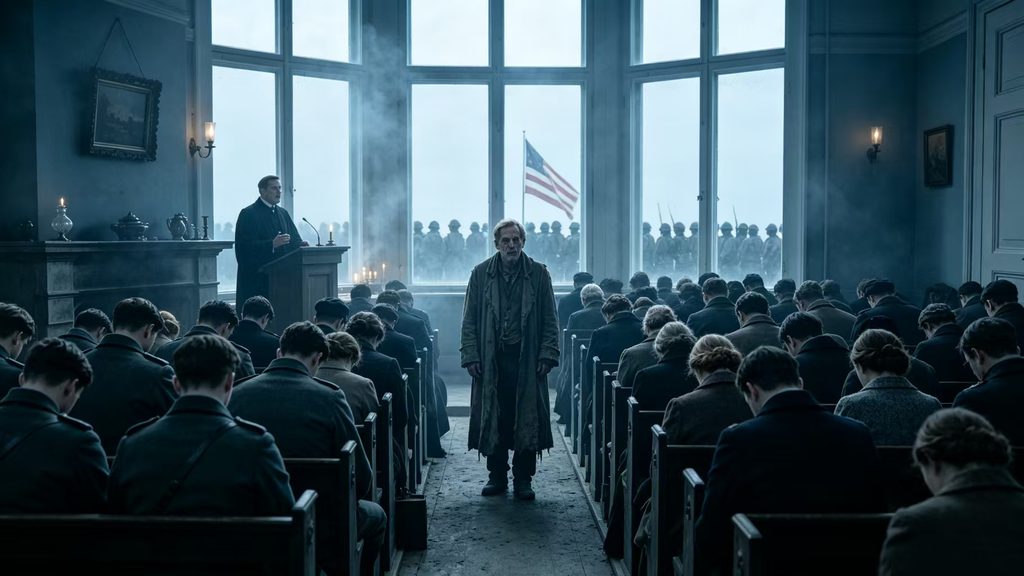
Then an aged stranger entered silently.
He moved slowly up the central aisle.
His robe reached his feet, his white hair fell upon his shoulders.
His face was unnaturally pale.
All eyes turned to him in wonder.
He stepped to the preacher’s side and waited.
When the prayer ended, he touched the minister’s arm,
and took his place before the altar.
He looked over the spellbound crowd with solemn eyes,
and spoke in a deep, resonant voice.
“I come from the Throne, bearing a message from Almighty God.
He has heard the prayer of your shepherd.
But this is not one prayer; it is two.
One is spoken, the other remains hidden in your hearts.
Both have risen to the ear of God.”
“You have asked for victory.
You do not pause to think what that prayer truly means.
To pray for victory is to pray for ruin.
Listen to the unspoken prayer that you also uttered:
O Lord our Father, help us tear their soldiers to bloody shreds with our shells;
help us cover their peaceful fields with the pale bodies of their dead;
help us drown the roar of cannon with the screams of their wounded,
writhing in agony;
help us burn their humble homes to ashes in a storm of fire;
help us break the hearts of their innocent widows with useless grief;
help us drive homeless mothers and small children
to wander the wasted land,
hungry, thirsty, bare, tormented by summer heat and winter frost.
Blast their hopes, blight their lives,
and stain the white snow with the blood of their bleeding feet.”
A heavy silence fell over the church.
The people stared at the stranger, stunned.
They had never recognized that their pious plea for triumph
was at the same time a curse upon the enemy.
The stranger finished his message and vanished.
Most of the congregation dismissed his words as madness.
They returned to their patriotic hopes,
unwilling to face the brutal truth their prayer contained.
译文
举国上下正处在激昂狂热的氛围之中。
国家全民备战,战争已经打响。
每个人胸中都燃烧着爱国的圣火。
鼓点阵阵,乐队奏响乐曲,
旗帜在阳光下四处飘扬。
年轻的志愿兵沿着宽阔大道列队行进,
崭新的制服鲜亮夺目。
骄傲的父母、姐妹与爱人向他们欢呼,
激动的情绪哽住了他们的嗓音。
教堂之内,牧师宣讲着对国旗与国家的忠诚,
祈求上帝站在己方士兵这一边。
礼拜日清晨如期而至。
第二天,部队就要开赴前线。
教堂里座无虚席,挤满信众。
志愿兵们坐在人群之中,
年轻的脸庞闪耀着对战争的幻想:
稳步推进、猛烈冲锋、刀光闪闪,
敌军溃败、硝烟四起、最终受降。
他们想象自己日后以饱经风霜的英雄身份归来,
受人拥戴、万众敬仰,沐浴在无尽荣光之中。
牧师起身开始祈祷。
他的语调热忱而恳切。
他祈求仁慈的天父,
看护这些高贵年轻的爱国者,
在战火的惊惧之中庇护他们,
赐予他们力量,使他们所向披靡。
“主啊我们的上帝,请赐予我们胜利!”
这句话是整篇祷词的核心。
全体信众低下头,同声附和这一祈求。
这时,一位年迈的陌生人悄然走入教堂。
他缓步沿着中间通道向前走去。
长袍垂至脚面,白发披散肩头。
他的面色苍白得异乎寻常。
所有人都惊奇地望向他。
他走到牧师身侧,静静等候。
祈祷结束之后,他轻触牧师的手臂,
走到祭坛之前。
他用肃穆的目光扫视着被震慑住的人群,
深沉洪亮的声音响起:
“我自王座而来,带来全能上帝的启示。
祂已经听见你们牧师的祈祷。
但这并非一份祈祷,而是两份。
一份宣之于口,另一份藏在你们心底。
两份祷词,都传到了上帝耳中。”
“你们祈求胜利。
却不曾停下来想一想,这份祈求真正意味着什么。
祈求胜利,便是祈求毁灭。
请听你们同时默默许下、未曾说出口的祷词:
我们的天父啊,请助我们用炮弹将敌方士兵炸成血肉碎片;
助我们让他们安宁的田野铺满死者苍白的躯体;
助我们用伤员痛苦扭动的哀嚎,盖过大炮的轰鸣;
助我们用烈火风暴,将他们简陋的家园焚为灰烬;
助我们用无望的悲痛,撕碎无辜遗孀的心;
助我们驱赶无家可归的母亲与幼童,
在荒芜的土地上漂泊流浪,
忍饥挨饿、衣不蔽体,饱受酷暑与寒霜折磨。
摧毁他们的希望,摧残他们的生命,
让皑皑白雪染上他们流血双脚的殷红。”
沉重的寂静笼罩整座教堂。
人们呆呆望着陌生人,心神震颤。
他们从未意识到,自己虔诚祈求胜利的祷文,
同时也是施加在敌人身上的诅咒。
陌生人说完启示,便消失不见。
绝大多数信众只当他是疯言疯语。
他们重拾爱国的热忱期盼,
不愿直面这份祈祷背后残酷的真相。
🔍长难句赏析与拆解
原句一
It was a time of great and exalting excitement.
The country was up in arms, the war was on.
句式解读
第一句为主系表简单句,
great and exalting 并列形容词修饰抽象名词 excitement ;
第二句由两个独立分句构成,
up in arms 是固定习语,意为“武装起来、备战”,
the war was on 为主系表结构,on在这里表示“正在进行”。
开篇两句短促有力,铺陈时代氛围,
用简洁客观的陈述,先烘托全民狂热的背景,
为后文强烈的反转批判做好铺垫。
句子主干
It was a time. The country was up in arms, the war was on.
原句二
You do not pause to think what that prayer truly means.
句式解读
本句为主谓宾结构,宾语由 what 引导的宾语从句充当;
pause to think 是固定搭配,意为“停下来思索”。
句子句式朴素直白,没有复杂修饰,
却是全文的思辨转折点。
作者借陌生人之口,直击信众的认知盲区:
人们只贪恋胜利,刻意回避胜利附带的杀戮与苦难。
句子主干
You do not pause to think.
📖全篇句式特点
全文叙事节奏张弛分明,长短句交替排布。
开篇大量使用短句铺陈环境,渲染群体狂热;
牧师的祈祷段落语调庄重绵长;
陌生人揭示隐藏祷词的段落使用大量并列祈使句,
层层堆叠暴力意象,冲击力极强。
文中广泛使用宾语从句、并列分句、分词伴随结构、固定习语。
语言风格克制冷峻,前半部分模仿宗教布道庄重典雅的文风,
后半部分急转直下,用直白残酷的意象打破宗教话语的温情伪装。
文本思辨性极强,适合英语精读、修辞赏析、批判性阅读教学。
核心词汇
1. exalting
/ɪɡˈzɔːltɪŋ/
令人振奋的,狂热的
形容词(adj.)
2. patriotism
/ˈpeɪtriətɪzəm/
爱国精神,爱国热忱
名词(n.)
3. congregation
/ˌkɒŋɡrɪˈɡeɪʃn/
会众,教堂全体信徒
名词(n.)
4. invincible
/ɪnˈvɪnsəbl/
不可战胜的,所向披靡的
形容词(adj.)
5. supplication
/ˌsʌplɪˈkeɪʃn/
祈求,祷告
名词(n.)
6. resonant
/ˈrezənənt/
洪亮的,浑厚的
形容词(adj.)
7. agony
/ˈæɡəni/
剧痛,极度痛苦
名词(n.)
8. humble
/ˈhʌmbl/
简陋的,卑微的
形容词(adj.)
9. blight
/blaɪt/
摧残,毁坏
动词(v.)
10. pious
/ˈpaɪəs/
虔诚的
形容词(adj.)
📜文学赏析
《战争祈祷文》是马克·吐温最为锋利的反战短篇作品。
文本采用强烈的对照叙事结构:表层是庄重虔诚、
祈求己方平安得胜的公开祷告;
深层是被所有人刻意忽略、包含屠戮、毁灭、家破人亡的隐秘诅咒。
陌生人这一形象,是真理的化身,
他撕开宗教与爱国主义共同编织的温情假面。
作者没有直接斥责战争,而是还原一个朴素的逻辑:
战争的胜利永远建立在另一方的毁灭之上。
当民众在教堂向上帝祈求胜利之时,
他们实质上同时在祈求敌人承受苦难。
故事结尾众人将真言视作疯话,进一步讽刺群体的集体自欺。
这篇作品跳出简单的善恶评判,指向群体盲从、
宗教裹挟战争、大众逃避道德责任的深刻命题。
💡主旨品读
选文以教堂战前祈祷为核心场景,围绕“两份祈祷”的核心对比展开。
信众沉浸在爱国激情与宗教虔诚之中,只看见胜利的荣光,
选择性无视胜利背后必然伴随的杀戮、伤痛与毁灭。
陌生人的启示打破这种自欺,揭示祷词内在无法割裂的双重性。
本文传递核心主旨:
战争没有干净纯粹的胜利。
任何为己方胜利进行的祈祷,
都暗含对敌方生灵的伤害。
狂热的集体情绪很容易让人回避道德责任;
人应当直视自己诉求背后全部的代价,
警惕爱国主义与宗教外衣之下潜藏的暴力。
©英语数字智库 版权所有
未经权利人许可,不得转载、摘抄、复制、
二次编辑或商用分发,违者将依法追究法律责任。
请点击返回首页收录经典目录