
 由 英语数字智库
The Wild Duck《野鸭》节选
作者:Henrik Ibsen(亨利克·易卜生)
成稿誊清稿寄出:1884 年 9 月 2 日
首次出版日期:1884 年 11 月 11 日
出版社:Gyldendalske Boghandels Forlag
世界首演:1885 年 1 月 9 日(卑尔根国家剧院)
收录说明:初版独立刊行,后世收入易卜生戏剧全集
创作背景:
《野鸭》是易卜生中期创作阶段极具代表性的作品。
创作于十九世纪后期,欧洲社会新旧观念剧烈碰撞。
传统的道德准则、家庭伦理,
与新兴的理想主义思想持续发生冲突。
不同于《玩偶之家》直白的反抗表达,
本剧转向更为复杂的人性思辨。
易卜生不再简单评判是非对错,
转而探讨理想、谎言、幻想与现实的边界。
剧中以受伤的野鸭作为核心象征,
隐喻那些被生活重创、躲在虚幻慰藉之中的普通人。
作品引导读者思考:
残酷的真相是否一定优于善意的幻想,
纯粹的理想主义会不会给平凡的家庭带来毁灭性的伤害。
英文原文
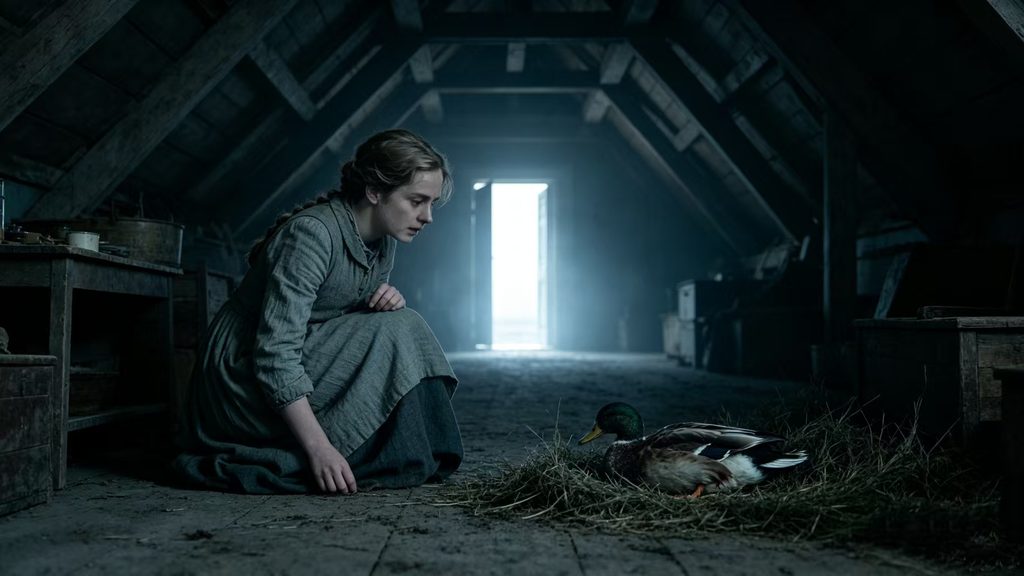
There is a wild duck,
that lives hidden away
in the deep, damp corner of the garret.
It was once shot by a hunter,
and one wing was badly wounded.
Since that day,
it can no longer fly high into the open sky.
It cannot follow the other wild birds
across the wide, free expanse of clouds.
Instead, it creeps into the dark weeds,
and stays quietly in the shadowy shelter,
where it feels safe from the wind and danger.
The old man Ekdal keeps it carefully,
feeding it grain and clean water every day.
To him, this wounded duck is more than a bird.
It stands for the broken part of his own life,
the hopes that have been shattered long ago.
Gregers Werle has come back to this house,
carrying a firm, burning belief in pure truth.
He holds the idea that all falsehood is evil,
and every human being ought to live
without any hidden lies or comforting illusions.
He looks into the quiet family life of the Ekdals,
and he quickly finds out many secret things.
The happy peace inside this little home
is built upon a soft, carefully woven web of lies.
He thinks it is his duty,
his sacred mission,
to tear down every false shelter,
and show every member of the family
the bare, unkind truth behind their gentle daily life.
Hedvig, the young daughter of the family,
is gentle, quiet and full of warm affection.
She loves the wild duck deeply.
For her, the duck is a dear companion,
a creature that shares her own quiet loneliness.
She does not know the heavy secrets
that her parents try to hide from the world.
She grows up in this warm, gentle household,
believing firmly in the love and peace around her.
Her eyes are slowly growing weaker,
and she fears the day when she may lose her sight.
The little garret with the wild duck
becomes the most precious place in her whole world.
It is the place where she can escape sadness,
and hold onto simple, quiet happiness.
Gregers talks with Hedvig again and again.
He tells her that the wild duck is trapped,
that it lives in a foolish dream,
and it should be set free,
even if freedom brings pain and death.
He asks her to wake up,
to face all the hidden truth bravely,
and give up all the sweet lies that protect her heart.
He believes that true nobility of spirit
can only grow from clear, unvarnished truth.
He cannot understand that for some people,
illusion is the only support that keeps them alive.
The family’s calm happiness is not grand,
it is small, fragile and easy to break.
Old Ekdal sits in the garret for hours,
lost in his old hunting memories.
He once had a bright career and great plans,
but he fell into disgrace and poverty.
He builds a small imaginary forest in the attic,
and pretends he is still hunting in the wild mountains.
This game is his only comfort,
the only way he can bear his ruined life.
Hedvig’s mother, Gina, knows all these secrets well.
She chooses silence and soft compromise,
because she knows how cruel reality can be.
She only wants to keep the family together,
and guard the simple peace they have managed to keep.
Gregers never stops pushing his ideal.
He insists that truth must come first,
no matter what harm it may bring.
Slowly, the quiet balance of the Ekdal family
begins to crack and fall apart.
The comfortable fog of illusion lifts away,
and all the painful secrets are laid out in the open.
Hedvig’s pure world collapses completely.
She cannot bear the weight of the harsh truth,
and the wild duck, her only comfort,
can no longer give her peace.
The ideal that Gregers worships so faithfully
does not bring freedom or salvation.
It only brings destruction to a gentle family
that had survived by leaning on soft, harmless dreams.
Many people chase the bright light of truth,
and praise it as the highest good of humanity.
Yet this play asks us to pause and think.
Is every kind of illusion worth destroying?
Does a noble ideal always lead to kindness?
Some wounds in the heart cannot bear raw truth.
For the wounded wild duck,
and for the wounded people in the world,
sometimes a gentle shelter,
even if it is built on illusion,
may be the only thing that keeps them from sinking.
译文
有一只野鸭,
躲藏在阁楼幽深潮湿的角落。
它曾经被猎人击中,
一侧翅膀受了重伤。
从那天起,
它再也无法高飞,
冲入开阔辽远的长空。
它不能跟随其他野鸟,
穿过云层之间自由广袤的天地。
它只能钻进幽暗的草丛,
安静待在阴影的庇护之中,
在这里,它能够躲开狂风与危险。
老埃克达尔细心照料它,
每日为它投喂谷物与清水。
对他而言,这只受伤的野鸭不只是一只鸟。
它象征着他人生里破碎的部分,
那些早已破灭的希望。
格雷格斯·维尔勒回到这栋小屋,
怀揣着一份坚定炽热的信念,信奉纯粹的真理。
他认定一切谎言都是罪恶,
每个人都应当活着,
不怀揣任何隐秘的假话、用以自我慰藉的幻想。
他审视埃克达尔一家平静的家庭生活,
很快发现了诸多深藏的秘密。
这个小家表面的安宁幸福,
建立在一层细密、温柔编织的谎言之上。
他认为这是自己的责任,
是神圣的使命,
撕碎所有虚假的庇护,
向家中每一个人,
展露他们温情日常背后赤裸、残酷的真相。
海维格,这个家里年幼的女儿,
性情温柔沉静,满怀热忱。
她深深喜爱这只野鸭。
对她来说,野鸭是亲密的伙伴,
是和她一样,承受着孤寂的生命。
她不知道父母刻意向外界隐瞒的沉重秘密。
她在温暖柔和的家庭里长大,
由衷相信身边的爱意与安宁。
她的视力日渐衰弱,
内心恐惧自己终有一天会失明。
饲养野鸭的阁楼,
成了她全世界最珍贵的地方。
在这里,她可以躲开悲伤,
守住简单、安静的快乐。
格雷格斯一次次和海维格交谈。
他告诉她,野鸭被困住了,
活在一场愚昧的幻梦里,
它应当被释放,
哪怕自由带来痛苦甚至死亡。
他劝她清醒过来,
勇敢直面所有隐藏的真相,
舍弃那些守护她内心的甜蜜谎言。
他坚信,真正高尚的精神品格,
只能从毫无修饰的真相之中生长出来。
他无法理解,对于一部分人而言,
幻想是支撑他们活下去的唯一支柱。
这个家庭的幸福并不宏大,
它渺小、脆弱,一碰就碎。
老埃克达尔常常在阁楼静坐许久,
沉浸在往日打猎的回忆之中。
他曾经拥有光明的事业、远大的规划,
后来却身败名裂,陷入贫困。
他在阁楼搭建出一片想象中的森林,
幻想自己依旧在山野间狩猎。
这场幻想是他唯一的慰藉,
是他承受破败人生的方式。
海维格的母亲吉娜,清楚所有秘密。
她选择沉默与温和的妥协,
因为她深知现实的残酷。
她只想维系这个家庭不散,
守护他们好不容易留住的安稳。
格雷格斯始终坚持自己的理想。
他坚持真理必须放在第一位,
无论会带来怎样的伤害。
慢慢地,埃克达尔家原本平稳的平衡,
开始开裂、崩塌。
那层包裹着一家人的、温柔的幻梦消散,
所有痛苦的秘密,全都摊开在众人眼前。
海维格纯净的世界彻底瓦解。
她无力承受残酷真相带来的重压,
而野鸭,她唯一的慰藉,
再也无法带给她安宁。
格雷格斯虔诚信奉的理想,
并没有带来自由与救赎。
它只给这个温和的家庭带来毁灭,
这个家庭原本靠着无害的温柔幻梦,艰难支撑。
很多人追寻真理的光芒,
将它赞颂为人最高的善。
但这部剧引导我们停下思索。
是不是所有幻想都值得摧毁?
高尚的理想,一定导向善意吗?
心灵上有些伤口,承受不住直白的真相。
对于这只受伤的野鸭,
以及世间所有受过创伤的人,
有时候一处温柔的庇护所,
哪怕它建立在幻想之上,
或许也是防止他们彻底沉沦的唯一依靠。
🔍长难句赏析与拆解
原句一
It cannot follow the other wild birds
across the wide, free expanse of clouds.
句式解读
本句为主谓宾结构,across引导介词短语作地点状语。
句子以野鸭的遭遇具象化隐喻,
将翅膀受伤、失去飞翔能力的野鸭,
和失去人生希望、困在幻想里的人对应起来。
句式舒缓,画面感强,
用辽阔云天反衬野鸭的被困,
奠定全文哀伤思辨的基调。
语言含蓄,不直白说教,
是本剧象征手法的典型例句。
句子主干
It cannot follow the other wild birds.
原句二
He believes that true nobility of spirit
can only grow from clear, unvarnished truth.
句式解读
本句包含that引导的宾语从句。
从句内部使用only,强化限定意味,
精准体现格雷格斯极端的理想主义认知。
这句话集中展现他的核心价值观:
真理优先,排斥一切幻想与妥协。
和后文家庭破碎的结局形成强烈反讽,
是推动全剧矛盾的关键句子。
句子主干
He believes that true nobility of spirit can only grow from truth.
📖全篇句式特点
全篇延续易卜生后期思辨戏剧的语言风格。
长短句交错排布,节奏克制内敛。
大量使用宾语从句、分词短语、介词状语结构。
长句用来铺陈人物内心信念、复杂的家庭处境,
缓缓铺展理想与现实的矛盾;
短句简洁凝练,用来点明隐喻、抛出思辨问题。
文字没有激烈的控诉,
不做非黑即白的道德评判,
用冷静、含蓄的对白式叙事,
一层层剥开人性的复杂。
文本避开简单的对错定论,
留给读者思考的空间,
适配高中英语文学精读、句法赏析教学。
核心词汇
1. garret
/ˈɡærət/
阁楼,顶楼
名词(n.)
2. wound
/wuːnd/
使受伤,伤害
动词(v.)
3. illusion
/ɪˈluːʒn/
幻想,错觉
名词(n.)
4. sacred
/ˈseɪkrɪd/
神圣的
形容词(adj.)
5. unvarnished
/ʌnˈvɑːnɪʃt/
不加修饰的,直白的
形容词(adj.)
6. compromise
/ˈkɒmprəmaɪz/
妥协,折中
名词(n.)
7. disgrace
/dɪsˈɡreɪs/
耻辱,失势
名词(n.)
8. salvation
/sælˈveɪʃn/
救赎,解脱
名词(n.)
9. noble
/ˈnəʊbl/
高尚的
形容词(adj.)
10. crack
/kræk/
破裂,裂开
动词(v.)
📜文学赏析
《野鸭》是易卜生创作思想发生转向的重要作品。
在这篇作品之中,作者跳出了早期戏剧里,
“揭露真相、反抗束缚”的单一逻辑。
野鸭作为贯穿全文的核心意象,
承载着多重内涵:它既是肉体受伤的生灵,
也是每一个被现实重创、依靠幻想喘息的普通人。
格雷格斯代表绝对化的理想主义,
他执着地追求纯粹真理,
把幻想一律视作应当根除的谎言。
埃克达尔一家,则代表平凡众生。
他们清楚生活并不完美,
靠着无伤的幻想、温和的妥协,
维持着来之不易的家庭安宁。
作者没有站在格雷格斯一边,
也没有简单否定追寻真理的价值。
他冷静呈现一个残酷的结果:
脱离现实的理想,
有时候会变成伤人的利刃。
当理想主义者强行打碎他人的精神庇护,
所谓的真相,未必带来救赎,
反而会摧毁脆弱的生命与温情。
作品探讨一个深刻命题:
理想本身固然可贵,
但理想的推行,不能无视人性的脆弱。
它打破二元对立的道德判断,
展现人性、家庭、理想之间缠绕的复杂关系,
思辨层次丰厚,耐人反复品读。
💡主旨品读
选文以受伤野鸭的故事为线索,
围绕格雷格斯的理想主义与埃克达尔一家的幻想生活展开对照。
文章引导我们思考真理与幻想的边界。
真理本身具备价值,
但真理并不适合不加区分地施加给所有人。
一部分人赖以支撑生活的精神寄托,
是微小、柔软的幻梦。
强行撕碎这份寄托,
并不会唤醒他们,只会带来毁灭。
作品提醒读者:
高尚的理想,应当带着对人性的体谅。
现实世界不是非真即假的简单选择,
很多普通人的生存空间,
本就建立在适度的包容与妥协之上。
它不鼓励自欺欺人的逃避,
也反对偏执、粗暴的理想狂热。
真正的善良,
既包含对真相的尊重,
也包含对他人脆弱内心的体恤。
这也是《野鸭》超越时代、长久被研读的思想内核。
©英语数字智库 版权所有
未经权利人许可,不得转载、摘抄、复制、
二次编辑或商用分发,违者将依法追究法律责任。
请点击返回首页收录经典目录