
 由 英语数字智库
了解更多:英语四六级分类词汇短语目录
作者:William Faulkner(威廉·福克纳)
首次出版:1939 年 6 月
首次收录于:《Harper’s Magazine》《哈珀杂志》
出版背景:美国,以杂志刊载形式推出
收录说明:归入约克纳帕塔法体系,后多次收录于福克纳短篇小说集
创作背景:
《烧马棚》是福克纳最经典的短篇,
属于他虚构的南方约克纳帕塔法县故事。
美国南北战争之后,南方旧庄园体系瓦解,
底层白人佃农处境艰难。
主人公父亲斯诺普斯,内心充满怨恨,偏执敏感。
他被阶层压迫,
却用纵火这种极端方式报复比自己富裕的庄园主。
小男孩萨蒂是故事的叙述视角,
夹在血缘亲情与是非良知之间痛苦挣扎。
一边是父子血脉,一边是正义与道德。
小说写南方底层的仇恨、贫穷带来的扭曲,
以及孩子艰难的精神觉醒。
探讨忠诚、良知、家族羁绊与道德选择的永恒冲突。
英文原文
The store in which the justice of the peace’s court was sitting
smelled of cheese and kerosene and sweat.
Sarty sat on a nail keg,
watching his father stand before the magistrate.
His full name was Colonel Sartoris Snopes,
though everyone called him Sarty.
He was ten years old,
thin and tense,
his heart hammering hard inside his chest.
Abner Snopes, his father, was on trial again,
accused of burning down his landlord’s barn.
The landlord, Mr. Harris,
had caught Abner trespassing and threatened punishment.
So Abner had struck back in the only way he knew:
by fire, swift and secret,
the weapon of a man who had no other power.
Sarty’s whole body trembled.
He knew what the judge was going to ask.
He knew they would call him up,
make him testify against his own father.
Blood is thicker than water,
his father had told him a hundred times.
You have to stick to your own blood,
no matter what they do, no matter what is right.
That was the iron rule of their family.
But Sarty’s small heart was torn in two.
He knew barn burning was wrong.
He knew fear and destruction lived in the flames.
Yet this man was his father,
the man who carried him, fed him,
the head of his blood kin.
Mr. Harris told the court what had happened.
He described the warning,
the hidden fire,
the ruin of his barn and stored hay.
The justice looked down at Abner.
“There is not enough proof to convict you, Snopes.
You are free to go,
but you must leave this county at once.
Do not come back.”
Abner said nothing.
His face was hard, cold, without shame.
He turned and walked out of the store,
and the rest of the family followed behind him.
Sarty trailed after them,
his feet heavy, his mind confused.
That night, they camped by the side of the road.
Abner called Sarty close.
He stared down at the boy with pale, cold eyes.
“You almost told them back there,” he said quietly.
“I saw it in you.
You were going to betray your own blood.”
Sarty looked up, unable to speak.
“Let me tell you something,” Abner went on.
“Being related means you stand together.
There is no such thing as justice outside blood.
The rich, the landowners, they are all against us.
They crush us under their boots.
Fire is our answer.”
Sarty listened,
but he could not make his heart agree.
The next day, the family arrived at a new plantation.
Their new landlord was Major de Spain,
a wealthy, gentle old colonel.
Abner stepped on the expensive white rug
in the major’s front hall with his muddy boot.
The rug was stained and ruined.
When de Spain demanded payment,
Abner refused.
He planned his revenge again.
That evening, he fetched oil and dry kindling.
He meant to burn de Spain’s fine barn to the ground.
Sarty watched his father prepare.
The old fear rose up in him again,
but now there was something stronger:
the clear knowledge that this was evil.
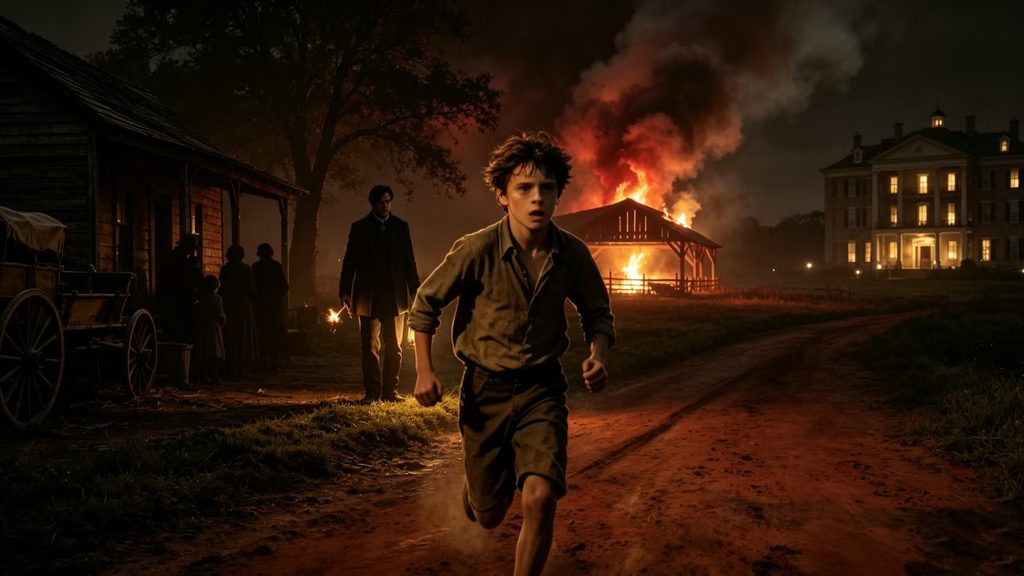
He ran, fast as his legs could carry him,
toward the big house.
“Barn! Barn!” he shouted to the major.
“He’s going to burn your barn!”
Then he kept running,
away from his father, away from the family.
Behind him, he heard gunshots crack through the dark.
He did not stop.
He climbed a hill and sat down,
trembling in the dawn light.
He had broken the rule of blood.
He had chosen what he believed was right.
He knew he could never go home again.
But for the first time,
he was free from the blind hatred that chained his father.
译文
治安官开庭的这间杂货铺里,
弥漫着奶酪、煤油与汗水混杂的气味。
萨蒂坐在一只钉子桶上,
看着父亲站在法官面前。
他全名是科洛内尔·萨托里斯·斯诺普斯,
大家都叫他萨蒂。
他十岁,
身形单薄,神经紧绷,
心脏在胸腔里剧烈跳动。
他的父亲阿布纳·斯诺普斯再次受审,
罪名是烧毁地主的马棚。
地主哈里斯先生,
抓到阿布纳私闯地界,并扬言要惩处他。
于是阿布纳用自己唯一懂得的方式报复:
纵火,隐秘而迅猛,
这是一个无权无势之人的武器。
萨蒂浑身发抖。
他知道法官接下来要问什么。
他知道他们会传唤他,
逼他出面指证自己的父亲。
血浓于水,
父亲已经跟他说过无数次。
你必须站在亲人这边,
不管旁人怎么做,不管是非对错。
这是他们家铁一般的规矩。
可萨蒂幼小的心被撕成两半。
他清楚烧马棚是错事。
他明白火焰里藏着恐惧与毁灭。
可这个人是他的父亲,
抱过他、养活他,是他血脉的源头。
哈里斯先生向法庭陈述经过。
他说起那次警告,
那场暗藏的大火,
被烧毁的马棚与干草。
法官低头看向阿布纳。
“证据不足,无法定罪,斯诺普斯。
你可以离开,
但是必须立刻搬出本县。
不许再回来。”
阿布纳一言不发。
面色僵硬冰冷,毫无愧色。
他转身走出铺子,
一家人跟在他身后。
萨蒂拖着步子跟在后头,
脚步沉重,内心纷乱。
当晚,他们在路边露宿。
阿布纳把萨蒂叫到跟前。
他用一双冷淡无神的眼睛俯视男孩。
“刚才在里面,你差点说出来,”他低声说。
“我看得出来。
你差点背叛自己的血亲。”
萨蒂抬头,说不出一句话。
“我跟你讲清楚,”阿布纳继续说。
血脉相连,就该彼此守望。
血缘之外,不存在什么公道。
富人、庄园主,全都和我们作对。
他们把我们踩在脚下。
火,就是我们的回应。”
萨蒂静静听着,
心底却无法认同这番话。
第二天,一家人来到一处新庄园。
新的地主是德斯潘少校,
一位富有温和的老上校。
阿布纳穿着沾满泥污的靴子,
踩进少校客厅昂贵的白色地毯。
地毯被污渍损毁。
德斯潘要求赔偿,
阿布纳断然拒绝。
他又一次谋划报复。
傍晚,他取来煤油和干柴。
打算把德斯潘精致的马棚烧成灰烬。
萨蒂看着父亲准备纵火。
旧日的恐惧再次涌上心头,
但此刻有一股更强大的力量:
他清清楚楚明白,这是恶行。
他拔腿狂奔,拼尽全力,
朝着大宅跑去。
“马棚!马棚!”他对着少校大喊。
“他要烧掉你的马棚!”
之后他继续奔跑,
逃离父亲,逃离这个家。
身后的黑暗里,传来几声枪响。
他没有停下。
爬上一座小山,静静坐下,
在晨光里不住颤抖。
他打破了血缘至上的规矩。
选择了自己心中的正义。
他知道自己再也回不去那个家。
但也是这一刻,
他挣脱了困住父亲的、盲目的仇恨。
🔍长难句赏析与拆解
原句一
Blood is thicker than water,
his father had told him a hundred times.
You have to stick to your own blood,
no matter what they do, no matter what is right.
句式解读
这是全文核心信条,是阿布纳扭曲的生存准则。
谚语“血浓于水”在这里被异化。
正常的亲情是温情,
在阿布纳这里变成凌驾是非的绝对命令。
这句话是萨蒂内心挣扎的根源:
从小被灌输这套逻辑,
但良知慢慢让他质疑。
短句有力,反复强调,刻画出父亲偏执的价值观。
句子主干
His father told him blood is thicker than water.
You must stick to your own blood.
原句二
He had broken the rule of blood.
He had chosen what he believed was right.
He knew he could never go home again.
But for the first time,
he was free from the blind hatred that chained his father.
句式解读
结尾点睛句,层层递进。
写出萨蒂艰难的精神成长:
主动放弃血缘庇护,承担代价。
他没有憎恨父亲,只是拒绝继承仇恨。
福克纳不做道德说教,
只是写出一个孩子独立人格的诞生。
chained 这个动词用得精妙,
把仇恨比作枷锁。
句子主干
He had broken the rule and chosen right.
He could not go home.
He was free from hatred.
📖全篇句式特点
采用小男孩萨蒂的有限视角叙事,
福克纳标志性的南方乡土叙事。
叙事节奏压抑紧绷,大量心理描写。
行文脉络:
法庭审判、萨蒂面临指证压力 → 父亲灌输血缘至上的信条 →
全家搬迁、来到新庄园→父亲蓄意破坏、
计划纵火 → 萨蒂内心挣扎、
选择告发 → 独自逃亡,完成精神觉醒。
文字带着南方乡土粗粝厚重的质感,
外部冲突(纵火、阶级矛盾)和内部心理冲突并行。
没有华丽辞藻,却充满情绪张力。
核心词汇
1. magistrate
/ˈmædʒɪstrət/
治安法官,地方官
名词(n.)
2. convict
/kənˈvɪkt/
定罪,宣判有罪
动词(v.)
3. trespass
/ˈtrespəs/
擅自进入,侵入地界
动词(v.)
4. kin
/kɪn/
亲属,家人
名词(n.)
5. plantation
/plɑːnˈteɪʃn/
种植园,庄园
名词(n.)
6. revenge
/rɪˈvendʒ/
报复,复仇
名词(n.)
7. kindling
/ˈkɪndlɪŋ/
引火木柴
名词(n.)
8. blind
/blaɪnd/
盲目的,无理性的
形容词(adj.)
9. chain
/tʃeɪn/
束缚,禁锢
动词(v.)
10. testify
/ˈtestɪfaɪ/
作证,指证
动词(v.)
📜文学赏析
《烧马棚》是福克纳约克纳帕塔法系列的入门经典。
故事扎根美国内战后的南方社会。
旧贵族庄园经济还在,底层白人佃农被挤压。
阿布纳·斯诺普斯是被社会碾压的失败者。
他无力对抗上层阶级,
只能用纵火这种原始暴力宣泄怨恨。
福克纳没有简单把阿布纳写成纯粹坏人。
他身上有底层人的苦难,也有自我毁灭式的偏执。
小说真正的主角是萨蒂。
他的成长不是和父亲决裂、互相敌视,
而是在亲情和良知之间,做出痛苦的道德抉择。
这篇小说也讨论:
苦难会不会赋予人作恶的权利?
血缘忠诚,是否可以凌驾普世道德?
💡主旨品读
小说核心探讨血缘忠诚与普遍良知的冲突。
亲情、血脉羁绊是人性里很强大的力量,
但它不该成为包庇恶行的借口。
父亲阿布纳困在阶级仇恨里,
把“血亲抱团”当成对抗世界的武器,
最终不断制造伤害,走向毁灭。
萨蒂的选择意味着:
一个人的道德判断,最终不能被家族立场绑架。
同情弱者,不等于认同弱者所有的报复行为。
成长的本质,就是学会独立分辨善恶,
哪怕这份清醒,要以失去家庭为沉重代价。
©英语数字智库 版权所有
未经权利人许可,不得转载、摘抄、复制、
二次编辑或商用分发,违者将依法追究法律责任。
请点击返回首页收录经典目录