
 由 英语数字智库
了解更多:考研英语:社会民生发展类词汇目录
作者:Shirley Jackson(雪莉·杰克逊)
首次出版:1948 年 6 月 26 日
首次收录于:《The New Yorker》《纽约客》
出版背景:美国,以杂志刊载形式推出
收录说明:刊载后于 1949 年收录进短篇小说集
《The Lottery and Other Stories》(《摸彩及其他故事》)
创作背景:
《抽彩》是雪莉·杰克逊最负盛名的短篇。
故事发表在二战之后,美国小镇看似宁静祥和。
村民每年夏天举行一场古老抽彩仪式。
所有人默认这是代代相传的传统,无人质疑。
抽彩的最终结果,是随机选出一名村民,被众人用石头砸死。
小说用平淡日常的笔调,写集体暴力与盲从。
它撕开温情小镇的假象,揭示盲目遵从传统的可怕。
这篇小说当年发表后引发巨大争议,很多读者愤怒退订杂志。
如今它是美国文学经典,反复讨论人性、群体心理、习俗之恶。
英文原文
The morning of June 27th was clear and sunny,
with the fresh warmth of a full-summer day;
the flowers were blossoming profusely
and the grass was richly green.
The people of the village began to gather in the square,
between the post office and the bank,
around ten o’clock;
in some towns there were so many people
that the lottery took two days
and had to start on June 26th,
but in this village,
where there were only about three hundred people,
the whole lottery took less than two hours,
so it could begin at ten o’clock in the morning
and still be through in time to allow the villagers
to get home for noon dinner.
The children assembled first,
of course.
School was recently over for the summer,
and the feeling of liberty sat uneasily on most of them;
they tended to gather together quietly for a while
before they broke into boisterous play.
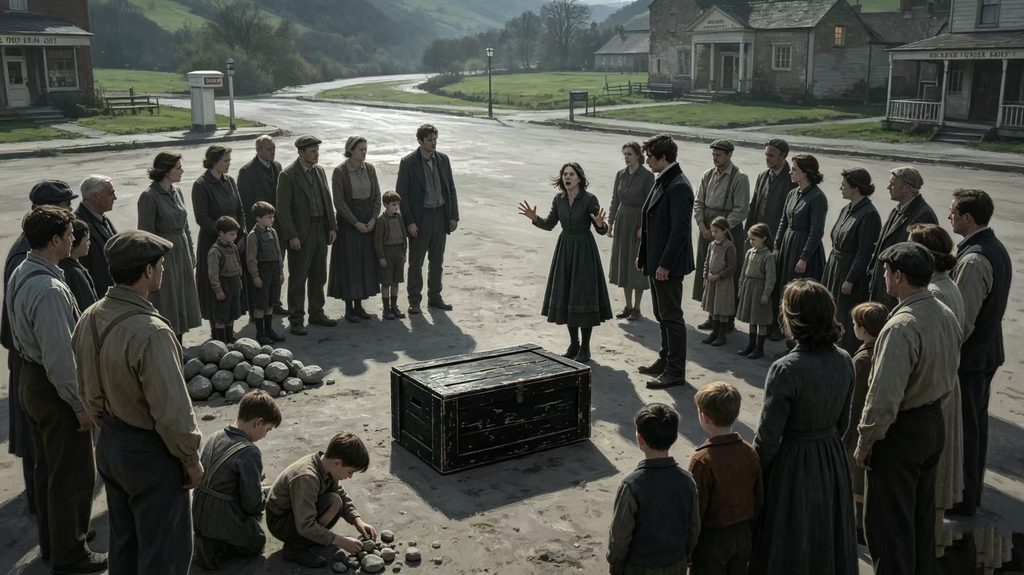
Bobby Martin had already stuffed his pockets full of stones,
and the other boys soon followed his example,
selecting the smoothest and roundest stones;
Bobby and Harry Jones and Dickie Delacroix
eventually made a great pile of stones in one corner of the square
and guarded it against the raids of the other boys.
The girls stood aside,
talking among themselves,
looking over their shoulders at the boys,
and the very small children rolled in the dust
or clung to the hands of their older brothers and sisters.
Soon the men began to gather,
surveying their own children,
speaking of planting and rain,
tractors and taxes.
They stood together,
away from the pile of stones in the corner,
and their jokes were quiet
and they smiled rather than laughed.
The women, wearing faded house dresses and sweaters,
came shortly after their menfolk.
They greeted one another and exchanged bits of gossip
as they went to stand beside their husbands.
Mr. Summers spoke frequently to the villagers
about making a new box,
but no one liked to upset even as much tradition
as was represented by the black box.
There was a story that the present box
had been made with some pieces of the box
that had preceded it,
the one that had been constructed
when the first people settled down to make a village here.
Every year, after the lottery,
Mr. Summers began talking again about a new box,
but every year the subject was allowed to fade off
without anything’s being done.
The black box grew shabbier each year;
by now it was no longer completely black
but splintered badly along one side
to show the original pale wood color.
“Thought we were going to have to get on without you, Tessie,”
Mrs. Hutchinson said,
grinning.
Tessie Hutchinson was in the center of a cleared space
by now,
and she waved her hand at Mrs. Hutchinson.
“Wouldn’t have me leave m’ dishes in the sink, now, would you, Joe?”
and soft laughter ran through the crowd
as the people stirred back to position after Mrs. Hutchinson’s arrival.
“Now, I’ll read the names,
and the heads of families come up and draw.”
A hush fell on the square.
One by one, men stepped forward,
reached into the worn black box,
and pulled out a folded slip of paper.
No one opened their paper yet.
When every family had drawn,
Mr. Summers called out for them to look.
A breathless pause hung over the crowd.
Bill Hutchinson stared at his slip,
then looked up quietly.
His family had drawn the marked paper.
Tessie Hutchinson’s voice rose in panic at once.
“It isn’t fair!
You didn’t give him enough time to pick the paper he wanted!”
People around her shook their heads.
“Be a good sport, Tessie.”
“All of us took the same chance.”
The villagers moved slowly toward the pile of stones.
Tessie stood in the open space,
her cries of protest thin and sharp
against the quiet, waiting faces of her neighbors.
The lottery was not a reward.
It was an old, cruel sacrifice,
carried out year after year,
simply because it had always been done.
译文
6月27日的清晨,晴朗明媚,
充盈盛夏时节清新温暖的气息;
鲜花肆意盛放,
草地浓郁翠绿。
村里的人们开始聚集在广场上,
就在邮局和银行之间,
大约十点钟。
有些镇子人口众多,
抽彩仪式要耗时两天,
得在26号就开始。
但这个村子,
只有大约三百人,
整场抽彩用不到两个小时,
上午十点开始,
还能赶在正午晚饭前结束。
最先到的自然是孩子们。
学校刚刚放暑假,
自由的感觉让大多数孩子心神不定。
他们先是安静聚在一起,
没多久就喧闹地追逐玩耍。
博比·马丁已经把口袋塞满石子,
其他男孩很快跟着效仿,
挑拣光滑圆润的石块。
博比、哈里·琼斯和迪基·德拉克鲁瓦
最后在广场一角堆起一大堆石头,
守着石堆,不让别的孩子抢走。
女孩们站在一旁,
互相闲聊,
回头望着男孩们,
年纪很小的孩子在尘土里打滚,
或是紧紧拽着哥哥姐姐的手。
很快,男人们陆续赶来,
照看自家孩子,
聊耕种、雨水、拖拉机和赋税。
他们站在一起,
远离角落的石堆,
玩笑轻声克制,
脸上只是浅笑,不大声开怀。
女人们穿着褪色居家裙衫、毛衣,
紧随丈夫们过来。
她们互相问好,闲聊几句闲话,
走到丈夫身边站定。
萨默斯先生常常和村民提起,
该做一个新箱子了。
但没人愿意打破这份传统,
哪怕只是换掉这个黑箱子。
有传言说,现在这个箱子,
用了更早旧箱子的木料打造,
那只旧箱子,
还是第一批定居建村的人做的。
每年抽彩结束之后,
萨默斯先生都会重提换新箱子,
可每一年,这件事最后都不了了之。
黑箱子一年比一年破旧。
如今它早已不是通体乌黑,
一侧开裂严重,
露出原木浅淡的底色。
“还以为今天等不到你了,泰西。”
哈钦森太太笑着说道。
泰西·哈钦森这时站到空地中央,
朝她挥了挥手。
“我总不能把碗丢在水槽里不管吧,乔?”
人群里响起轻轻的笑声,
哈钦森太太到场之后,
人们重新站回原位。
“现在,我念名字,
各家户主上前抽签。”
广场上一片寂静。
男人们依次走上前,
把手伸进老旧黑箱子,
抽出一张折叠纸条。
所有人暂时都没有打开纸条。
等每一户都抽完,
萨默斯先生示意大家查看。
人群屏息等待。
比尔·哈钦森盯着手里的纸条,
缓缓抬头。
中签的是他家。
泰西·哈钦森立刻惊慌地大喊起来。
“这不公平!
你根本没给他足够时间,选他想要的纸条!”
身边的村民纷纷摇头。
“泰西,认命一点。”
“大家机会都是一样的。”
村民慢慢朝着石堆走去。
泰西站在空地中央,
她的抗议声微弱尖利,
周围邻居神色平静,静静等候。
这场抽彩不是奖赏。
它是一场古老残酷的献祭,
年复一年重复上演,
只因为,历来如此。
🔍长难句赏析与拆解
原句一
The morning of June 27th was clear and sunny,
with the fresh warmth of a full-summer day;
the flowers were blossoming profusely
and the grass was richly green.
句式解读
开篇环境描写,用明媚平和的景物铺垫氛围。
明亮、温馨的田园小镇景象,
和后面血腥残酷的结局形成强烈反差。
杰克逊用美好的日常景象麻痹读者,
制造巨大的反转冲击力,是全文最经典的反衬手法。
分号连接两组画面,节奏舒缓,像普通乡村记事。
句子主干
The morning was clear and sunny.
Flowers were blossoming and grass was green.
原句二
It was an old, cruel sacrifice,
carried out year after year,
simply because it had always been done.
句式解读
全篇点睛句,简短有力,直击核心。
没有复杂修饰,冷静陈述残酷本质。
“历来如此”,就是盲从传统最常见的理由。
人们不去思考仪式的意义、对错,
仅仅因为代代相传,就默认它合理。
这一句话点破集体无意识的恶。
句子主干
It was a sacrifice.
It was carried out because it had always been done.
📖全篇句式特点
全文采用客观、冷静、不带情绪的纪实叙事口吻。
作者几乎不发表主观评判,
像一个旁观者记录小镇一场普通活动。
前半段大量铺陈日常细节:孩子玩耍、村民闲谈、准备抽签。
文字平淡温和,伪装成乡村民俗小故事。
行文脉络:
晴朗清晨村民聚集 → 孩子们捡拾石头 → 黑箱子、
旧传统的介绍 → 抽签、泰西中签 → 真相暴露、献祭开始。
平静叙事和惊悚结局形成极强反差,
这种“零度写作”,正是这篇小说最恐怖的地方。
核心词汇
1. profusely
/prəˈfjuːsli/
繁茂地,大量地
副词(adv.)
2. boisterous
/ˈbɔɪstərəs/
喧闹的,欢闹的
形容词(adj.)
3. splinter
/ˈsplɪntə(r)/
碎裂,裂开
动词(v.)
4. faded
/ˈfeɪdɪd/
褪色的,暗淡的
形容词(adj.)
5. hush
/hʌʃ/
寂静,安静
名词(n.)
6. panic
/ˈpænɪk/
恐慌,惊慌
名词(n.)
7. protest
/ˈprəʊtest/
抗议,申辩
名词(n.)
8. sacrifice
/ˈsækrɪfaɪs/
献祭,牺牲
名词(n.)
9. tradition
/trəˈdɪʃn/
传统,习俗
名词(n.)
10. unconscious
/ʌnˈkɒnʃəs/
无意识的
形容词(adj.)
📜文学赏析
《抽彩》是美国短篇文学史上里程碑式的作品。
雪莉·杰克逊没有写鬼怪、凶杀、暴力故事,
她的恐怖,来自普通人、普通小镇、普通习俗。
故事里的村民不是坏人,他们平时一起闲聊、过日子。
但当所有人一起遵从古老仪式,
个体良知就会被群体吞没。
人们习惯于服从代代延续的规矩,
不去追问传统是否合理、是否残忍。
这篇小说也隐喻很多现实:
群体偏见、从众暴力、刻板习俗、多数人的暴政。
小说最让人脊背发凉的一点:
作恶的不是某个恶人,而是一群普通人。
仪式本身没有神圣性,
仅仅依靠“大家一直这么做”维持它的残酷。
💡主旨品读
小说的核心,批判盲目从众与不加反思的传统。
很多习俗、规则,仅仅因为历史悠久,
就被人们不假思索地接纳、执行。
群体氛围会消解人的独立判断,
让普通人参与伤害他人的恶行。
泰西的反抗很有讽刺意味:
她不是一开始就反对抽彩,
只有厄运落到自己头上时,她才喊不公平。
当灾难属于别人,所有人都可以平静旁观。
这篇故事提醒我们:
独立思考、保持质疑,
拒绝不假思索地跟随集体,
警惕那些被包装成“传统”的恶。
©英语数字智库 版权所有
未经权利人许可,不得转载、摘抄、复制、
二次编辑或商用分发,违者将依法追究法律责任。
请点击返回首页收录经典目录