
 由 英语数字智库
了解更多:商务英语词汇目录
A Perfect Day for Bananafish《香蕉鱼的好日子》节选
作者:J. D. Salinger(杰罗姆·大卫·塞林格)
出版:1948年1月31日
收录集子:《Nine Stories》《九故事》
创作背景:
这是塞林格最具代表性的短篇之一。
作品以二战后美国社会为背景,
通过一个孩童般纯净的女孩与一名战后创伤男子的短暂相遇,
写尽喧嚣世俗中的孤独、创伤与难以言说的精神困境。
英文原文
It was a bright day in Florida,
and the hotel lobby was full of women and children.
Muriel’s mother was sitting by the window,
reading a magazine.
She looked up as Muriel came down the stairs.
“Where have you been?” she asked.
“Mother, I’ve been talking to Seymour,” Muriel said.
“He’s outside on the beach.”
Her mother frowned.
“Seymour? At this hour?
Isn’t he supposed to be resting?”
Muriel sat down beside her.
“He says he’s fine,” she said.
“He says the weather’s perfect today.”
Her mother put down her magazine.
“Muriel,
I wish you wouldn’t let him wander off alone.
You know how he is since the war.”
“I’m not his nurse, Mother,” Muriel said sharply.
“He’s my husband.”
Her mother sighed.
“I just don’t understand him.
One minute he’s laughing,
the next he’s quiet as a ghost.
Sometimes I think he’s still in France.”
Muriel lit a cigarette.
“He’s fine,” she repeated.
“He just likes to be alone sometimes.”
Her mother shook her head.
“Be careful, Muriel.
That boy’s not like other boys.”
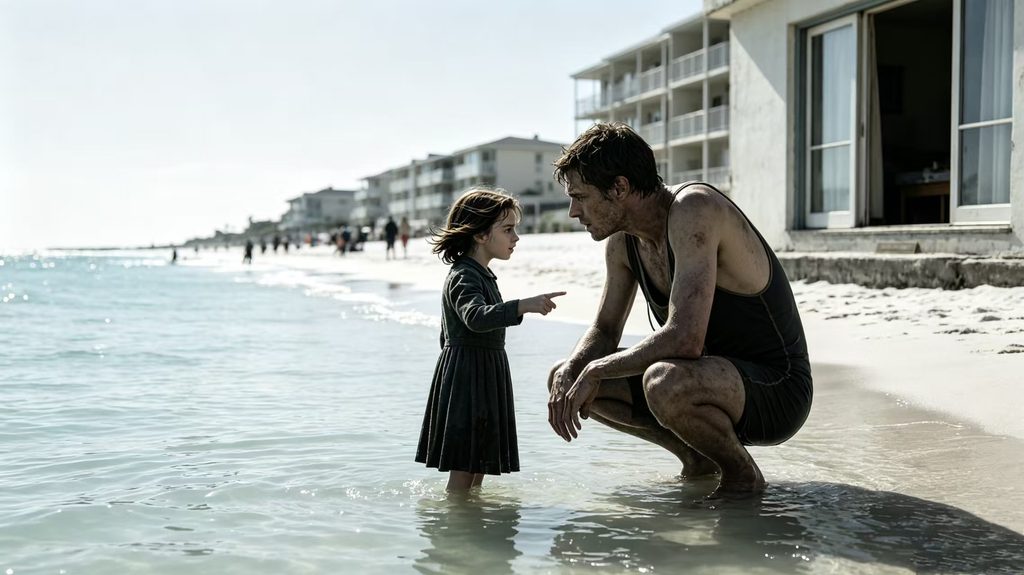
Seymour was standing at the edge of the ocean,
watching the waves.
He wore a dark bathing suit,
and his hair was wet from the sea breeze.
A little girl was building a sandcastle near him.
She looked up and smiled.
“Hello,” she said.
Seymour smiled back.
“Hello.”
“I’m Sybil,” she said.
“I’m six and a half.”
“I know,” Seymour said.
“You look exactly six and a half.”
Sybil stood up and brushed sand from her knees.
“Are you a soldier?” she asked.
Seymour laughed.
“No,” he said.
“I used to be, but I’m not anymore.”
“Why are you sad?” Sybil asked.
Seymour looked at her.
“I’m not sad,” he said.
“Then why don’t you talk to the other people?”
“Because I don’t like the other people,” Seymour said.
“I like the ocean.
I like watching the waves.”
Sybil pointed to the water.
“Look,” she said.
“A fish!”
Seymour looked where she pointed.
“Where?” he asked.
“There,” Sybil said.
“Right there.”
Seymour pretended to see it.
“Oh, yes,” he said.
“Very nice.”
“It’s a bananafish,” Sybil said.
Seymour knelt down.
“A bananafish?” he asked.
“What’s a bananafish?”
“They have bananas inside them,” Sybil said.
“They swim into banana holes and eat all the bananas.
Then they get too fat to swim out.
And then they die.”
Seymour stared at her.
“That’s terrible,” he said.
“Yes,” Sybil said.
“They’re very sad fish.”
Seymour sat on the sand.
“Tell me more about bananafish,” he said.
Sybil sat down beside him.
“They swim very fast,” she said.
“And they’re yellow.
But when they die, they turn blue.”
“Blue?” Seymour said.
“Yes,” Sybil said.
“Like the ocean.”
Seymour looked out at the water.
“The ocean’s not blue today,” he said.
“It is for bananafish,” Sybil said.
Seymour smiled.
“I guess it is,” he said.
Sybil put her hand on his arm.
“Will you take me swimming?” she asked.
“Now?” Seymour asked.
“Yes,” Sybil said.
“Please.”
Seymour stood up.
“All right,” he said.
“But you have to be careful.
The waves are strong today.”
Sybil clapped her hands.
“I love swimming!” she said.
They walked into the water together.
Seymour held Sybil’s hand.
She screamed with happiness as a wave broke around her ankles.
“Faster!” she said.
Seymour laughed.
“Not too fast,” he said.
“Your mother will be angry.”
Sybil pulled his hand.
“No, she won’t,” she said.
“She’s busy talking to the other mothers.”
They waded deeper.
Sybil floated on her back,
kicking her feet in the water.
Seymour watched her.
“You’re very brave,” he said.
“Braver than me.”
Sybil looked up at him.
“Why?” she asked.
“Because I’m afraid of things,” Seymour said.
“Afraid of what?”
“Afraid of the hotel,” Seymour said.
“Afraid of the people.
Afraid of the rooms and the walls and the voices.”
Sybil touched his chest.
“Don’t be afraid,” she said.
“I’m here.”
Seymour knelt down in the water.
“Thank you,” he said.
“Thank you, Sybil.”
They stayed in the water for a long time.
Sybil told him about her dolls,
her school,
her cat at home.
Seymour listened quietly.
He did not say much,
but he listened as if every word mattered.
When they came out of the water,
Sybil’s mother was waiting on the beach.
“Sybil!” she called.
“Where have you been?”
Sybil ran to her.
“I was swimming with the man,” she said.
“The man with the bananafish.”
Her mother looked at Seymour.
“Thank you,” she said coldly.
“Please don’t talk to strangers next time,” she said to Sybil.
Seymour stood alone on the beach.
He watched them walk away.
The ocean was quiet behind him.
The hotel was full of noise.
He turned and walked toward the hotel.
His footsteps were slow.
He did not look at anyone.
When he reached his room,
he closed the door behind him.
Muriel was lying on the bed,
reading a magazine.
She looked up.
“Seymour?” she said.
“Where have you been?”
Seymour did not answer.
He walked to the window and looked out.
The beach was still bright.
People were laughing.
Children were screaming.
Muriel sat up.
“Seymour,
are you all right?”
He turned around.
“I’m fine,” he said.
“I just saw the bananafish.”
Muriel stared at him.
“The bananafish?” she said.
“What are you talking about?”
Seymour smiled.
“They were very fat,” he said.
“Too fat to swim out.”
Muriel shook her head.
“You’re strange,” she said.
Seymour sat down on the edge of the bed.
“Am I?” he asked.
“Yes,” Muriel said.
“Sometimes I don’t know you.”
Seymour looked at her.
“You know me,” he said.
“You just don’t listen.”
Muriel lay back down.
“Tell me about the bananafish,” she said.
Seymour looked at the ceiling.
“They swim into banana holes,” he said.
“They eat all the bananas.
Then they can’t get out.
And then they die.”
Muriel lit another cigarette.
“That’s a terrible story,” she said.
“Yes,” Seymour said.
“It is.”
He paused.
“Muriel?”
“Yes?”
“Nothing,” he said.
“Never mind.”
Muriel went back to her magazine.
Seymour stood up and walked to the window again.
The ocean was still there.
The waves kept coming.
He watched them for a long time.
Then he turned around.
“Muriel,” he said.
“Put on your pretty dress.”
Muriel looked up.
“Why?” she asked.
“Because we’re going out,” he said.
“Where?”
“Just out,” he said.
“For a walk.”
Muriel sighed.
“All right,” she said.
“If it makes you happy.”
She got up and went into the bathroom.
Seymour stood by the window.
He did not move.
The ocean was very calm now.
Somewhere outside,
a child was laughing.
He closed his eyes.
For a moment,
he was back in the water.
He was swimming with Sybil.
The bananafish were swimming around them.
They were very fat.
They could not get out.
He opened his eyes.
The room was quiet.
Muriel was in the bathroom.
He walked to the closet and took out his pistol.
He held it in his hand for a long time.
Then he sat down on the chair by the window.
The ocean was still bright.
The waves were still coming.
He looked at the pistol.
Then he looked out at the ocean.
“Too fat to swim out,” he said softly.
He put the pistol to his temple.
The ocean did not stop.
The waves kept coming.
The hotel was still full of noise.
And somewhere,
a little girl was still talking about bananafish.
译文
佛罗里达的一天,阳光明亮。
酒店大堂里满是女人和孩子。
穆里尔的母亲坐在窗边,
读一本杂志。
她看见穆里尔走下楼,便抬起头。
“你去哪儿了?”她问。
“妈妈,我刚和西摩聊了一会儿。”穆里尔说。
“他现在在外面的海滩上。”
母亲皱起眉。
“西摩?这个时候?
他不是应该休息吗?”
穆里尔在她身边坐下。
“他说他没事。”她说。
“他说今天天气好极了。”
母亲放下杂志。
“穆里尔,
我希望你别让他一个人乱跑。
你知道他战后一直是这个样子。”
“我不是他的护士,妈妈。”穆里尔尖锐地说。
“他是我的丈夫。”
母亲叹了口气。
“我只是不理解他。
一会儿笑,
一会儿又安静得像个幽灵。
有时候我觉得他还在法国。”
穆里尔点燃一支烟。
“他没事。”她重复道。
“他只是有时候喜欢一个人待着。”
母亲摇摇头。
“小心点,穆里尔。
那孩子和别的孩子不一样。”
西摩站在海边,
望着海浪。
他穿一件深色泳衣,
海风吹湿了他的头发。
一个小女孩在他附近堆沙堡。
她抬起头,笑了。
“你好。”她说。
西摩也笑了。
“你好。”
“我叫西比尔。”她说。
“我六岁半。”
“我知道。”西摩说。
“你看起来正好六岁半。”
西比尔站起来,拍掉膝盖上的沙子。
“你是士兵吗?”她问。
西摩笑了。
“不是。”他说。
“我以前是,但现在不是了。”
“那你为什么难过?”西比尔问。
西摩看着她。
“我不难过。”他说。
“那你为什么不和别人说话?”
“因为我不喜欢别人。”西摩说。
“我喜欢大海。
我喜欢看浪。”
西比尔指向水面。
“你看。”她说。
“一条鱼!”
西摩看向她指的方向。
“哪儿?”他问。
“那儿。”西比尔说。
“就在那儿。”
西摩假装看见了。
“哦,是的。”他说。
“真漂亮。”
“那是香蕉鱼。”西比尔说。
西摩跪下来。
“香蕉鱼?”他问。
“香蕉鱼是什么?”
“它们肚子里有香蕉。”西比尔说。
“它们游进香蕉洞,
把所有香蕉都吃光。
然后胖得游不出来。
然后就死了。”
西摩盯着她。
“真可怕。”他说。
“是的。”西比尔说。
“它们是很伤心的鱼。”
西摩坐在沙滩上。
“再给我讲讲香蕉鱼。”他说。
西比尔坐在他旁边。
“它们游得很快。”她说。
“而且是黄色的。
但死了以后,就会变成蓝色。”
“蓝色?”西摩说。
“是的。”西比尔说。
“像大海一样。”
西摩望向水面。
“今天的海不是蓝色。”他说。
“对香蕉鱼来说是。”西比尔说。
西摩笑了。
“我想是的。”他说。
西比尔把手放在他手臂上。
“你带我游泳吗?”她问。
“现在?”西摩问。
“是的。”西比尔说。
“求你了。”
西摩站起来。
“好吧。”他说。
“但你要小心。
今天浪很大。”
西比尔拍手。
“我喜欢游泳!”她说。
他们一起走进水里。
西摩牵着西比尔的手。
一个浪拍在她脚踝上,
她开心地尖叫起来。
“快一点!”她说。
西摩笑了。
“别太快。”他说。
“你妈妈会生气的。”
西比尔拉着他的手。
“不会的。”她说。
“她正忙着和别的妈妈聊天。”
他们往深处走。
西比尔仰浮在水面上,
双脚踢着水花。
西摩看着她。
“你很勇敢。”他说。
“比我勇敢。”
西比尔抬头看他。
“为什么?”她问。
“因为我害怕很多东西。”西摩说。
“怕什么?”
“怕酒店。”西摩说。
“怕人。
怕房间、怕墙、怕声音。”
西比尔摸摸他的胸口。
“别害怕。”她说。
“我在这儿。”
西摩在水里跪下来。
“谢谢你。”他说。
“谢谢你,西比尔。”
他们在水里待了很久。
西比尔给他讲自己的娃娃,
学校,
家里的猫。
西摩安静地听着。
他话不多,
但听得很认真,
仿佛每个字都很重要。
当他们走出水面时,
西比尔的妈妈正在海滩上等她。
“西比尔!”她喊道。
“你去哪儿了?”
西比尔跑向她。
“我和那个男人一起游泳。”她说。
“那个讲香蕉鱼的男人。”
妈妈看向西摩。
“谢谢。”她冷冷地说。
“下次别和陌生人说话。”她对西比尔说。
西摩独自站在海滩上。
他看着她们走远。
身后的大海很安静。
酒店里满是喧闹。
他转身朝酒店走去。
脚步很慢。
他没有看任何人。
回到房间后,
他关上门。
穆里尔躺在床上,
看杂志。
她抬起头。
“西摩?”她说。
“你去哪儿了?”
西摩没有回答。
他走到窗边,向外看。
海滩依旧明亮。
人们在笑。
孩子在叫。
穆里尔坐起来。
“西摩,
你没事吧?”
他转过身。
“我没事。”他说。
“我刚看见香蕉鱼了。”
穆里尔盯着他。
“香蕉鱼?”她说。
“你在说什么?”
西摩笑了。
“它们很胖。”他说。
“胖得游不出来。”
穆里尔摇摇头。
“你真奇怪。”她说。
西摩坐在床边。
“是吗?”他问。
“是的。”穆里尔说。
“有时候我都不认识你。”
西摩看着她。
“你认识我。”他说。
“你只是不听。”
穆里尔重新躺下。
“给我讲讲香蕉鱼。”她说。
西摩望着天花板。
“它们游进香蕉洞。”他说。
“把所有香蕉都吃光。
然后就出不来了。
然后就死了。”
穆里尔又点了一支烟。
“真可怕。”她说。
“是的。”西摩说。
“是这样。”
他停了一下。
“穆里尔?”
“嗯?”
“没什么。”他说。
“算了。”
穆里尔继续看杂志。
西摩又站起来,走到窗边。
大海还在那里。
浪还在来。
他看了很久。
然后转过身。
“穆里尔。”他说。
“穿上你漂亮的裙子。”
穆里尔抬起头。
“为什么?”她问。
“因为我们要出去。”他说。
“去哪儿?”
“只是出去走走。”他说。
穆里尔叹了口气。
“好吧。”她说。
“只要你开心。”
她起身走进浴室。
西摩站在窗边。
他没有动。
海面现在很平静。
外面某个地方,
有孩子在笑。
他闭上眼睛。
有那么一瞬间,
他回到了水里。
他和西比尔一起游泳。
香蕉鱼游在他们周围。
它们很胖。
它们出不来。
他睁开眼睛。
房间很安静。
穆里尔在浴室里。
他走到衣橱前,
取出手枪。
他在手里握了很久。
然后坐在窗边的椅子上。
大海依旧明亮。
浪还在来。
他看看手枪。
然后望向大海。
“胖得游不出来。”他轻声说。
他把手枪对准太阳穴。
大海没有停。
浪还在来。
酒店依旧喧闹。
而某个地方,
一个小女孩还在讲着香蕉鱼的故事。
🔍长难句赏析与拆解
原句一
It was a bright day in Florida,
and the hotel lobby was full of women and children.
句式解读
and连接并列句,
前半句交代时间与环境,
后半句迅速建立人物场域。
画面感清楚,为后续对话与心理冲突提供背景。
句子主干
It was a bright day, and the lobby was full of women and children.
原句二
They swam into banana holes and ate all the bananas.
Then they got too fat to swim out.
And then they died.
句式解读
三句均为简单句,
连续推进,节奏像孩童讲故事。
“too…to…”结构表结果,
简洁点明香蕉鱼的命运。
句子主干
They swam into banana holes and ate all the bananas.
They got too fat to swim out.
They died.
原句三
He did not say much,
but he listened as if every word mattered.
句式解读
but连接并列句,
后一句包含as if引导方式状语从句。
用外在沉默与内在专注形成反差,
刻画人物孤独而敏感的精神状态。
句子主干
He did not say much, but he listened.
📖全篇句式特点
全文以简洁对话和短句为主,
穿插叙述性长句。
语言表面平静克制,
深层情绪压抑复杂。
大量使用and、but等并列词推进场景。
对话日常自然,
却暗含人物之间的疏离与误解。
叙事节奏由明亮海滩逐渐转向安静房间,
情绪由童真、短暂温暖滑向孤独与沉默。
适合精读对话体叙事、方式状语从句、象征式细节描写。
核心词汇
1. lobby
/ˈlɒbi/
大堂,前厅
名词(n.)
2. frown
/fraʊn/
皱眉,表示不满
动词(v.)
3. wander
/ˈwɒndə(r)/
闲逛,游荡
动词(v.)
4. breeze
/briːz/
微风,海风
名词(n.)
5. pretend
/prɪˈtend/
假装,佯装
动词(v.)
6. wade
/weɪd/
涉水,趟水
动词(v.)
7. float
/fləʊt/
漂浮,浮起
动词(v.)
8. temple
/ˈtempl/
太阳穴
名词(n.)
9. calm
/kɑːm/
平静的,安静的
形容词(adj.)
10. matter
/ˈmætə(r)/
要紧,有重要意义
动词(v.)
📜文学赏析
《香蕉鱼的好日子》是塞林格式孤独叙事的代表。
故事表层是轻松的佛罗里达海滩,
内里却是一个战后创伤男子无法被世俗理解的精神世界。
西摩与西比尔的海边相遇,
是全篇最纯净的段落。
西比尔用孩子的语言讲香蕉鱼,
西摩却从这童话般的想象中,
照见自己被困境困住、无法突围的命运。
故事的可怕之处,
不在于激烈冲突,
而在于安静。
酒店里的人声、母亲的担忧、妻子的麻木,
都围绕着西摩,
却没有人真正进入他的内心。
香蕉鱼因此成为核心象征:
被欲望或困境困住,
胖得游不出去,
最终安静地死去。
塞林格没有用夸张的悲剧写法,
而是以明亮环境反衬人物内心的阴冷,
以童真对话反衬成年世界的疏离。
这种轻与重、明与暗的反差,
形成了故事极强的张力。
💡主旨品读
选文借香蕉鱼的寓言,
写尽现代人的精神困境。
西摩不是单纯的悲伤,
而是被战后经验、世俗喧嚣和亲密误解围困。
他能在孩子那里得到短暂理解,
却无法回到成人世界。
故事真正探讨的,
是创伤之后如何重新面对生活。
当外界只要求你“正常”“开心”“休息一下”,
有些痛苦却连语言都无法表达。
香蕉鱼的结局,
正是这种无法言说的困境的象征。
塞林格用一个看似平淡的短篇,
写出了战争留给一代人的精神伤痕,
也写出了人与人之间永远无法完全抵达的孤独。
即便在最明亮的日子里,
有些人依然被困在自己的香蕉洞里。
请点击返回首页收录经典目录