
 由 英语数字智库
了解更多:英语四六级分类词汇短语目录
The Story of an Hour《一小时的故事》
作者:Kate Chopin(凯特·肖邦)
首次出版:1894 年 12 月 6 日
首次收录于:《Vogue》《时尚》
出版背景:美国,以杂志刊载形式推出
收录说明:无专属原始单行短篇集,后广泛收录于各类文学选本
补充:首发原题为《The Dream of an Hour》,
后重印定名《The Story of an Hour》《一小时的故事》。
创作背景:
这是美国女性文学里程碑式的短篇。
故事讲述路易丝得知丈夫遇难的消息,
在一小时之内,
从悲痛慢慢觉醒,
体会到婚姻枷锁之外独立自由的狂喜。
结局突如其来的反转极具冲击力,
大胆叩问十九世纪婚姻制度对女性自我的禁锢,
探讨自由、身份与生命价值的沉重命题。
英文原文
Knowing that Mrs. Mallard was afflicted with a heart trouble,
great care was taken to break to her as gently as possible
the news of her husband’s death.
It was her sister Josephine who told her,
in broken sentences;
veiled hints that revealed in half concealing.
Her husband’s friend Richards was there, too,
near her.
It was he who had been in the newspaper office
when intelligence of the railroad disaster was received,
with Brently Mallard’s name leading the list of “killed.”
He had only taken the time
to assure himself of its truth by a second telegram,
and had hastened to forestall any less careful,
less tender friend in bearing the sad message.
She did not hear the story as many women have heard the same,
with a paralyzed inability to accept its significance.
She wept at once,
with sudden, wild abandonment,
in her sister’s arms.
When the storm of grief had spent itself
she went away to her room alone.
She would have no one follow her.
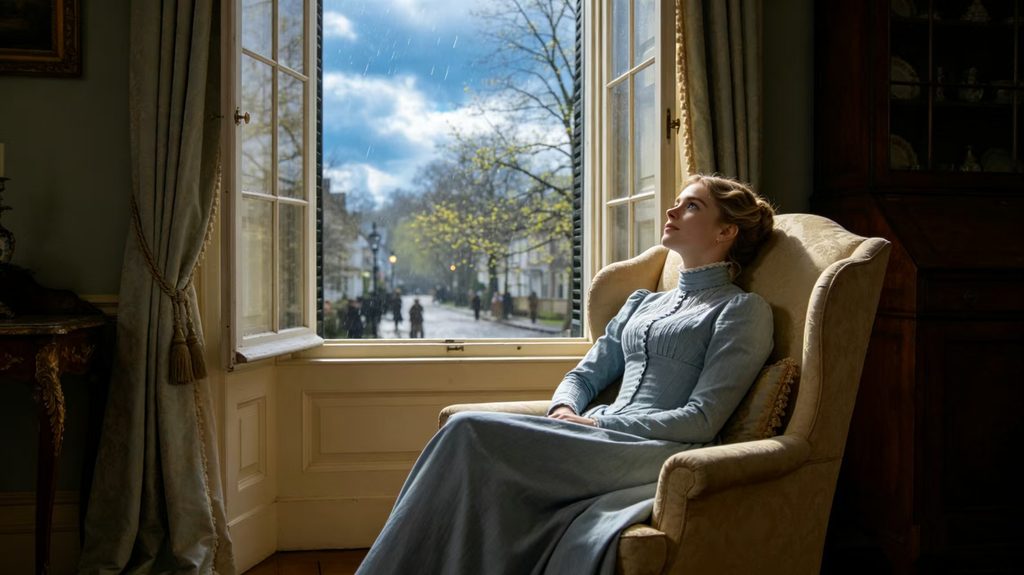
There stood,
facing the open window,
a comfortable, roomy armchair.
Into this she sank,
pressed down by a physical exhaustion
that haunted her body and seemed to reach into her soul.
She could see in the open square before her house
the tops of trees that were all aquiver with the new spring life.
The delicious breath of rain was in the air.
In the street below a peddler was crying his wares.
The notes of a distant song which some one was singing reached her faintly,
and countless sparrows were twittering in the eaves.
There were patches of blue sky showing here and there
through the clouds that had met and piled one above the other
in the west facing her window.
She sat with her head thrown back upon the cushion of the chair,
quite motionless,
except when a sob came up into her throat and shook her,
as a child who has cried itself to sleep continues to sob in its dreams.
She was young,
with a fair, calm face,
whose lines bespoke repression and even a certain strength.
But now there was a dull stare in her eyes,
whose gaze was fixed away off yonder on one of those patches of blue sky.
It was not a glance of reflection,
but rather indicated a suspension of intelligent thought.
There was something coming to her and she was waiting for it,
fearfully.
What was it?
She did not know;
it was too subtle and elusive to name.
But she felt it,
creeping out of the sky,
reaching toward her through the sounds,
the scents,
the color that filled the air.
Now her bosom rose and fell tumultuously.
She was beginning to recognize this thing
that was approaching to possess her,
and she was striving to beat it back with her will—
as powerless as her two white slender hands would have been.
When she abandoned herself
a little whispered word escaped her slightly parted lips.
She said it over and over under her breath:
“free, free, free!”
The vacant stare and the look of terror that had followed it went from her eyes.
They stayed keen and bright.
Her pulses beat fast,
and the coursing blood warmed and relaxed every inch of her body.
She did not stop to ask
if it were or were not a monstrous joy that held her.
A clear and exalted perception enabled her
to dismiss the suggestion as trivial.
She knew that she would weep again
when she saw the kind, tender hands folded in death;
the face that had never looked save with love upon her,
fixed and gray and dead.
But she saw beyond that bitter moment
a long procession of years to come
that would belong to her absolutely.
And she opened and spread her arms out to them in welcome.
There would be no one to live for her during those coming years;
she would live for herself.
There would be no powerful will bending hers
in that blind persistence
with which men and women believe
they have a right to impose a private will upon a fellow-creature.
“Free! Body and soul free!” she kept whispering.
Josephine was kneeling before the closed door
with her lips to the keyhole,
imploring for admission.
“Louise, open the door!
I beg; open the door—you will make yourself ill.
What are you doing, Louise?
For heaven’s sake open the door.”
“Go away.
I am not making myself ill.”
No;
she was drinking in a very elixir of life through that open window.
She arose at length and opened the door to her sister’s importunities.
There was a feverish triumph in her eyes,
and she carried herself unwittingly like a goddess of Victory.
She clasped her sister’s waist,
and together they descended the stairs.
Richards stood waiting for them at the bottom.
Some one was opening the front door with a latchkey.
It was Brently Mallard who entered,
a little travel-stained,
composedly carrying his gripsack and umbrella.
He had been far from the scene of accident,
and did not even know there had been one.
He stood amazed at Josephine’s piercing cry;
at Richards’ quick motion to screen him from the view of his wife.
But Richards was too late.
When the doctors came they said she had died
of heart disease—of joy that kills.
译文
大家都知道马拉德夫人患有心脏病,
所以大家小心翼翼,
尽量委婉地告知她丈夫离世的噩耗。
是姐姐约瑟芬告诉她消息的,
话语断断续续;
半遮半掩的暗示,
欲说还休。
丈夫的朋友理查兹也在一旁。
当初报社收到铁路事故消息,
遇难名单首位就是布伦特里·马拉德,
理查兹当时就在报社。
他立刻再发一封电报核实消息属实,
便急忙赶来,
生怕别的人冒失,
粗鲁地把噩耗带给她。
她不像很多女人听到死讯那样,
浑身僵住,无法接受现实。
她立刻痛哭起来,
失控地扑在姐姐怀里。
等这一阵悲痛的风暴慢慢平息,
她独自回到房间。
她不想任何人跟着。
窗前摆着一把宽大舒适的扶手椅。
她瘫坐进去,
一股深深的疲惫裹挟着她,
沉重地压在身上,仿佛浸透灵魂。
透过敞开的窗户,
她能看见屋外广场上的树梢,
在春日里轻轻颤动,焕发新生。
空气中弥漫着雨后清新湿润的气息。
楼下街上小贩沿街叫卖。
远处有人哼唱的歌声隐约飘来,
还有无数麻雀在屋檐下叽叽喳喳。
西边的云层层层堆叠,
云隙间,一片片蓝天露出来。
她头靠在椅垫上,一动不动,
只有喉咙里时不时涌上哽咽,让她微微颤抖,
就像哭累睡着的孩子,梦里依旧断断续续抽泣。
她还年轻,面容温和沉静,
脸上的纹路藏着长久压抑,
也藏着一份韧性。
可此刻她眼神空洞,
目光落在远处那片蓝天之上。
这不是沉思的眼神,
更像是思绪暂时停滞。
有什么东西正向她靠近,
她惶恐地等待着。
那是什么?
她说不清楚。
它太过微妙缥缈,难以名状。
但她能感受到,
它自天际缓缓漫来,
借着周遭的声响、气息与色彩,一点点向她靠拢。
她胸口起伏剧烈。
她渐渐明白,
有一样东西将要占据她;
她努力用意志抗拒,
可她苍白纤细的双手,绵软无力。
当她不再抵抗,
一句低语轻轻从微张的唇边溜出。
她反复低声默念:
“自由,自由,自由!”
空洞的眼神和随之而来的恐惧慢慢消散。
目光变得清亮敏锐。
脉搏急促跳动,
奔流的暖意淌遍全身,舒展了每一寸筋骨。
她没有去思索,
这份攫住自己的欢喜,
是不是一种可怕的狂喜。
一种通透昂扬的感知,
让她觉得这种疑虑微不足道。
她知道,
等看见丈夫那双温柔善良、永远爱着她的手冰冷地交叠,
看见他灰白僵硬的脸庞,
她依旧会落泪。
但在这份痛苦之外,
她望见往后漫长岁月,
完完全全属于她自己。
她张开双臂,迎接这样的未来。
往后的日子里,
她不必再为别人而活;
她只为自己活着。
再也不会有一种强势意志,强迫顺从。
很多人固执地认为,
自己有权把个人意愿强加在另一个人身上。
“自由!身心皆自由!”她不停低语。
约瑟芬跪在紧闭的房门外,嘴唇贴着钥匙孔,
苦苦央求她开门。
“路易丝,开门!求你了,快开门——你会伤到自己。
你在里面干什么?看在上帝的份上,开门!”
“走开。我没事。”
恰恰相反,
她正透过这扇窗,汲取生命的甘露。
终于,在姐姐不停的恳求下,她起身拉开房门。
她眼中带着热烈的喜悦,
不自觉地像一位胜利女神。
她挽住姐姐的腰,
两人一同走下楼梯。
理查兹在楼下等着她们。
有人用钥匙打开前门。
走进来的正是布伦特里·马拉德。
他风尘仆仆,
平静地拎着手提包和雨伞。
事故发生时他根本不在现场,
甚至不知道出过这场灾难。
约瑟芬失声尖叫,理查兹急忙上前挡住他,
不让马拉德夫人看见。
可是理查兹,还是晚了一步。
医生赶来的时候说,她死于心脏病——
死于一场杀死她的狂喜。
🔍长难句赏析与拆解
原句一
Knowing that Mrs. Mallard was afflicted with a heart trouble,
great care was taken to break to her as gently as possible
the news of her husband’s death.
句式解读
句首是现在分词作原因状语,
内部嵌套that引导宾语从句;
主句为被动句式,
交代故事开端的前提,
为结尾的悲剧埋下伏笔。
主干:Great care was taken to break the news.
原句二
She was young,
with a fair, calm face,
whose lines bespoke repression and even a certain strength.
句式解读
whose引导非限制性定语从句,修饰face;
用来写出人物长期压抑的内在状态,
外表平静和内心被禁锢形成对照。
主干:She was young, with a fair, calm face.
原句三
There would be no powerful will bending hers
in that blind persistence
with which men and women believe
they have a right to impose a private will upon a fellow-creature.
句式解读
with which引导定语从句修饰persistence;
句子点明故事核心思考:
人们常常自以为有权支配他人意志。
主干:There would be no powerful will bending hers.
📖全篇句式特点
文本节奏层次分明。
开篇克制平缓交代噩耗;
中段大量环境烘托、心理描写,
长短句交错,缓缓释放路易丝内心压抑许久的渴望;
高潮部分短句反复呐喊free,情绪爆发力极强;
结尾极简一句话反转,戛然而止。
作者不直白评判婚姻,
依靠心理变化和结尾反转制造震撼感。
适合学习分词状语、定语从句、心理叙事写法。
🔖核心词汇
1. afflict
/əˈflɪkt/
折磨,使受病痛
动词(v.)
2. veil
/veɪl/
遮掩,掩饰
动词(v.)
3. forestall
/fɔːˈstɔːl/
抢先阻止,预先防备
动词(v.)
4. aquiver
/əˈkwɪvə(r)/
颤动的,抖动的
形容词(adj.)
5. elusive
/ɪˈluːsɪv/
难以捉摸的,难以捕捉的
形容词(adj.)
6. tumultuously
/tjuːˈmʌltʃuəsli/
剧烈地,纷乱地
副词(adv.)
7. exalted
/ɪɡˈzɔːltɪd/
昂扬的,崇高的
形容词(adj.)
8. procession
/prəˈseʃn/
一连串,一系列
名词(n.)
9. impose
/ɪmˈpəʊz/
强加,迫使接受
动词(v.)
10. elixir
/ɪˈlɪksə(r)/
琼浆,甘露
名词(n.)
📜文学赏析
《一小时的故事》是美国女性文学经典短篇。
故事仅仅浓缩在一小时之内:
从得知丈夫死亡的悲痛,
到独自在房间里慢慢觉醒,
品尝到独立自由的狂喜,
最后丈夫活着归来,她骤然离世。
肖邦没有塑造激烈抗争的女性形象,
而是写出一种隐秘的渴望:
在那个时代,婚姻看似安稳体面,
却悄悄吞噬女性独立的自我。
路易丝对丈夫并无恨意,
她甚至承认自己爱过他。
但她向往的,是完完全全属于自己的人生。
结尾的反讽力量是全文的点睛之笔。
旁人都以为她是欢喜过度猝死,
可读者清楚,
摧毁她的不是喜悦,
而是刚刚触碰到的自由瞬间崩塌。
💡主旨品读
小说想要表达:
真正的自由,是拥有支配自己生命的权利。
很多看似温情的亲密关系,
也会在无形之中束缚个体。
路易丝短暂的觉醒,
是一个被压抑的女性灵魂对自主人生的向往。
这个悲剧揭露:
当自由仅仅是一场短暂的幻梦,
梦醒之时,生命也随之熄灭。
©英语数字智库 版权所有
未经权利人许可,不得转载、摘抄、复制、
二次编辑或商用分发,违者将依法追究法律责任。
请点击返回首页收录经典目录