
 由 英语数字智库
了解更多:考研英语:法律政治政策类词汇目录
作者:Franz Kafka 弗朗茨·卡夫卡
首次出版:1913 年 5 月
首次收录于:《Arkadia》《阿卡迪亚》(文学年鉴)
出版背景:德国,以文学年鉴刊载形式推出
收录说明:首发收录于年鉴《Arkadia》《阿卡迪亚》,
1916 年秋季由 Kurt Wolff Verlag 单独出版单行本
补充:原作德文名《Das Urteil》,为卡夫卡通宵写成的标志性短篇。
创作背景:
《判决》是卡夫卡一夜通宵写成的巅峰短篇。
作品以扭曲的父子关系为核心,
用极致荒诞的日常冲突,
展现父权压迫与现代人的精神崩溃。
英文原文
It was a Sunday morning in the very height of spring.
Georg Bendemann,
a young merchant of twenty-one years old,
stood by the window of his upper room,
looking out over the river that wound through the quiet town.
He had just finished composing a long letter
to his oldest friend who had emigrated to St. Petersburg years before.
This friend had struggled for a long time in a foreign land.
He had failed in business again and again,
fallen into loneliness,
and gradually cut himself off from all connections back home.
Georg had lived a stable and smooth life in comparison.
He took over part of his family’s trading business,
ran the store steadily,
and recently got engaged to a local young woman.
He intended to share his happy news with his distant friend,
yet hesitation lingered in his heart.
He feared his own prosperity and happiness
would deeply hurt the lonely, frustrated man abroad.
After pacing back and forth for a long while,
he overcame his unease.
He believed sincere friendship allowed no concealment.
True friends ought to witness each other’s joys and sorrows.
Before sealing and sending the letter,
he decided to pay a visit to his aging father,
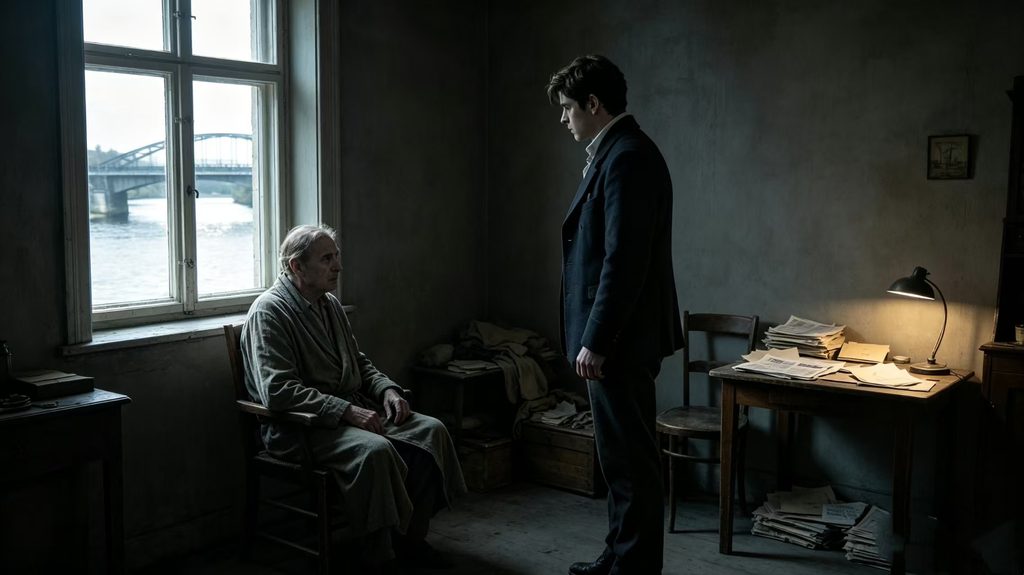
who lived alone in the dim room downstairs.
The bright spring sunlight filled the outer world,
but his father’s chamber remained gloomy and cold.
Tall walls blocked most of the daylight.
The old man sat rigidly beside the window,
his eyes dim with age,
half leaning over an old newspaper he could barely read.
His body was weak and withered,
yet his aura still carried heavy oppression.
Georg greeted his father gently,
and told him about the letter and his upcoming marriage.
He spoke softly and respectfully,
hoping to gain his father’s blessing.
Unexpectedly,
the father’s calm attitude vanished in an instant.
He raised his head sharply,
his eyes sharp and harsh.
He accused Georg of hypocrisy and deception.
He claimed Georg always hid the truth,
looked down on his aging father,
and pretended to be honest and filial.
Every gentle explanation from Georg
only aroused fiercer anger from his father.
The old man overturned all of Georg’s pride and happiness.
He denied his son’s friendship,
denied his career achievements,
and denied his right to pursue marriage and joy.
Trapped in the narrow dark room,
Georg felt an overwhelming sense of suffocation.
He had no way to argue,
no way to resist.
In a trembling, thunderous voice,
his father delivered the cruelest sentence of his life.
“You were an innocent child once,
but you have grown into a hateful, selfish human being.
Now, I sentence you to death by drowning.”
The terrifying judgment struck Georg like a heavy blow.
He lost all power of thought and resistance.
He rushed frantically out of the dark room,
ran through the corridor,
burst out of the house,
and hurried straight toward the river bridge.
He climbed over the bridge railing without hesitation.
In the noisy flow of Sunday traffic,
he let his body fall into the rushing river below.
译文
时值暮春,一个和煦的周日清晨。
二十一岁的年轻商人格奥尔格·本德曼,
站在楼上房间的窗边,
眺望蜿蜒穿过静谧小镇的河流。
他刚刚写完一封长信,
寄给多年前移民去往圣彼得堡的挚友。
这位友人在异国他乡挣扎多年。
生意屡屡受挫,
深陷孤独之中,
渐渐断绝了与家乡所有的往来。
相比之下,格奥尔格的人生安稳顺遂。
他接手家族部分贸易生意,
店铺经营得稳稳当当,
近期还与当地一位年轻女子订了婚。
他本想将这份喜讯告知远方的友人,
心底却始终犹豫不定。
他怕自己的顺遂与幸福,
会深深刺痛那位落魄孤寂的异乡人。
他在屋内来回踱步许久,
终于放下内心的不安。
他认为真挚的友谊不该有隐瞒。
真正的朋友,本就该共享悲欢。
在封缄寄信之前,
他决定前去看望独居在楼下昏暗房间的老父亲。
屋外满是明媚的春光,
父亲的房间却依旧阴冷幽暗。
高高的院墙遮挡了绝大部分日光。
老人僵硬地坐在窗边,
双眼因年迈变得浑浊,
半俯着身看着一张几乎看不清字迹的旧报纸。
他身形枯弱苍老,
周身却萦绕着沉重的压迫感。
格奥尔格温柔地向父亲问好,
告知了写信的缘由,还有自己即将成婚的喜讯。
他语气温和、态度恭敬,
希望能得到父亲的祝福。
出乎意料,
父亲平和的神态瞬间消失殆尽。
他猛地抬头,
目光凌厉凶狠。
他斥责格奥尔格虚伪狡诈,
指责他刻意隐瞒实情,
轻视年迈的父亲,
假意装作乖巧孝顺。
格奥尔格每一次温和的解释,
只会激起父亲更盛的怒火。
老人全盘推翻了格奥尔格的所有骄傲与幸福。
否定他的友情,
否定他的事业成就,
否定他追求婚姻、拥抱美好的权利。
被困在狭小昏暗的房间里,
格奥尔格感到极致的窒息。
他无从辩驳,
无力反抗。
父亲用颤抖却雷霆般的声音,
宣判了他一生最残酷的刑罚。
“你曾经是个天真的孩子,
可如今你已然变成自私可憎的人。
现在,我宣判你,投河溺亡。”
这恐怖的判决如惊雷砸在格奥尔格身上。
他彻底丧失了思考与反抗的能力。
他疯狂冲出幽暗的房间,
穿过走廊,
奔出家门,
径直朝着河桥狂奔而去。
他毫不犹豫爬上桥栏。
在周日喧闹的车流之中,
纵身坠入脚下湍急的河水。
🔍长难句赏析与拆解
原句一
He had just finished composing a long letter
to his oldest friend who had emigrated to St. Petersburg years before.
句式解读
who引导限制性定语从句,修饰人物;
过去完成时铺垫故事背景,叙事节奏平缓克制。
句子主干
He had just finished composing a long letter.
原句二
He feared his own prosperity and happiness
would deeply hurt the lonely, frustrated man abroad.
句式解读
省略that的宾语从句作宾语;
通过心理描写,体现主角温柔隐忍的性格,铺垫后文悲剧。
句子主干
He feared his prosperity and happiness would hurt the man.
原句三
In a trembling, thunderous voice,
his father delivered the cruelest sentence of his life.
句式解读
状语前置强化画面张力;
最高级结构突出判决的残酷与毁灭性,是全文核心高潮句。
句子主干
His father delivered the cruelest sentence.
📖全篇句式特点
全文长短句精准交错排布。
开篇大量舒缓长句铺陈环境、人物处境与心理,
营造平和日常的假象。
冲突爆发后短句密集紧凑,
节奏急促压抑,层层收紧情绪。
全篇无激烈血腥描写,
用克制冷静的书面句式,
烘托精神碾压、父权窒息的荒诞悲剧感,
是卡夫卡典型的冷漠叙事风格。
核心词汇
1. emigrate
/ˈemɪɡreɪt/
移居,移民
动词(v.)
2. prosperity
/prɒˈsperəti/
顺遂,繁荣
名词(n.)
3. concealment
/kənˈsiːlmənt/
隐瞒,隐匿
名词(n.)
4. gloomy
/ˈɡluːmi/
昏暗的,阴郁的
形容词(adj.)
5. oppression
/əˈpreʃn/
压迫,压抑
名词(n.)
6. hypocrisy
/hɪˈpɒkrəsi/
虚伪,伪善
名词(n.)
7. filial
/ˈfɪliəl/
孝顺的
形容词(adj.)
8. overwhelming
/ˌəʊvəˈwelmɪŋ/
极致的,压倒性的
形容词(adj.)
9. sentence
/ˈsentəns/
宣判,判决
动词(v.)
📜文学赏析
《判决》是卡夫卡心理荒诞小说的标杆之作。
故事依托简单的日常父子对话展开,
没有外部灾难,没有现实恩怨,
却完成了彻底的精神毁灭。
年迈衰弱的父亲,
拥有绝对的精神支配权,
仅凭语言就可以全盘否定儿子的人生。
表面明媚的春日场景,
与室内幽暗窒息的精神空间形成极致反差。
温和孝顺的儿子毫无征兆走向死亡,
极致荒诞的结局,
精准揭露了畸形父权关系对人性的吞噬。
💡主旨品读
小说深刻揭露畸形的家庭权力压迫。
精神层面的碾压,远比肉体暴力更加致命。
个体在绝对权威之下,
自我认知会彻底崩塌,
甚至主动服从荒诞的致命判决。
卡夫卡借父子悲剧,
诠释现代人深层的精神困境、自我虚无与宿命式的绝望,
展现了工业时代个体无处挣脱的精神枷锁。
©英语数字智库 版权所有
未经权利人许可,不得转载、摘抄、复制、
二次编辑或商用分发,违者将依法追究法律责任。
请点击返回首页收录经典目录