
 由 英语数字智库
了解更多:雅思:交通出行基建类词汇目录
Misery《苦恼》
作者:安东·契诃夫(Anton Chekhov)
首次出版:1886 年
首次发表刊物:《彼得堡报》(Peterburgskaya Gazeta)
出版背景:俄国原版刊印,后世多次校勘再版。
多国译本与双语选编版本广泛流传。
收录说明:该版本为原著定本,
讲述马车夫约纳丧子之后,遍寻路人倾诉却无人理睬,
最后只能把满腹苦恼讲给马儿听。
以极简故事写尽人间冷漠与孤独,是契诃夫短篇现实主义的经典。
创作背景:
十九世纪后期沙皇俄国,
底层小人物饱尝生活重压与人情淡漠。
契诃夫借一个马车夫的遭遇,
温柔又悲凉地叩问人心,描摹底层无处安放的孤独与悲哀。
英文原文
The twilight of a snowy evening.
The coachman, Iona Potapov,
is all white as a ghost,
sits on his box, bent double,
hardly moving in the cold.
His little mare,
also white and motionless,
stands beside him,
her head drooping,
thin legs straight as sticks.
They have been standing a long time.
Before the office doors opened,
Iona had driven out,
and now he has not had a single fare.
Now the evening mist falls.
The noisy streets grow quieter,
the lamps begin to glow.
Iona sits and sits,
while the snow covers his back and shoulders.
At last a passenger gets in.
“To Vyborgskaya!”
says a young officer,
“quick! Make haste!”
Iona starts,
and from under his long lashes
looks sideways at the passenger.
The officer wraps himself in his greatcoat,
and Iona cracks the whip.
The mare moves off,
slowly at first,
then faster.
Iona glances back,
but the passenger closes his eyes,
evidently not wishing to talk.
Iona tries to speak:
“My son, sir,
died this week.”
The officer does not hear,
or does not wish to reply.
He merely says:
“Drive on!
I shall be late.”
Iona drives,
and his eyes wander over the crowd.
The people pass by,
hurrying, laughing, quarrelling.
No one notices him.
His heart is heavy,
he longs to speak,
to tell someone that his son is dead.
At last another fare.
A fat merchant gets in.
“To Okhta!”
he cries,
and jumps into the sleigh.
Iona turns,
and tries again:
“My son, sir,
died this week.”
The merchant nods,
but says nothing.
Iona drives on,
and his misery grows.
He looks at the people,
and feels more alone.
Another passenger.
Two officers pass,
and Iona calls to them.
They stop,
and Iona speaks again:
“My son, sir,
died this week.”
But they hurry away,
without a word.
Iona is left alone.
The snow falls thicker.
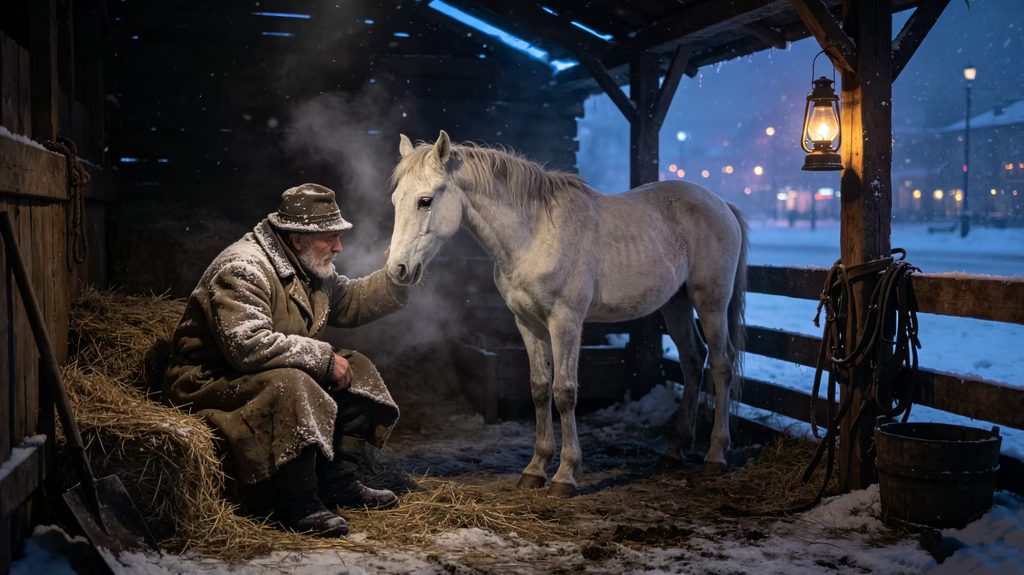
His little mare stands still,
and Iona sits,
bent double,
his head on his chest.
He cannot bear it any longer.
He gets down,
goes to the stable,
and finds his horse.
The mare looks at him,
and Iona speaks to her:
“My son,
died this week.
Do you understand?
My son is dead,
and I am alone.”
The mare chews the hay,
and listens,
and breathes warmly on his hand.
Iona cries,
and tells her everything.
No one else would listen.
译文
雪夜的黄昏。
车夫约纳·波塔波夫,
浑身雪白,像个幽灵,
坐在车座上,身子弯成一团,
在严寒中几乎一动不动。
他的小母马,
也同样雪白,同样静止,
站在他身旁,
低着头,
细腿直得像木棍。
他们已经站了很久。
办公室开门之前,
约纳就已出车,
可直到现在,还没有一个乘客。
夜幕渐渐落下。
喧闹的街道变得安静,
路灯开始亮起。
约纳坐着,坐着,
雪花覆盖了他的后背和肩膀。
终于来了一位乘客。
“去维堡区!”
一位年轻军官说,
“快!快点!”
约纳一惊,
从长长的睫毛下
侧眼看了看乘客。
军官裹紧大衣,
约纳扬起鞭子。
母马动身了,
起初很慢,
随后加快。
约纳回头张望,
但乘客闭着眼睛,
显然不想说话。
约纳试着开口:
“先生,我的儿子,
这周死了。”
军官没有听见,
或是不愿回答。
他只说:
“继续赶!
我要迟到了。”
约纳继续赶车,
目光扫过人群。
人们来来往往,
匆忙、说笑、争吵。
没有人注意他。
他心情沉重,
渴望开口,
告诉别人他的儿子死了。
终于又来了一位乘客。
一个胖商人上了车。
“去奥赫塔!”
他喊着,
跳上雪橇。
约纳转过身,
再次试着开口:
“先生,我的儿子,
这周死了。”
商人点点头,
但什么也没说。
约纳继续赶车,
苦恼越来越重。
他看着人群,
感到更加孤独。
又有乘客经过。
两位军官走来,
约纳叫住他们。
他们停下,
约纳再次开口:
“先生,我的儿子,
这周死了。”
但他们一言不发,匆匆离开。
约纳再次孤身一人。
雪下得更大了。
小母马静静站着,
约纳坐着,身子弯成一团,
头垂在胸前,他再也受不了了。
他下了车,走进马厩,
找到他的马。
母马望着他,约纳对她说:
“我的儿子,这周死了。
你明白吗?我的儿子死了,
而我孤身一人。”
母马嚼着干草,听着,
温暖的气息呼在他手上。
约纳哭了,把一切都告诉了她。
没有别人愿意听。
🔍长难句赏析与拆解
原句:
The coachman, Iona Potapov,
is all white as a ghost,
sits on his box, bent double,
hardly moving in the cold.
句式解读:
简短同位语加连续状态描写,
用极少词勾勒人物外貌、姿态和处境。
“bent double”与“hardly moving”强化身心重压,
适合短篇人物开篇。
句子主干:
The coachman sits on his box.
原句:
His heart is heavy,
he longs to speak,
to tell someone that his son is dead.
句式解读:
短句递进,从心情到渴望再到核心事实,
情绪层层下沉,克制却有冲击力。
适合表达人物无法言说的孤独。
句子主干:
His heart is heavy and he longs to speak.
文学赏析
《苦恼》是契诃夫1886年的经典短篇,
写的不是惊天动地的悲剧,
而是一个丧子车夫无人倾听的孤独。
约纳失去了儿子,整个城市却照常运转。
乘客赶时间,商人忙着办事,路人匆匆而过,
没有人真正停下来听他说话。
契诃夫用冷静近乎冷淡的笔触,
把城市的喧闹和人物的沉默对照起来。
约纳一次次开口,又一次次咽下,
他的痛苦不是爆发出来的,
而是在反复被忽略中慢慢沉底。
故事最残忍的地方,不是死亡本身,
而是人在人群中竟找不到一个倾听者。
最后,约纳只能向马倾诉,
动物的沉默反而比人的冷漠更接近安慰。
这篇小说写尽了底层小人物的尊严与孤独,
也写出了现代城市中人与人之间的距离。
写作迁移点拨
适合写作主题:孤独、倾听、城市冷漠、小人物的痛苦、无法言说。
高分仿写:
In a crowded city,
the loudest grief is often the one
no one stops to hear.
仿写运用:
适合记叙文结尾与议论文开头,
用反差表达都市孤独与情感疏离。
📖全篇句式特点
以短句和状态描写为主,
叙事平静,情绪压在水面下。
人物语言极少,大量动作和神态推进故事,
契诃夫式的克制,让悲剧更真实沉重。
核心词汇
1. twilight
/ˈtwaɪlaɪt/
黄昏,暮色
名词 (n.)
2. coachman
/ˈkəʊtʃmən/
车夫
名词 (n.)
3. bent
/bent/
弯曲的
形容词 (adj.)
4. motionless
/ˈməʊʃnəs/
一动不动的
形容词 (adj.)
5. droop
/druːp/
低垂,下垂
动词 (v.)
6. passenger
/ˈpæsɪndʒə(r)/
乘客
名词 (n.)
7. long
/lɒŋ/
渴望,盼望
动词 (v.)
8. misery
/ˈmɪzəri/
苦恼,痛苦
名词 (n.)
9. alone
/əˈləʊn/
孤独的,独自一人的
形容词 (adj.)
10. listen
/ˈlɪsn/
倾听
动词 (v.)
💡主旨品读
《苦恼》真正写的,
不是一个车夫的丧子之痛,
而是痛苦需要被看见。
人在巨大的悲伤面前,
最需要的也许不是安慰,
而是有人愿意停下,听一听。
约纳一次次开口,
不是为了博取同情,
而是为了确认自己还活在人与人的联系之中。
然而城市太忙,人们太急,
没有人把他的痛苦当回事。
最后他向马倾诉,
不是因为马最懂他,
而是因为只有马没有走开。
契诃夫借此告诉我们:
真正可怕的不是孤独本身,
而是身处人群,却连说出痛苦的机会都没有。
©英语数字智库 版权所有
未经权利人许可,不得转载、摘抄、复制、
二次编辑或商用分发,违者将依法追究法律责任。
请点击返回首页收录经典目录