
 由 英语数字智库
了解更多:考研英语:社会民生发展类词汇目录
Les Misérables《悲惨世界》节选
作者:维克多·雨果(Victor Hugo)
首次出版:1862 年 3 月 30 日(布鲁塞尔首发)
首次发表刊物:A. Lacroix, Verboeckhoven & Cie(布鲁塞尔)
出版背景:法国原版刊印,后世多次校勘再版。
多国译本与双语选编版本广泛流传。
收录说明:该版本为原著定本节选,
围绕冉阿让一生的救赎与挣扎展开,
串联起芳汀、珂赛特等众多底层人物的命运。
宏大的时代画卷交织人性光辉与苦难,
是一部饱含悲悯情怀的史诗巨作。
创作背景:
十九世纪法国历经多次革命与动荡,
底层民众饱受贫困与压迫。
雨果借这部作品同情苦难者,
呼唤仁慈、正义与人性的救赎力量。
英文原文
Jean Valjean stepped out of the gates of the galleys at Toulon.
Nineteen long years had slipped away since that night when he broke a shop window
and snatched a loaf of bread to feed his sister’s starving children.
He had been sentenced to five years for theft.
Punished again and again for trying to escape,
his sentence stretched on and on,
until nineteen years of chains, hard labour and bitter suffering were behind him.
He carried a yellow passport, the mark of an ex‑convict.
Everywhere he went, this paper told strangers who he was.
He was free by law, yet he was not free at all.
Society had forgiven nothing.
He walked into the quiet town of Digne, hungry and worn out.
He knocked at inn after inn, begging for a bed and a piece of bread.
But the innkeepers read his passport,
stared at his rough face and heavy shoulders,
and drove him away without mercy.
No family would open their door to him.
Even the guard at the prison refused to shelter him.
A dog snapped at him and chased him from its kennel.
Night fell over the little town.
Cold wind swept the empty streets.
Jean Valjean sank down onto a stone bench in front of the church.
He thought that the whole world rejected him.
Crime had made him a prisoner,
and punishment had turned his heart hard and full of rage.
He believed that kindness no longer existed among men.
At that moment, an old woman found him shivering there.
She listened to his story,
and told him to knock at the house of Bishop Myriel.
Bishop Myriel was known across Digne for his gentle heart.
He gave away nearly all his money to the poor.
When Jean Valjean entered his simple home,
the bishop greeted him calmly, without fear or disgust.
He set food on the table, poured wine,
and prepared a soft bed for the tired wanderer.
Valjean watched him in disbelief.
He had expected hatred, suspicion and insults,
but never such quiet, unguarded goodness.
After everyone in the house fell asleep,
Jean Valjean lay awake for hours.
Nineteen years of anger rose up inside him.
His eyes fell on the fine silver plates and candlesticks on the cupboard.
A wild thought took hold of his mind.
He slipped quietly across the room,
gathered the silver into his sack,
and fled from the house into the dark countryside.
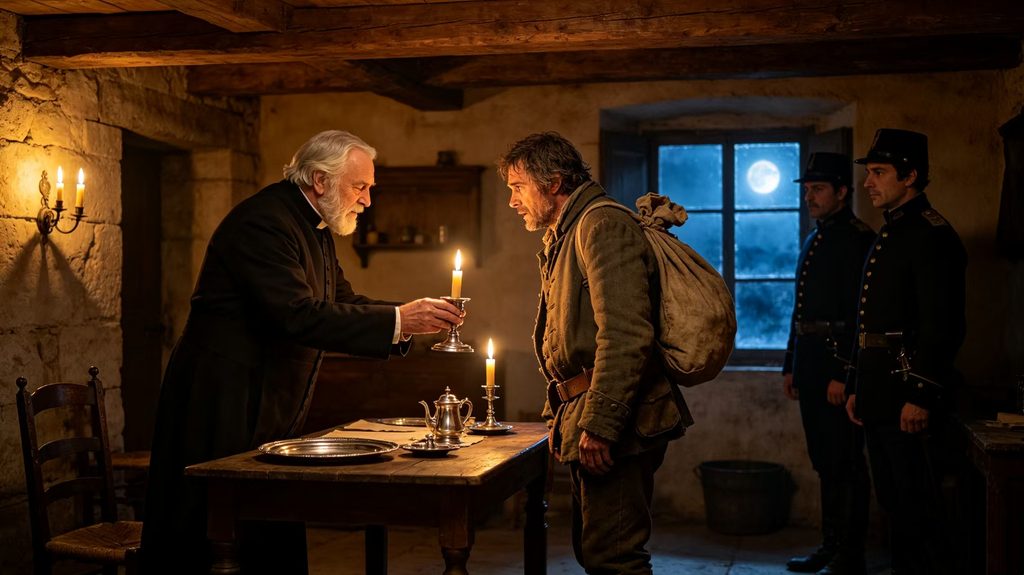
Before dawn, two policemen caught him on the road.
They saw the stolen silver,
and brought him straight back to the bishop’s home.
Jean Valjean was certain he would be sent back to the galleys forever.
He stood with his head bowed, waiting for the terrible sentence.
But Bishop Myriel walked toward him with a warm smile.
“Ah, there you are!” the bishop said.
“I gave you the silver candlesticks as well.
Why did you forget to take them with the plates?”
The policemen were stunned.
They had expected the bishop to cry out for justice.
Instead, he claimed the silver was a gift.
The officers could do nothing but let Jean Valjean go.
When the policemen left, the bishop spoke softly to Valjean.
“Jean Valjean, my brother, no longer belong to evil.
This silver I give you, to become an honest man.
I buy your soul for God.
From this hour, you must put away all bitter thoughts and hatred.”
Jean Valjean walked away from Digne in silence.
He held the heavy silver in his hands,
and his mind was in turmoil.
For nineteen years, the world had only struck him down.
Now this holy man had forgiven his theft and trusted him.
He sat down beside the country road,
and for the first time since his arrest,
he burst into tears.
The hard shell around his heart began to crack.
He did not yet know what his new life would bring.
He did not know about Cosette, about Javert,
or all the struggles still waiting ahead.
But in that moment, a faint light had entered the darkness of his soul.
译文
冉阿让走出土伦苦役监狱的大门。
十九年漫长岁月,从那个夜晚开始:他砸碎店铺橱窗,
只为抢一块面包,养活姐姐快要饿死的孩子们。
最初他因盗窃被判五年苦役。
一次次越狱,换来一次次加刑,
刑期不断拉长,
就这样,锁链、重劳役与无尽苦楚,耗去了整整十九年。
他随身带着一张黄色通行证,这是前科犯的烙印。
无论走到哪里,这张纸片都会向陌生人揭露他的身份。
法律上他重获自由,可他根本没有真正的自由。
社会丝毫没有宽恕他。
他走到宁静的迪涅小镇,饥寒交迫,疲惫不堪。
他一家一家旅店敲门,只求一张床铺、一口面包。
但店主看见通行证,
打量着他粗犷的面容、宽厚的肩膀,
毫不留情地把他赶走。
没有一户人家愿意为他开门。
就连监狱看守也拒绝收留他。
一条狗朝他狂吠,把他从狗窝边赶开。
夜幕笼罩小镇。
冷风扫过空旷街道。
冉阿让瘫坐在教堂前的石凳上。
他觉得整个世界都抛弃了自己。
罪行让他沦为囚徒,
残酷的惩罚又把他的心打磨得坚硬、充满怨愤。
他不再相信人间还有善意。
就在这时,一位老妇人发现了瑟瑟发抖的他。
听完他的遭遇,
老妇人指引他去敲米里哀主教家的门。
米里哀主教在迪涅远近闻名,心地仁厚。
他几乎把自己全部钱财都接济穷人。
当冉阿让走进朴素的小屋,
主教平静地接待他,没有恐惧,也没有厌恶。
他端上食物,斟好葡萄酒,
为这个疲惫的流浪者铺好柔软的床铺。
冉阿让难以置信地看着这一切。
他预想的只有敌意、猜忌与辱骂,
从未见过这样坦然、毫无防备的善意。
等到屋里所有人沉沉睡去,
冉阿让久久无法入眠。
十九年积压的怒火在心底翻涌。
他目光落在橱柜上精致的银盘与银烛台上。
一个疯狂的念头攫住了他。
他悄悄穿过房间,
把银器装进布袋,
趁着夜色逃出小屋,奔向郊外。
黎明之前,两名巡警在路上截住了他。
巡警看见赃银,
直接把他押回主教家中。
冉阿让认定自己会被重新送回苦役牢,永无出头之日。
他垂着头站在原地,等待残酷的宣判。
可米里哀主教面带温和的笑容走向他。
“啊,你回来了!”主教说道,
“我把银烛台一并送给你的,
怎么只拿走盘子,忘了带上烛台?”
巡警大为震惊。
他们原本以为主教会高声要求严惩窃贼。
没想到主教却说这些银器本就是赠礼。
巡警没有理由继续扣押,只能放走冉阿让。
警察离开之后,主教轻声对冉阿让说:
“冉阿让,我的兄弟,你不再属于邪恶。
这些银子送给你,去做一个诚实的人。
我把你的灵魂从黑暗赎回来,交给上帝。
从今往后,你要放下所有怨恨与戾气。”
冉阿让默默离开迪涅。
沉甸甸的银器握在手中,
内心翻江倒海。
十九年来,这个世界只有打击与伤害。
而今这位圣洁的老人宽恕了偷窃,选择信任他。
他在乡间路边坐下,
被捕之后这是第一次,
泪水奔涌而出。
包裹心灵那层坚硬外壳,开始裂开缝隙。
他尚且不知道前路会是什么样的人生。
他还不知道珂赛特,不知道沙威,
不知道往后所有磨难与挣扎。
但就在这一刻,一束微光照进了他灵魂深处的黑暗。
🔍长难句赏析与拆解
原句:
He carried a yellow passport, the mark of an ex‑convict.
Everywhere he went, this paper told strangers who he was.
He was free by law, yet he was not free at all.
句式解读:
the mark of an ex‑convict 是同位语,解释 yellow passport;
who 引导宾语从句;yet 转折短句短促有力,形成强烈反差。
短短三句写出一个核心悲剧:法律释放了他,偏见依旧囚禁着他。
句子主干:
He carried a yellow passport.
This paper told strangers who he was.
He was free, yet not free.
原句:
Nineteen long years had slipped away since that night when he broke a shop window
and snatched a loaf of bread to feed his sister’s starving children.
句式解读:
since 引导时间状语从句,when 定语从句修饰 night;
不定式 to feed 点明偷窃的初衷。
叙事克制,一句话交代全部悲剧源头,奠定悲悯基调。
句子主干:
Nineteen years had slipped away since that night.
文学赏析
《悲惨世界》是雨果1862年出版的经典社会长篇小说。
本段选取全书开篇最核心的片段:
冉阿让刑满释放、受尽排挤,遇见米里哀主教。
这一节是全书精神的起点,整本书的善恶、救赎主题全部由此生发。
雨果写出了一种残酷的现实:
贫穷催生过错,惩罚制造仇恨,社会偏见会持续压榨底层人。
主教没有用法律、暴力去报复偷窃行为,
而是用无条件的善意完成灵魂救赎。
这里形成两组强烈对照:
世人的排挤冷漠,和主教的宽容慈悲;
冉阿让心中的仇恨黑暗,和善意带来的微光。
雨果想要探讨:真正改造人的不是牢狱与刑罚,而是怜悯、宽恕与爱。
后面珂赛特的养育、沙威一生的执念、
巴黎街垒的抗争,全部建立在这次灵魂转变之上。
写作迁移点拨
适合写作主题:宽恕与救赎、偏见、
善良的力量、社会公平、苦难与人的选择。
高分仿写:
Punishment may bind the body,
yet only mercy can set the wounded soul free.
仿写运用:
适合议论文探讨善意、宽容,用来写救赎、人性觉醒类作文。
📖全篇句式特点
叙事节奏舒缓厚重,长句交代背景,短句冲击情绪;
大量同位语、定语从句、状语从句交替使用。
语言庄重克制,贴合原著悲悯深沉的文风,
没有晦涩古英语,适合英文精读讲义。
先铺陈世间的冷酷排挤,再慢慢转入主教的温柔善意,
情绪由冷转暖,转折极具力量。
核心词汇
1. convict
/ˈkɒnvɪkt/
囚犯,前科犯
名词 (n.)
2. galley
/ˈɡæli/
苦役船,苦役监狱
名词 (n.)
3. passport
/ˈpɑːspɔːt/
通行证,护照
名词 (n.)
4. bishop
/ˈbɪʃəp/
主教
名词 (n.)
5. turmoil
/ˈtɜːmɔɪl/
混乱,心绪纷乱
名词 (n.)
6. snatch
/snætʃ/
抢夺
动词 (v.)
7. mercy
/ˈmɜːsi/
怜悯,仁慈
名词 (n.)
8. disbelief
/ˌdɪsbɪˈliːf/
难以置信
名词 (n.)
9. hatred
/ˈheɪtrɪd/
憎恨,怨恨
名词 (n.)
10. shelter
/ˈʃeltə(r)/
庇护,收留
动词 (v.)
💡主旨品读
这一段告诉我们:贫穷催生的过错,
常常会被社会无休止地追责。
牢狱可以惩罚行为,
却很难抚平心里的伤痛、化解心底的恨意。
米里哀主教的伟大,不在于他没有看见偷窃的罪行,
而在于他选择超越惩罚,给予犯错之人重新做人的机会。
救赎不是纵容罪恶,
而是相信人性之中依然存有向善的可能。
这束微光落在冉阿让身上,从此改变他一生,
也引出整部宏大史诗里所有关于苦难、爱与正义的思考。
©英语数字智库 版权所有
未经权利人许可,不得转载、摘抄、复制、
二次编辑或商用分发,违者将依法追究法律责任。
请点击返回首页收录经典目录