
 由 英语数字智库
了解更多:托福:商业管理类词汇目录
The Little Match Girl《卖火柴的小女孩》节选
作者:汉斯·克里斯蒂安·安徒生(Hans Christian Andersen)
首次出版:1845 年 12 月 21 日
首次发表刊物:《丹麦历书》
出版背景:丹麦原版刊印,后世多次校勘再版。
多国译本与双语选编版本广泛流传。
收录说明:
圣诞夜大雪纷飞,一个小女孩赤脚走在寒冷街头卖火柴。
没有人买她的火柴,她不敢回家,害怕遭到父亲打骂。
她一次次擦亮火柴,在微光里看见温暖的火炉、丰盛晚餐与圣诞树。
最后,她见到最疼爱自己的奶奶,奶奶带她飞向没有苦难的地方。
第二天清晨,人们发现小女孩冻僵在街角,脸上还带着幸福的微笑。
创作背景:
当时底层贫苦儿童常常忍受饥饿与严寒。
安徒生用凄美的童话打动读者。
让我们看见苦难里最后的希望,懂得怜悯与温柔。
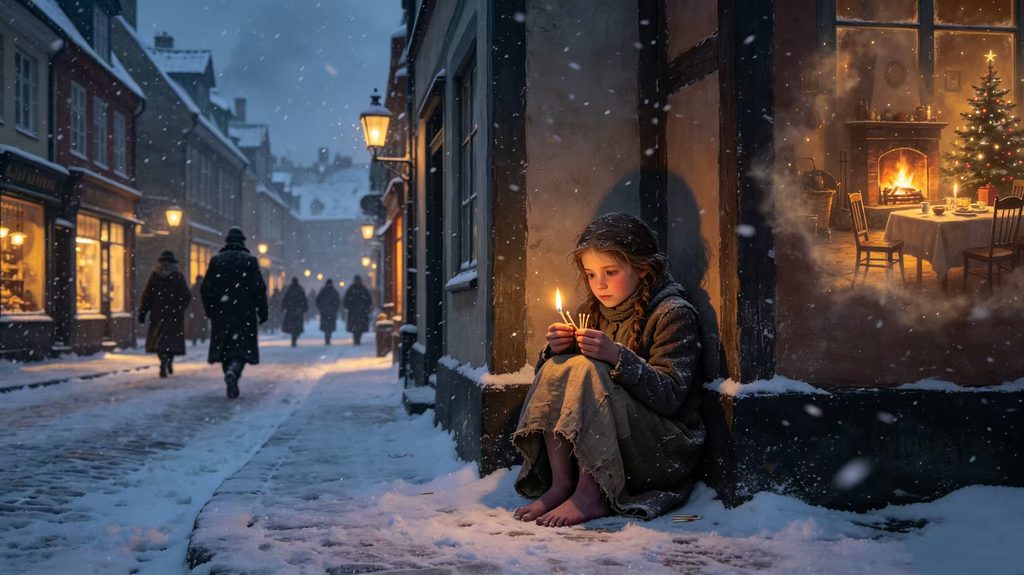
英文原文
It was terribly cold on the last evening of the old year.
Snow fell fast and thick over the streets and rooftops.
The wind blew sharply around corners,
carrying icy breath through every crack and doorway.
People hurried home under warm cloaks and umbrellas,
leaving footprints that quickly filled with white snow.
In the midst of this cold and noise,
a little girl walked through the streets.
She had no warm coat,
no thick scarf,
no strong shoes to protect her feet.
Her thin feet were red and blue with cold,
and she carried a bundle of matches under her arm.
The little girl was sent out to sell matches that evening.
Her father had told her not to come home
until she had earned some money.
If she returned empty-handed,
he would be angry and hard with her.
So she walked on,
shivering from head to foot,
through the deepening snow.
She tried to call out to passers-by,
but her voice was small and trembling.
Some people glanced at her coldly,
others hurried past without a word.
The bright windows of the shops seemed very far away,
and the warm smell of roasted goose drifted only a little distance before it vanished in the frost.
At last,
she slipped into a narrow corner between two houses.
There she sat down,
huddling against the cold wall.
She dared not go home,
for she had sold no matches
and had not taken a single penny.
Her father would surely scold her,
and the house itself was almost as cold as the street.
The little girl grew colder and colder.
She looked at the matches in her hand.
They were her only treasure that night.
At first,
she was afraid to strike one.
What would her father say?
What if the money was lost?
But the cold was too great,
and her little fingers were almost frozen.
At last,
she drew one match from the bundle.
She struck it on the wall,
and a tiny flame sprang out.
It gave a soft, yellow light,
warm and bright like a little candle.
The girl held her hands close to it,
and for a moment she felt as if she were sitting by a great iron stove.
The fire seemed so real,
so comforting.
She stretched out her feet to warm them,
but just then the flame went out.
The stove vanished,
and she was left again in the cold dark corner,
with nothing but a burnt match in her hand.
She struck another match.
This time the light fell upon the wall,
and it became transparent before her eyes.
She could see inside a room
where a Christmas tree stood shining with candles and golden ornaments.
The branches were beautiful,
and beneath them lay gifts waiting to be opened.
She reached out toward the vision,
but the match burned down,
and all the warmth and brightness disappeared.
Again and again she lit matches,
each time holding fast to a little hope.
She saw a table spread with food,
roasted goose and warm bread,
and she heard the sound of happy laughter from homes nearby.
But every vision faded quickly,
leaving her colder than before.
In the morning,
people found the little girl in the corner.
Her face was calm,
and a faint smile remained on her lips.
She had died of cold and hunger on New Year’s Eve.
No one knew what beautiful things she had seen,
or what bright dreams she had held
before she closed her eyes forever.
译文
旧年最后一个夜晚,
天气冷得吓人。
大雪密集地落满街道与屋顶,
寒风在街角呼啸,
把冰冷的气息送进每一道缝隙和门廊。
人们裹着温暖的斗篷、撑着雨伞匆匆回家,
留下的脚印很快又被白雪覆盖。
在这样的寒冷与喧闹中,
一个小女孩独自走在街上。
她没有暖和的外套,
没有厚实的围巾,
也没有结实的鞋子保护双脚。
她纤细的双脚冻得青紫,
胳膊下夹着一包火柴。
这天晚上,
父亲让她出来卖火柴。
他告诉她,
不赚到钱就不准回家。
如果空手回去,
父亲会对她发火,
会严厉地责骂她。
于是她只能继续往前走,
浑身发抖,
踩在越来越深的积雪里。
她试着向路人叫卖,
可声音细小又颤抖。
有些人冷冷看她一眼,
有些人一言不发匆匆走过。
商店明亮的橱窗仿佛离她很远,
烤鹅的香气只飘出一小段,
就在严寒里消散了。
最后,
她躲进两栋房屋之间的狭窄角落,
靠着冰冷的墙坐下来。
她不敢回家,
因为一根火柴也没卖出去,
一分钱也没赚到。
父亲一定会骂她,
而家里也几乎和街上一样冷。
女孩越来越冷,
她看着手里的火柴。
那是她当晚唯一的宝贝。
起初,
她不敢点燃一根。
父亲会怎么说?
要是赔了钱怎么办?
可寒冷太剧烈了,
她的小手指几乎冻僵。
终于,
她抽出一根火柴,
在墙上划亮。
细小的火苗跳了出来,
发出柔和的黄光,
温暖明亮,像一支小蜡烛。
女孩把双手靠近火光,
那一刻,
她仿佛坐在一座巨大的铁炉旁。
火焰那么真实,
那么令人安心。
她伸出双脚想取暖,
可就在这时,
火苗熄灭了。
火炉消失了,
她重新回到寒冷黑暗的角落里,
手里只剩一根烧过的火柴。
她又划亮一根火柴。
这一次,
光照在墙上,
墙面在她眼前变得透明。
她看见一间屋子里,
立着一棵圣诞树,
树上点着蜡烛,
挂着金色装饰。
树枝美丽极了,
树下放着等待开启的礼物。
她伸手想去触碰那幻象,
可火柴烧尽了,
所有温暖与光亮都消失了。
她一次又一次点燃火柴,
每次都紧紧抓住一点希望。
她看见摆满食物的桌子,
烤鹅和热面包,
听见附近人家传来幸福的笑声。
但每一次幻象都很快消逝,
留下她比之前更冷。
清晨时分,
人们在角落里发现了小女孩。
她的神情平静,
嘴角还留着一丝淡淡的微笑。
她在除夕夜死于寒冷与饥饿。
没有人知道她曾看见过多么美丽的景象,
也没有人知道,
在她永远闭上眼睛之前,
心中曾怀有怎样明亮的梦。
🔍长难句赏析与拆解
原句一
She dared not go home,
for she had sold no matches
and had not taken a single penny.
句式解读
本句为并列因果复合句,是交代人物处境与心理动机的经典句型。
1. She dared not go home
是主句,直接点明女孩不敢回家的心理状态;
2. for she had sold no matches and had not taken a single penny
是并列原因状语从句,解释她不敢回家的两个具体原因;
3. 先写结果,再补原因,逻辑清楚,适合记叙文人物处境描写。
句子主干:
She dared not go home.
原句二
The fire seemed so real,
so comforting.
She stretched out her feet to warm them,
but just then the flame went out.
句式解读
本句为并列复合句,由转折连词but连接,适合描写短暂希望与突然失落。
1. 前两句写火光带来的真实温暖,
营造幻觉中的希望;
2. but just then the flame went out
突然转折,写出希望破灭;
3. 这种“温暖—熄灭”的对比,
是童话中烘托悲剧感的常用手法。
句子主干:
The fire seemed real, but the flame went out.
文学赏析
《卖火柴的小女孩》是安徒生最动人的童话之一,
这段节选取自故事核心段落,
以极简洁的文字写出了贫穷、孤独、寒冷与渴望。
故事开篇没有直接控诉社会,
而是先把读者带进一个极冷的除夕夜。
外面越热闹,
女孩的孤独就越突出;
别人家中越温暖,
她的处境就越艰难。
安徒生用雪、风、火光和幻象,
把一个穷苦孩子的悲惨夜晚写得具体可感。
女孩的火柴,
是全文最重要的意象。
它微弱、短暂,
却能在寒夜里带来一点光、一点暖。
每一根火柴都像一个小小的希望,
照亮她对食物、亲情、温暖和快乐的渴望。
可火柴太短了,
现实太冷了,
光亮一消失,
她就重新跌回孤独与严寒。
作者没有用激烈的语言批评谁,
而是平静地写她如何蜷缩、如何划火、如何在幻象中获得安慰。
这种平静反而更有力量,
因为它让读者清楚看见:
一个孩子最基本的渴望,
在现实中却难以实现。
故事的悲剧不只在于寒冷和饥饿,
更在于她连回家的勇气都没有。
父亲的责骂、家庭的贫困、社会的冷漠,
一层层压缩她的生存空间,
让她只能在火光里寻找短暂的幸福。
安徒生真正想写的,
不只是一个可怜女孩的遭遇,
而是人间的冷暖、贫富的差距,
以及弱者对温暖与爱的本能渴望。
童话看似简单,
却藏着对现实的深刻反思。
写作迁移点拨
适合写作主题:温暖与冷漠、贫穷与同情、
希望与现实、关爱弱者、节日的意义、孤独与幸福。
高分仿写
The world may be full of noise and bright lights,
but there are always quiet souls who stand outside the warmth,
hoping for a little kindness, a little food, and a little home.
仿写运用
模仿原文“环境冷暖对比 + 人物处境描写”的写法,
适合记叙文、读后续写和议论文人物段落,
尤其适合“关爱弱者、同情贫困者”主题。
📖全篇句式特点
典型安徒生童话式叙事语言,
句子简洁,画面清晰,
情感克制但冲击力强。
擅长用环境描写烘托人物处境,
用幻象与现实对比制造悲剧感。
句子以短句和并列句为主,
不复杂,不华丽,
但每一句都指向人物的饥饿、寒冷、孤独与希望。
核心词汇
1. shiver
/ˈʃɪvə(r)/
发抖,颤抖
动词 (v.)
2. bundle
/ˈbʌndl/
捆,包,束
名词 (n.)
3. strike
/straɪk/
划(火柴),打,击
动词 (v.)
4. flame
/fleɪm/
火焰,火苗
名词 (n.)
5. transparent
/trænsˈpærənt/
透明的
形容词 (adj.)
6. vanish
/ˈvænɪʃ/
消失,突然不见
动词 (v.)
7. comfort
/ˈkʌmftə(r)/
安慰,慰藉
名词/动词
8. cold
/kəʊld/
寒冷,感冒
名词/形容词
9. hunger
/ˈhʌŋɡə(r)/
饥饿
名词 (n.)
10. hope
/həʊp/
希望
名词/动词
💡主旨品读
这篇故事最动人的地方,
不是它写了一个孩子的死亡,
而是它写了一个孩子在死亡之前,
仍然渴望温暖、渴望爱。
小女孩拥有的太少了,
寒冷、饥饿、孤独,
几乎包围了她全部的夜晚。
可她没有停止希望,
火柴的微光里,
她看见火炉、圣诞树、食物和幸福。
这些幻象不是空想,
而是一个人对美好生活最本能的向往。
真正的寒冷,
有时不来自冬天,
而来自人与人之间的冷漠。
街上的人并非都坏,
可他们匆匆走过,
没有人停下来问一问:
这个孩子为什么独自在雪夜里?
故事让我们看见,
节日不只是热闹和礼物,
更是衡量一个社会温度的标尺。
当最弱小的人都能被看见、被关心,
节日才有真正的意义。
安徒生没有把希望写进现实,
却把希望写进了女孩的眼睛里。
她在火光中微笑,
说明即使现实冰冷,
人对温暖与爱的渴望,
也永远不会完全熄灭。
这个故事提醒我们:
不要只看见自己的幸福,
也要看见身边那些寒冷、孤独、无人过问的人。
一句关心,
一点帮助,
一点真诚的善意,
也许就是别人寒夜里的一根火柴。
©英语数字智库 版权所有
未经权利人许可,不得转载、摘抄、复制、
二次编辑或商用分发,违者将依法追究法律责任。
请点击返回首页收录经典目录