
 由 英语数字智库
了解更多:考研英语:经济商业财经类词汇目录
The Signal‑Man《信号员》
作者:查尔斯·狄更斯(Charles Dickens)
首次出版:1866 年 12 月
首次发表刊物:《圣诞故事集》
出版背景:英国原版刊印,后世多次校勘再版。
多国译本与双语选编版本广泛流传。
收录说明:
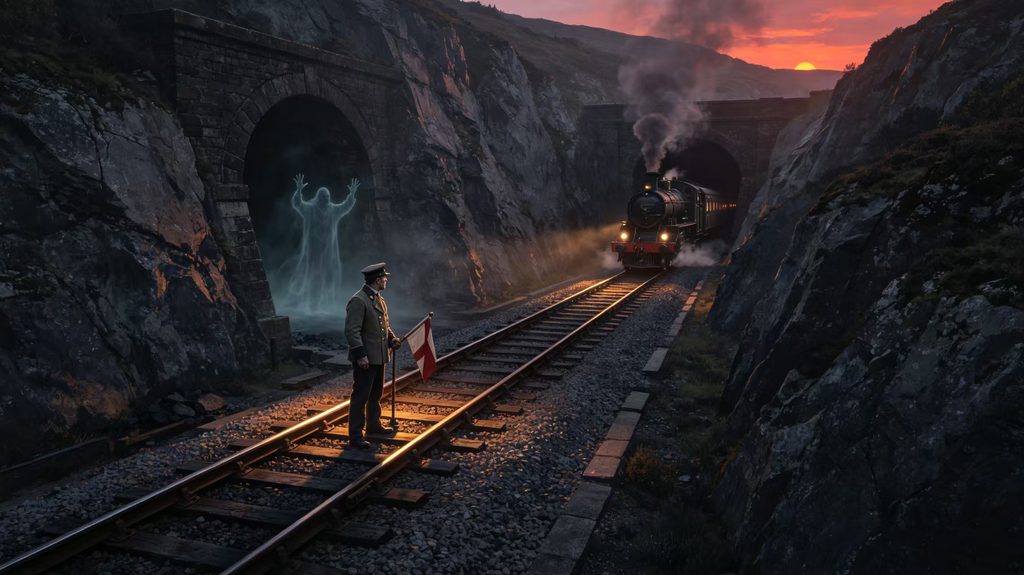
故事发生在幽深阴暗的铁路隧道信号站。
负责值守的信号员总是看见一个神秘幽灵。
幽灵每次出现,都预示一场惨烈的列车事故。
他满心恐惧,却无法阻止悲剧接连降临。
小说充满悬疑与阴森氛围,带着对命运的无力感。
也借新兴的铁路工业,写出科技背后潜藏的危机。
创作背景:
那个年代铁路飞速发展,事故频发,人心充满不安。
狄更斯把现代工业、灵异预兆与宿命感揉在一起。
让人在惊悚的故事里,体会未知带来的恐惧与绝望。
英文原文
I had been travelling for many hours,
and the heat had been almost unbearable.
At last I reached the top of the steep hill,
where I could look down upon the railway line below.
The sun blazed fiercely,
and the metal rails glowed like hot wires in the light.
Everything seemed silent and motionless,
as if the whole world were waiting for something to happen.
I saw a small figure standing at the foot of the hill,
near the entrance of a deep cutting.
He was a man in a faded uniform,
with a flag in his hand.
Even from that distance,
I could tell that he was watching the line with great attention.
There was something lonely and watchful about him,
which made me stop and look again.
I called down to him,
asking whether there was a way to get nearer to the railway.
He answered me clearly,
and told me how to descend the path.
As I walked down,
I noticed that the place was strangely quiet.
The cutting was high and narrow,
with steep walls on both sides.
The air below was close and heavy,
and the sound of my own footsteps echoed loudly.
When I reached the bottom,
I found the man waiting for me.
His face was pale,
and his eyes were keen and anxious.
He did not smile,
but he greeted me politely.
I asked him about his work,
and he told me that he was the signal-man stationed here.
It was his duty to watch the line day and night,
to give warning of danger,
and to stop trains if anything went wrong.
He spoke quietly,
but there was something uneasy in his manner.
While we were talking,
a train passed through the cutting with a roar.
The ground shook,
the air rushed past us,
and for a moment I could not hear my own voice.
When the noise had died away,
the signal-man looked at me strangely.
He said that he had seen an apparition,
a figure that appeared near the tunnel mouth.
It had waved its arm and cried,
“Halloa! Below there!”
He had seen it more than once,
and each time a terrible accident had followed on the line.
I tried to comfort him,
telling him that such sights were probably tricks of the light.
But he shook his head seriously.
He said that the ghost did not appear only to his eyes,
but also to his mind.
It seemed to warn him of coming disaster,
and he could not rest until he knew what it meant.
As evening came on,
the place became even more lonely.
The shadows lengthened along the cutting,
and the distant lights of the signal-box began to glow.
Before I left,
I promised to return and see him again.
He thanked me,
but his anxiety did not disappear.
I walked back up the hill,
looking at the lonely signal-man standing by the line.
The railway seemed to stretch endlessly into the dark,
and I could not help feeling that some secret weight
was pressing upon his heart.
译文
我已经走了许多小时,
天气酷热得几乎让人无法忍受。
终于,我爬上陡峭山顶,
从那里可以俯瞰下方的铁路线。
烈日猛烈燃烧,
铁轨在阳光下像发烫的金属线一样发亮。
四周一片寂静,
仿佛整个世界都在等待什么事情发生。
我看见山脚下有一个小小的身影,
站在深路堑入口附近。
他穿着褪色制服,
手里拿着一面旗子。
即使隔得很远,
我也能看出他正高度警惕地注视着线路。
他身上有一种孤独而警觉的气质,
让我忍不住停下脚步,再次望去。
我朝他喊话,
问他有没有办法走近铁路。
他清楚地回答了我,
告诉我该沿哪条小路下去。
往下走时,
我注意到这个地方异常安静。
路堑又高又窄,
两侧是陡峭墙壁,
低处空气闷热沉重,
我自己的脚步声也回荡得很响。
到达谷底后,
我发现那个人正在等我。
他脸色苍白,
目光锐利而焦虑。
他没有笑,
但很有礼貌地向我打招呼。
我问起他的工作,
他说自己是驻守这里的信号员。
他的职责是日夜看守线路,
发出危险警告,
一旦出现异常就拦停列车。
他说话很轻,
但举止中带着不安。
我们正交谈时,
一列火车轰鸣着穿过路堑。
地面震动,
气流从我们身边猛冲而过,
有那么一瞬间,我连自己的声音都听不见。
噪音消失后,
信号员用奇怪的眼神看着我。
他说自己见过一个幻象,
一个出现在隧道口附近的身影。
那身影挥动手臂,
高喊:“喂!下面小心!”
他已经见过不止一次,
而每次之后,线路上都会发生可怕事故。
我试图安慰他,
说这种景象可能只是光线造成的错觉。
但他严肃地摇了摇头。
他说那个幽灵不只是出现在眼前,
更像压在他心上的警告。
它仿佛在预示即将到来的灾难,
他必须弄清楚它的含义,否则无法安心。
夜幕降临时,
这里变得更加孤寂。
路堑两侧的影子越拉越长,
信号房远处的灯光开始闪烁。
离开前,
我答应会再来看他。
他谢了我,
但焦虑并没有消失。
我重新爬上山坡,
回头看见孤独的信号员仍站在线路旁。
铁路仿佛无尽地延伸进黑暗,
我不禁感到,
他心里正压着某种沉重而隐秘的东西。
🔍长难句赏析与拆解
原句一
There was something lonely and watchful about him,
which made me stop and look again.
句式解读
本句为非限制性定语从句复合句,是人物神态描写的经典句型。
1. There was something lonely and watchful about him
是主句,用存在句引出人物气质;
2. which made me stop and look again
是非限制性定语从句,补充说明这种气质带来的反应;
3. 先写人物给人的感觉,再写观察者反应,适合文学人物描写。
句子主干:
There was something lonely and watchful about him.
原句二
It seemed to warn him of coming disaster,
and he could not rest until he knew what it meant.
句式解读
本句为并列复合句,包含时间状语从句和宾语从句,适合描写人物焦虑心理。
1. 前半句写幻象的警示作用;
2. until he knew what it meant
是时间状语从句,说明他无法安心的条件;
3. 用并列句把“预兆”和“人物不安”连接起来,叙事紧凑。
句子主干:
It seemed to warn him, and he could not rest.
文学赏析
《信号员》是狄更斯晚年著名的悬疑短篇,
这段节选取自故事开篇,
以第一人称视角把读者带入一个孤独、封闭、压迫感极强的铁路世界。
故事一开始,
狄更斯没有直接抛出恐怖情节,
而是先写酷热、寂静、发光的铁轨和狭窄路堑。
环境越安静,
人的神经就越紧张;
铁路越笔直,
越像一条通向未知灾难的通道。
信号员是全文的核心人物。
他不是传统英雄,
也不是罪犯,
只是一个守着铁路、重复劳动的普通人。
他熟悉每一列火车,
熟悉每一段信号,
可他无法解释反复出现的幻象。
这种“熟悉的环境里突然出现未知恐惧”的写法,
正是故事最迷人的地方。
狄更斯把工业时代的铁路写得既真实又神秘。
火车是现代文明的象征,
速度、力量、秩序都集中在它身上。
可在这个故事里,
铁路不再只是交通工具,
而像一个沉默的命运审判场。
信号员守在隧道口,
仿佛守在生死交界线旁。
作者没有急着解释幻象真假,
而是先让读者感受到人物的焦虑。
他为什么害怕?
是精神问题,
还是真的预兆?
这个疑问贯穿全篇,
让平静的开篇也充满悬疑张力。
《信号员》的深刻之处,
在于它不只写鬼故事,
还写人在现代工业秩序中的孤独与不安。
当一个人每天面对巨大机械、固定线路和潜在危险时,
他的恐惧既是个人的,
也是时代的。
写作迁移点拨
适合写作主题:孤独、预兆与恐惧、
工业时代、人与机械、心理悬疑、命运与警告。
高分仿写
The place was silent,
but the silence was not peaceful.
It was heavy and watchful,
as if the walls and the rails themselves were waiting for something terrible to happen.
仿写运用
模仿原文“环境压迫感 + 人物心理暗示”的写法,
适合记叙文、悬疑故事开篇和读后续写,
尤其适合营造紧张、神秘、孤独氛围。
📖全篇句式特点
狄更斯式悬疑叙事语言,
开篇冷静克制,
后逐渐收紧节奏。
擅长用环境描写制造压迫感,
用人物神态和小动作表现不安。
句子以并列句、定语从句和状语从句为主,
结构清楚但气氛紧张,
带有鲜明的维多利亚时代工业文学色彩。
核心词汇
1. signal-man
/ˈsɪɡnl mæn/
信号员
名词 (n.)
2. cutting
/ˈkʌtɪŋ/
路堑,开挖的铁路通道
名词 (n.)
3. apparition
/ˌæpəˈrɪʃn/
幻象,幽灵
名词 (n.)
4. warning
/ˈwɔːnɪŋ/
警告,预兆
名词 (n.)
5. disaster
/dɪˈzɑːstə(r)/
灾难,灾祸
名词 (n.)
6. anxious
/ˈæŋkʃəs/
焦虑的,担忧的
形容词 (adj.)
7. motionless
/ˈməʊʃnləs/
静止的,不动的
形容词 (adj.)
8. echo
/ˈekəʊ/
回声,回响
名词/动词
9. stationed
/ˈsteɪʃnd/
驻守的,驻扎的
形容词 (adj.)
10. weight
/weɪt/
重量,负担
名词 (n.)
💡主旨品读
《信号员》表面上是一个带灵异色彩的悬疑故事,
但它真正探讨的,
是面对未知预兆时,人的孤独与恐惧。
信号员守在铁路旁,
每天重复同样的工作,
熟悉同样的线路。
可幻象的出现打破了这种稳定,
让他开始怀疑自己的眼睛,
也怀疑自己的判断。
他害怕的不只是死亡,
更是那种明明感到危险却无法证明、无法阻止的无力感。
这个故事也反映了工业时代的焦虑。
铁路和火车代表着现代文明的力量,
但力量越大,
潜在危险也越大。
人在巨大机械面前显得渺小,
一旦信号出错、判断失误,
后果便难以挽回。
狄更斯让我们思考:
当一个人被安排在关键位置,
却无法解释内心的不安时,
别人应该相信他,
还是相信所谓的“现实”?
故事没有简单给出答案,
而是把疑问留给读者。
真正的恐惧,
有时不是来自幽灵,
而是来自不被理解的孤独,
来自明明看见危险却无人相信的绝望。
信号员的困境,
也是很多身处关键岗位、承受巨大压力者的困境。
这个故事提醒我们:
不要轻易否定别人的不安。
很多时候,
直觉和心理负担并非毫无根据,
它们可能来自长期观察、潜在危险,
以及对环境最敏锐的感知。
学会倾听,
有时比急于下判断更重要。
©英语数字智库 版权所有
未经权利人许可,不得转载、摘抄、复制、
二次编辑或商用分发,违者将依法追究法律责任。
请点击返回首页收录经典目录