
 由 英语数字智库
了解更多:雅思:全球贸易经济类词汇目录
The Old Man at the Bridge《桥边的老人》
作者:欧内斯特·海明威(Ernest Hemingway)
首次出版:1938 年 5 月 19 日
首次发表刊物:Kenyon Magazine
出版背景:英国原版刊印,后世多次校勘再版。
多国译本与双语选编版本广泛流传。
收录说明:
战争来临,人们争相从桥上撤离逃难。
一位老人却独自坐在桥边不肯走远。
他不关心前线战况,只牵挂自己照料的小动物。
在战火与逃亡洪流里,
平凡生命的温柔牵挂,反衬出战争的残酷无情。
故事以极简的笔触,
道出战争对普通人安宁生活的无情摧毁。
创作背景:
故事以西班牙内战为背景。
海明威借一个无力逃亡的老人,控诉战争。
战争碾碎的不只是城池,还有普通人简单朴素的幸福。
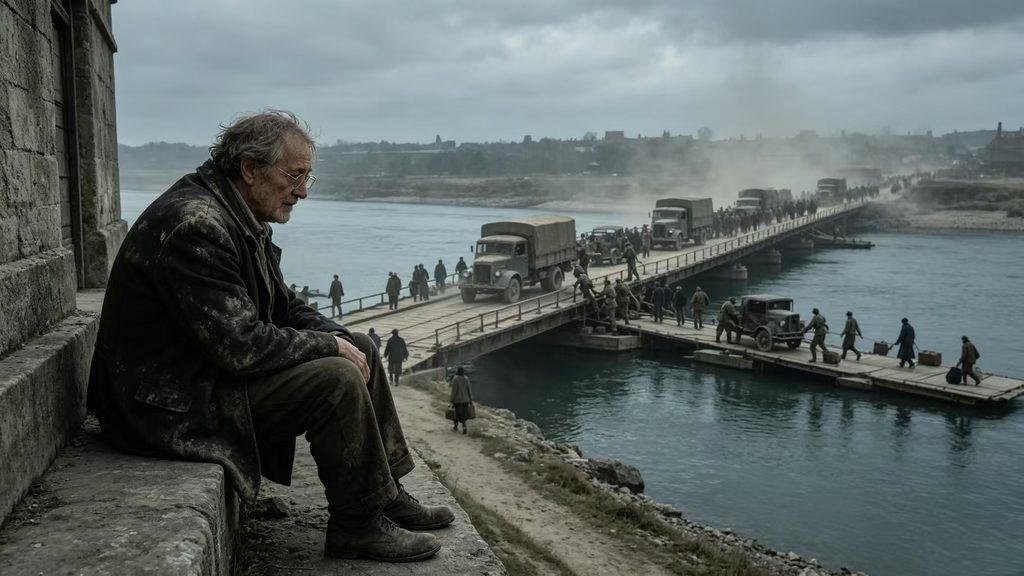
英文原文
An old man with steel rimmed spectacles
and very dusty clothes sat by the side of the road.
There was a pontoon bridge across the river
and carts, trucks, and men, women and children were crossing it.
The mule-drawn carts staggered up the steep bank from the bridge
with soldiers helping push against the spokes of the wheels.
The trucks ground up and away heading out of it all
and the peasants plodded along in the ankle deep dust.
But the old man sat there without moving.
He was too tired to go any farther.
It was my business to cross the bridge,
explore the bridgehead beyond
and find out to what point the enemy had advanced.
I did this and returned over the bridge.
There were not so many carts now
and very few people on foot,
but the old man was still there.
“Where do you come from?” I asked him.
“From San Carlos,” he said, and smiled.
That was his native town
and so it gave him pleasure to mention it and he smiled.
“I was taking care of animals,” he explained.
“Oh,” I said, not quite understanding.
“Yes,” he said, “I stayed, you see, taking care of animals.
I was the last one to leave the town of San Carlos.”
He did not look like a shepherd nor a herdsman
and I looked at his black dusty clothes
and his grey dusty face and his steel rimmed spectacles
and said, “What animals were they?”
“Various animals,” he said, and shook his head.
“I had to leave them.”
I was watching the far bank of the river,
wondering how long it would be before we saw the enemy,
and listening all the time for the first sound
that would announce the mysterious, impending battle,
and the old man sat there.
“What animals were they?” I asked again.
“There were three animals altogether,” he explained.
“There were two goats and a cat
and then there were four pairs of pigeons.”
“And you had to leave them?” I asked.
“Yes. Because of the artillery.
The captain told me to go
because the artillery was coming.”
“No family?” I asked, watching the far end of the bridge
where the last carts were hurrying down the slope of the bank.
“No,” he said, “only the animals I stated.
The cat, of course, will be all right.
A cat can look out for itself,
but I cannot think what will become of the others.”
“What politics have you?” I asked.
“I am without politics,” he said.
“I am seventy-six years old.
I have come twelve kilometers now
and I think I can go no further.”
“This is not a good place to stop,” I said.
“If you can make it,
there are trucks up the road where it forks for Tortosa.”
“I will wait a while,” he said, “and then I will go.
Where do the trucks go?”
“Towards Barcelona,” I told him.
“I know no one in that direction,” he said,
“but thank you very much.”
He looked at me very blankly and tiredly,
and then said, “The cat will be all right,
I am sure. There is no need to be worried about the cat.
But the others. Do you think the pigeons will fly?”
“They should fly.”
“Yes. But what about the goats?
Oh, what will happen to the goats?”
He said, “I cannot think about the goats any longer.”
“Better to get up and try to walk now,” I said.
“Try to move.”
“I thank you,” he said,
and got up slowly,
swayed from side to side,
and then sat down backwards in the dust.
“I was only taking care of animals,” he said dully,
no longer speaking to me,
but to himself.
It was Easter Sunday
and the fascists were advancing toward the Ebro.
It was a grey overcast day
with a low ceiling so their planes would not come up.
That fact and the cats’ ability to look after themselves
was all the good luck that old man would ever have.
译文
一个戴着钢丝边眼镜、满身尘土的老人,
坐在路边。
河上架着一座浮桥,
大车、卡车,还有男人、女人和孩子们,
正从桥上匆匆穿过。
骡拉的大车摇晃着,从桥这边爬上陡峭的堤岸,
士兵们在一旁帮忙推着车轮辐条。
卡车轰鸣着开上坡,扬长而去,
农夫们则在没及脚踝的尘土里艰难跋涉。
唯独老人一动不动坐在原地,
他已经筋疲力尽,再也走不动了。
我的任务是过桥,
侦察对岸的桥头阵地,
摸清敌人推进到了什么位置。
侦察完毕,我又过桥折返回来。
此时桥上车辆已经不多,
步行的行人也寥寥无几,
但那个老人依旧坐在原处。
“你从哪里来?”我问他。
“从圣卡洛斯。”他说着,露出微笑。
那是他的故乡,
提起家乡,他心里欢喜,所以笑了。
“我一直在照料动物。”他解释道。
“哦。”我说,没有完全听懂。
“是的,你知道,我留下来照看它们。
我是最后一个离开圣卡洛斯小镇的人。”
他看上去既不像牧羊人,也不像牧牛人。
我望着他沾满灰尘的黑衣,
蒙着尘土的灰色脸庞,还有那副钢丝边眼镜,
问道:“都是些什么动物?”
“好几种,”他摇着头说,
“我不得不抛下它们。”
我望向河的对岸,
心里盘算还要多久才能看见敌军,
一直侧耳等候第一声响动,
那声响预示着一场未知的战斗即将来临,
而老人就静静坐在那里。
“到底是什么动物?”我又问了一遍。
“一共三只,”他解释说,
“两只山羊,一只猫,
还有四对鸽子。”
“你只能丢下它们吗?”我问。
“没办法,炮火要来了。
上尉命令我撤离,
炮火不长眼睛。”
“你没有家人吗?”我一边问,一边望向桥的尽头,
最后几辆大车正匆忙驶下河岸斜坡。
“没有,”老人说,“就只有我说的这些动物。
猫肯定没事,猫能自己照顾自己。
可剩下这些,我不知道它们会怎么样。”
“你支持哪一派?”我问道。
“我不懂什么政治,”他说,
“我七十六岁了。
我已经走了十二公里,
实在走不动了。”
“这里不能久留,”我说,
“如果你还能勉强走动,
前面通往托尔托萨的岔路口有卡车。”
“我再歇一会儿,然后再走,”他说,
“卡车往哪里开?”
“开往巴塞罗那。”我告诉他。
“那边我一个熟人都没有,”他说,
“不过还是非常谢谢你。”
他茫然又疲惫地望着我,
接着开口:“猫肯定没事,这点我确定。
不必担心那只猫。
可是别的动物,你觉得鸽子能飞逃走吗?”
“它们应该可以飞走。”
“是啊。那山羊呢?
唉,山羊该怎么办啊。”
他喃喃道,“我不敢再想山羊的命运了。”
“现在最好站起来试着往前走一走,”我说,
“试着动身吧。”
“谢谢你。”他说,
慢慢站起身,
身子左右摇晃,
随后又向后跌坐在尘土里。
“我本来只是照看那些动物而已。”他沉闷地说着,
不再是对我说,
更像是自言自语。
那天是复活节的礼拜日,
法西斯军队正向埃布罗河推进。
天色阴沉灰暗,云层很低,
敌机因此无法升空。
这件事,再加上猫能够自保,
便是这个老人仅有的一点好运了。
🔍长难句赏析与拆解
原句一
There was a pontoon bridge across the river
and carts, trucks, and men, women and children were crossing it.
The mule-drawn carts staggered up the steep bank from the bridge
with soldiers helping push against the spokes of the wheels.
句式解读
第一句是there be句型,
并列连词and连接前后两个分句,
勾勒逃难人群过桥的全景;
第二句主干为
The mule-drawn carts staggered up the steep bank;
with soldiers helping…是with复合结构作伴随状语,
描写士兵帮忙推车的画面,
冷静客观,是海明威典型的镜头式叙事。
句子主干:
There was a pontoon bridge.
The mule-drawn carts staggered up the steep bank.
原句二
It was my business to cross the bridge,
explore the bridgehead beyond
and find out to what point the enemy had advanced.
句式解读
本句it作形式主语,
真正主语是后面三个并列的不定式短语:
to cross…, explore… and find out…;
to what point引导宾语从句,
放在find out之后;
句式简洁紧凑,没有多余修饰,
体现战地叙述者冷静克制的口吻。
句子主干:
It was my business to cross, explore and find out.
文学赏析
《桥边的老人》是海明威“冰山原则”的经典范例,
故事取材西班牙内战,
没有激烈的枪战、宏大的厮杀场面,
只用一个桥头、一段简短对话承载战争主题。
全文以第一人称侦察兵“我”作为叙事视角,
以旁观者的视角记录逃难途中偶遇的一位老人。
所有人都在拼命向前逃亡躲避战火,
唯独年迈的老人耗尽体力停滞不前,
他不担心自己的安危,
反复牵挂的是家中无人照料的山羊、鸽子与小猫。
在宏大的战争、派别、政治冲突面前,
老人只在乎弱小生命能否存活,
这种反差极具冲击力。
海明威文字极简,克制留白,
大量情绪藏在文字之下,
水面之上只露出八分之一,
剩下沉重的悲悯、对战争的控诉留给读者体会。
复活节本是象征新生与希望的日子,
可战火依旧向前推进,
美好的节日与残酷的战争形成强烈反讽,
凸显战争对普通平民安稳生活无情的摧毁。
写作迁移点拨
适合写作主题:
战争与平民、小人物的悲悯、生命关怀、克制的叙事、
表象之下的苦难、平凡人的温柔。
高分仿写
War sweeps forward without mercy,
crushing the quiet and trivial happiness of ordinary people.
What they care for is not ideology or victory,
but the small creatures and gentle life they have cherished.
仿写运用
适合议论文、记叙文结尾,
适合写苦难、人文关怀、反战主题,
学习克制含蓄、不煽情的表达风格,
适配文学评论、英语作文。
📖全篇句式特点
通篇多用短句、简单句,
少繁复从句,语言干净凝练,
符合海明威标志性的电报式文风。
句子长短交替,
长句用来铺陈环境背景,
短句用于对话,贴合口语,真实自然。
叙述语调始终冷静平淡,
不直接抒发悲伤愤怒,
把情感藏在客观场景和对话之中,
依靠留白产生震撼力量,
这就是著名的冰山写作手法。
核心词汇
1. spectacles
/ˈspektəklz/
眼镜
名词 (n.)
2. pontoon
/pɒnˈtuːn/
浮舟,浮桥
名词 (n.)
3. stagger
/ˈstæɡə(r)/
蹒跚,摇晃前行
动词 (v.)
4. plod
/plɒd/
沉重缓慢地行走
动词 (v.)
5. artillery
/ɑːˈtɪləri/
火炮,大炮
名词 (n.)
6. impending
/ɪmˈpendɪŋ/
即将来临的
形容词 (adj.)
7. blankly
/ˈblæŋkli/
茫然地
副词 (adv.)
8. overcast
/ˈəʊvəkɑːst/
阴天的,阴沉的
形容词 (adj.)
💡主旨品读
这篇小说的重心不在胜负、阵营,
而落在战争里无辜的底层平民身上。
老人不问政治,不懂派系斗争,
他一辈子的生活寄托就是几只小动物,
战争突如其来,强行打碎他安稳的日常。
比起害怕死亡,
他更加放不下那些无法自主逃生的生灵。
海明威借这个微小的桥头片段告诉我们:
战争的伤害,从来不止发生在战场之上。
它会碾碎普通人微小朴素的幸福,
夺走平凡生命赖以生存的一切。
作者没有激昂地批判战争,
只用平淡冷静的文字记录一个无助老人的担忧,
这种不动声色的悲悯,
反而比慷慨控诉更有力量,
传递出对所有弱小生命的尊重,
以及对和平朴素、深沉的渴望。
©英语数字智库 版权所有
未经权利人许可,不得转载、摘抄、复制、
二次编辑或商用分发,违者将依法追究法律责任。
请点击返回首页收录经典目录