
 由 英语数字智库
了解更多:雅思:传媒文化全球化词汇目录
The Boarded Window《钉起来的窗户》
作者:安布罗斯·比尔斯(Ambrose Bierce)
首次出版:1891 年
首次发表刊物:San Francisco Examiner
出版背景:英国原版刊印,后世多次校勘再版。
多国译本与双语选编版本广泛流传。
收录说明:
在偏僻荒凉的森林深处,有一间窗户被牢牢钉死的木屋。
独自居住的男人守着这座充满秘密的房子。
一段恐怖往事藏在钉死的窗后,带着惊悚与悲凉。
故事用阴森克制的叙事,慢慢揭开令人毛骨悚然的真相。
短小的篇幅里,交织着孤独、悲痛与原始的恐惧。
创作背景:
十九世纪美国流行乡土恐怖与荒野怪谈。
比尔斯擅长书写人性深处的惊悚。
用荒野老屋的传说,把悲痛转化成挥之不去的恐怖记忆。
英文原文
In 1830, only a few miles away from what is now the great city of Cincinnati,
lay an immense and almost unbroken forest.
The region was sparsely settled,
and the few clearings which the inhabitants had made
were not of much extent.
The road by which a traveller might pass through that part of the country
was a narrow path,
winding among gigantic trees,
through which the sunlight fell only in rare and fitful patches.
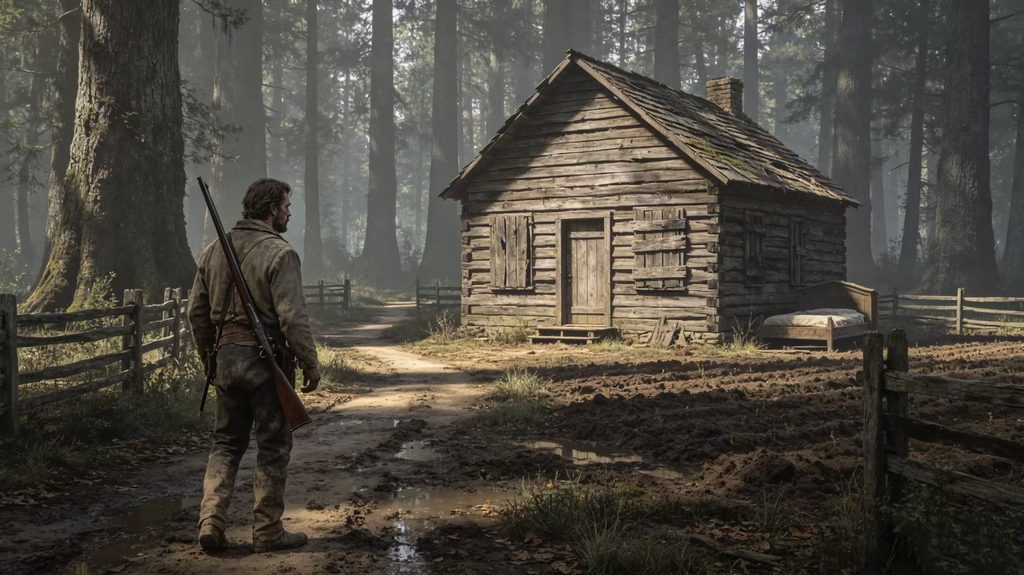
Here and there a log cabin stood in a small opening,
but for the most part the forest was silent and uninhabited.
One afternoon in the autumn of that year,
a man walked along that road.
He was dressed in rough frontier clothing,
and carried a rifle on his shoulder.
His face was pale,
his eyes were fixed upon the ground before him,
and he moved with an air of weariness and dejection.
Suddenly he stopped,
looked up,
and appeared to recognize the place.
At a little distance from the road
was a small log cabin,
surrounded by a few acres of half-cleared land.
The door was closed,
but not fastened.
The windows were boarded up.
A rude fence enclosed a small field,
and the whole site bore marks of desertion and decay.
The man approached the cabin
and stood for a moment observing it in silence.
Then he pushed open the door
and entered.
The interior was dim and covered with dust.
A few pieces of furniture,
a bed, a table, and a chair,
were discernible in the gloom.
There was no fire on the hearth,
no smoke rising from the chimney,
and no visible sign of living things.
The man glanced about the space,
and his expression deepened.
He seemed to await some signal,
yet could not remain stationary.
Shortly afterward he stepped outside again,
closed the door behind him,
and proceeded along the path.
He had travelled only a short distance
before he turned back.
Once more he halted before the boarded window,
once more he regarded the closed door,
and once more he hesitated.
Eventually he moved toward the window,
removed several planks,
and peered into the room.
He could not fully interpret what met his sight.
The chamber remained nearly dark,
yet by the faint light entering through the gap,
he saw the figure of a woman stretched upon the bed.
She made no movement.
He called her name,
and received no reply.
He forced the door open
and rushed inside.
The woman was dead.
A considerable period had passed since her death.
Her body had been placed within a rough wooden coffin,
but the coffin lid had been displaced,
and the body was absent.
No record indicated its destination.
The cabin had stood abandoned for months.
The man stood beside the bed,
gazing at the empty coffin,
his countenance marked by shock.
After a pause he turned and exited the building,
securing the door behind him.
He did not direct his gaze toward the boarded window again.
After this encounter,
the man ceased to appear within this district.
The cabin remained standing for many years,
with no resident occupying it.
Its windows stayed sealed with planks,
and its door stayed shut.
Travellers who passed near the site after dark
reported glimpses of shifting light inside the structure
and irregular sounds emanating from it.
Such accounts circulated as local hearsay.
The underlying fact carried greater simplicity and greater horror.
译文
1830年,在距离如今辛辛那提这座大型城市数英里的区域,
分布着一片广袤、近乎连绵不绝的森林。
该区域人口分布稀疏,
当地居民开辟出的空地,
面积都较为有限。
供旅人穿行这片区域的道路,
只是一条狭窄小径,
蜿蜒穿梭于参天林木之间,
阳光只能间断、零星地穿透树冠洒落地面。
林间零星的空地上坐落着原木小屋,
但森林的绝大部分区域沉寂荒芜,无人定居。
同年秋季的一个下午,
一名男子沿着这条小路前行。
他身着边疆地区粗简的服饰,
肩头扛着一支来复枪。
他面色苍白,
视线落在身前的地面,
步履间流露疲惫与消沉。
他骤然停下脚步,
抬头观望,
认出了眼前的地点。
道路不远处立着一间原木小屋,
小屋周边是数英亩尚未完全开垦的土地。
屋门闭合,
并未上锁。
所有窗户都以木板封钉。
一道简陋栅栏圈出一小块田地,
整处场地显现出荒废、衰败的特征。
男子走向小屋,
静默伫立片刻,打量建筑。
随后他推开门,
走入屋内。
房间光线昏暗,遍布积尘。
几件家具——
一张床、一张桌子、一把椅子,
在幽暗之中依稀可辨。
壁炉没有生火,
烟囱没有烟气升腾,
不存在任何生命活动的痕迹。
男子环视室内,
神色愈发凝重。
他仿佛在等候某种讯号,
却无法在此久留。
片刻之后他走出房屋,
带上房门,
沿着小路离开。
他没有走出很远,
便折返回来。
他再次停在封钉的窗前,
再次注视紧闭的屋门,
再次陷入迟疑。
最终他走到窗边,
拆下几块木板,
朝屋内窥探。
他无法清晰辨识所见之物。
屋内几乎完全黑暗,
但从缝隙渗入的微弱光线里,
他看见床上躺着一名女子。
女子一动不动。
他出声呼唤,
没有得到任何应答。
他撞开屋门,
冲进房间。
女子已经死亡。
她离世已有较长时间。
遗体原本安置在一具简易木棺之中,
棺盖已经被移开,
遗体不见踪影。
没有线索能够说明遗体的去向。
这间小屋已经被遗弃数月之久。
男子站在床边,
注视空棺,
神情惊骇。
短暂停顿后,他转身走出小屋,
带上房门。
他再也没有看向那扇钉死的窗户。
此事之后,
这片区域再也没有人见到这名男子。
小屋多年内一直矗立原处,
不再有人居住。
窗户始终以木板封闭,
屋门长期紧闭。
夜间途经此地的旅人,
称看见屋内有晃动的光影,
还听见不明声响从中传出。
这类说法只作为地方传闻流传。
事件本身的真相更为朴素,也更为惊悚。
🔍长难句赏析与拆解
原句一
In 1830, only a few miles away from what is now the great city of Cincinnati,
lay an immense and almost unbroken forest.
句式解读
本句为地点状语前置引发的全部倒装结构。
正常语序可以还原为:
An immense and almost unbroken forest lay only a few miles away from what is now the great city of Cincinnati。
what引导宾语从句,
作介词from的宾语。
倒装结构优先铺展地理环境,
将故事的荒野背景前置,
奠定孤寂闭塞的叙事基调。
句子主干:
An immense and almost unbroken forest lay.
原句二
The road by which a traveller might pass through that part of the country
was a narrow path,
winding among gigantic trees,
through which the sunlight fell only in rare and fitful patches.
句式解读
by which引导限制性定语从句,
修饰先行词the road,
解释道路的通行功能。
winding among gigantic trees为现在分词短语作后置定语,
描摹小路在林间延展的形态。
through which引导第二层定语从句,
修饰path,
补充林间光照稀少的环境特点。
多层修饰依次叠加,
逐步构建压抑荒凉的边疆林地图景。
句子主干:
The road was a narrow path.
文学赏析
《钉起来的窗户》是安布罗斯·比尔斯具有代表性的哥特短篇文本。
小说以十九世纪美国西部边疆林地作为叙事空间。
被木板封钉的窗户,
是全文核心象征意象。
木板阻隔屋内与外部世界,
遮蔽不为人知的秘密,
同时象征人物主动回避的创伤记忆。
文本叙事节奏舒缓克制,
开篇以大量笔墨铺陈荒野环境,
缓慢营造凝滞孤寂的氛围。
作者不依靠夸张的恐怖描写制造刺激。
叙事跟随男子重返旧宅的行动推进,
反复徘徊、进退犹豫的行为,
持续积蓄心理层面的悬念。
全文采用客观冷静的第三人称叙事。
惊悚感依托场景、物象与叙事留白传递,
不直接剖白人物全部内心活动。
故事结尾没有完整解开全部谜题,
刻意保留叙事空白,
引导读者解读事件背后潜藏的悲痛、负罪与精神创伤。
该作是美国早期心理恐怖短篇小说的典型范例。
写作迁移点拨
适合写作主题:
隐秘的创伤、无法回避的过往、空间承载记忆、
沉默的痛苦、秘密与自我隔绝。
高分仿写
Some memories cannot be erased.
They are sealed inside abandoned rooms,
waiting for anyone who dares to break the barrier and look inside.
仿写运用
适用于记叙文的开篇或者结尾段落,
用于书写过往阴影、内心隐秘,
营造含蓄沉静、留有回味的叙事氛围,
适配文学评论、英语议论文、创意写作练习。
📖全篇句式特点
开篇多用环境铺陈长句,
信息分层排布,
缓慢建立故事背景。
情节推进阶段短句占比提升,
聚焦人物动作,
加快悬念节奏。
作者偏好选用平实的名词与动词,
规避繁复华丽的修饰词汇。
叙事语调保持中立纪实,
不向外宣泄情绪。
内在的紧张感藏在场景对照与人物行为之中,
依靠留白实现心理冲击效果。
核心词汇
1. immense
/ɪˈmens/
巨大的,广阔的
形容词 (adj.)
2. sparsely
/ˈspɑːsli/
稀疏地,稀少地
副词 (adv.)
3. dejection
/dɪˈdʒekʃn/
沮丧,低落
名词 (n.)
4. boarded up
/ˈbɔːdɪd ʌp/
用木板钉死的
短语
5. gloom
/ɡluːm/
幽暗,阴暗
名词 (n.)
6. coffin
/ˈkɒfɪn/
棺材
名词 (n.)
7. desertion
/dɪˈzɜːʃn/
遗弃,荒废
名词 (n.)
8. fitful
/ˈfɪtfl/
间歇的,断断续续的
形容词 (adj.)
💡主旨品读
小说叙事重心不在于超自然异象。
故事的内核聚焦于个体无法摆脱的过往经历。
钉死的窗户,
代表秘密被封闭,
伤痛被刻意隐藏。
也代表生者与逝者之间,
难以切断却无法直面的联结。
男子重回小屋,
并非出于猎奇心理,
而是被迫直面长久回避的真相。
比尔斯将恐怖的源头归于人的内心,
而非鬼怪传说。
木屋长久空置、门窗封闭,
男子从此消失于当地,
共同印证一个事实:
部分创伤一旦扎根于生命之中,
便无法彻底隔绝与逃离。
文本借边疆荒野之中的一桩旧事,
探讨愧疚、失去、记忆禁锢等永恒命题。
©英语数字智库 版权所有
未经权利人许可,不得转载、摘抄、复制、
二次编辑或商用分发,违者将依法追究法律责任。
请点击返回首页收录经典目录