
 由 英语数字智库
了解更多:雅思:常规本意&熟词僻义目录
Rashomon《罗生门》
作者:芥川龙之介(Ryūnosuke Akutagawa)
首次出版:1915 年 11 月(大正 4 年 11 月)
首次发表刊物:《帝国文学》(Teikoku Bungaku)
出版背景:原版刊印,后世多次校勘再版。
多国译本与双语选编版本广泛流传。
收录说明:
灾荒年代,走投无路的家仆在破败荒凉的罗生门下徘徊。
他挣扎在饿死与沦为强盗之间,内心善恶不断拉扯。
当看见老妇拔取死人头发求生,他最后的道德防线崩塌。
生存压力消解良知,最终他夺走老妇衣物,选择堕入恶。
故事借城门下一幕,撕开困境里人性利己的残酷真相。
创作背景:
故事取材于平安时代传说集《今昔物语集》。
大正初年社会动荡、民生凋敝,危机不断考验人的底线。
芥川龙之介借古老传说,拷问绝境之下人性的脆弱与自私。
英文原文
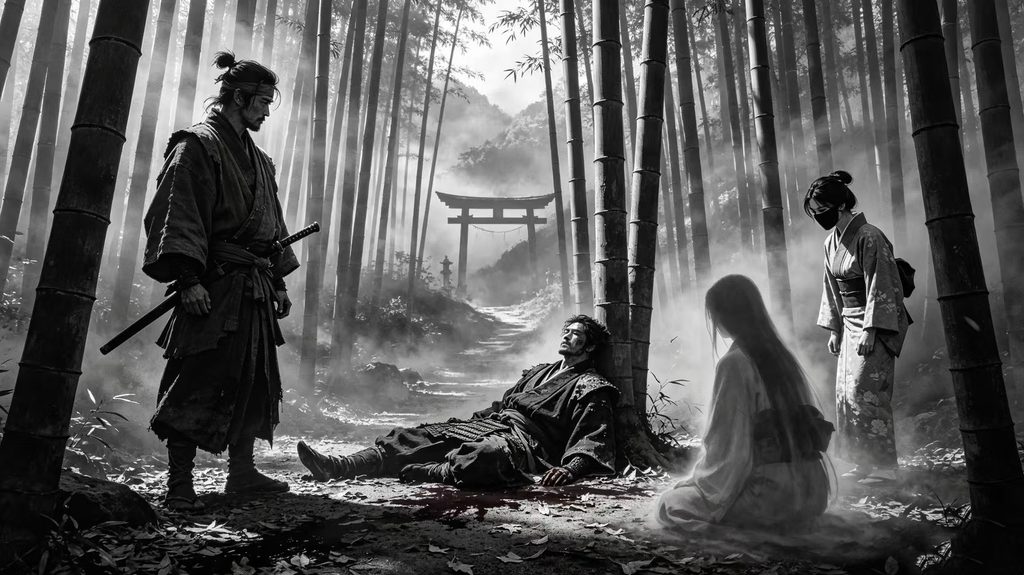
Deep within a secluded bamboo grove off the Yamashina highway,
a samurai’s lifeless body was discovered at daybreak.
The bamboo stems stood densely together,
interspersed with scattered cedar saplings,
forming a shadowy enclosure where sunlight could scarcely penetrate.
Fallen bamboo leaves around the corpse were stained with dried dark blood,
and the quiet woodland held no trace of the weapon
that had delivered the fatal wound.
A woodcutter, the first witness,
gave his testimony before the magistrate,
stating that he found only a length of hemp rope
and a woman’s comb beside the fallen man.
A travelling monk recalled encountering the samurai
and his wife on the previous afternoon.
The warrior carried a sword and a quiver of arrows,
while his young wife wore a veil that partially concealed her features.
They rode slowly along the mountain road,
seemingly unaware that danger lingered nearby.
A patrol officer later captured the notorious bandit Tajomaru,
who was known for robbery and assault across these mountain districts.
Tajomaru had fallen from a horse nearby,
and the steed matched the description of the mount ridden by the samurai’s spouse.
The old mother of the female traveller confirmed
that the deceased samurai was her daughter’s husband,
a man of gentle temperament from a respectable clan.
Tajomaru confessed to luring the couple into the thick bamboo grove,
claiming he had buried a hoard of antique treasures beneath the cedars.
Once the samurai stepped into the isolated woodland,
the bandit overpowered and bound him to a tree.
He then violated the samurai’s wife in front of her restrained husband.
In his account, the woman begged the two men to duel for her fate.
Tajomaru agreed, and they fought fiercely for more than twenty rounds.
At last, his blade struck the samurai’s chest,
and the woman fled from the grove before the duel concluded.
The robber insisted he had slain the warrior honourably in fair combat.
The wife’s confession told a vastly different story.
After the assault, Tajomaru fled into the woods,
leaving her alone with her bound husband.
She attempted to free him,
yet she met only icy contempt and scorn in his gaze.
He regarded her as defiled and worthless,
and refused to grant her mercy or death.
Overwhelmed by humiliation and despair,
she drove a small dagger into his breast to end his suffering,
before wandering aimlessly through the mountains in a daze.
Her narrative framed her deed as an act born from unbearable shame.
Through the medium of a shaman,
the spirit of the dead samurai spoke from the underworld.
He testified that after the assault,
his wife had urged Tajomaru to kill him without delay.
Even the bandit was repelled by her cruelty,
and offered the samurai the choice of sparing or slaying her.
The woman ran away into the thicket,
and Tajomaru cut the warrior’s bonds and departed.
Left alone in the silent bamboo,
the samurai plunged his own dagger into his heart,
choosing seppuku to preserve the dignity of his lineage.
He asserted that his death was an act of voluntary honour.
No single version of events aligns with the others.
Each speaker revises the memory of the crime
to defend their self-image and salvage personal honour.
The bamboo grove absorbs all conflicting accounts,
retaining no objective record of what truly transpired within its shadow.
The search for a definitive truth dissolves,
replaced by the revelation that every human recollection
is shaped by vanity, fear, and the craving for self-justification.
译文
在山科驿道旁一处人迹罕至的竹林深处,
一名武士的遗体于清晨被人发现。
林立的竹秆密密匝匝,
其间零星生长着杉树苗,
构筑成一片幽暗的围场,日光难以穿透。
遗体四周的竹叶浸染着已经干涸的暗色血迹,
幽静的林间,不见那柄造成致命创伤的凶器。
最先发现尸体的樵夫在典史面前供词,
他说只在死者身旁找到一段麻绳与一把女子的梳子。
一名云游僧人回忆,前一日午后曾与这对夫妻相遇。
武士身佩长刀,携箭筒与箭矢,
年轻的妻子罩着面纱,容颜半掩。
二人沿着山路缓缓前行,
全然不知危机已经潜伏在近旁。
捕役随后抓获了恶名远扬的强盗多襄丸,
此人常年在这片山区劫掠行凶。
多襄丸方才从马背上跌落,
那匹马的样貌,与武士妻子所乘坐骑完全吻合。
女子的老母出面作证,确认死者便是自己女儿的丈夫,
一位出身良家、性情温厚的武士。
多襄丸供认,他以林间埋有古物财宝为说辞,
诱骗夫妻二人走入茂密竹林。
待武士踏入这片与世隔绝的林地,
强盗迅速将他制服,捆绑在树干之上。
随后,他当着武士的面玷污了他的妻子。
按照强盗的说法,女子事后恳求二人决斗,以决定她的归宿。
多襄丸应允,二人激烈缠斗二十余回合。
最终他的利刃刺穿武士胸膛,
女子则在决斗尚未结束时逃离竹林。
强盗坚称,自己是在堂堂正正的对决之中斩杀武士。
妻子的忏悔,却讲述了全然迥异的经过。
施暴结束后,多襄丸独自遁入林中,
留下她与被缚的丈夫独处。
她试图解开绳索,
可迎向她的,只有丈夫冰冷鄙夷的目光。
他认定她已然受辱、不值一提,
既不肯宽恕她,也不愿赐她一死。
在无尽羞耻与绝望裹挟之下,
她将短刀刺入武士胸膛,了结他的性命,
之后神志恍惚,漫无目的地游荡在群山之间。
在她的叙事里,这一举动是不堪屈辱催生的抉择。
武士的亡魂借巫女之口,自幽冥之中道出第三种说辞。
他供述,暴行结束之后,
妻子竟怂恿多襄丸立刻将他杀死。
就连强盗也被这份残酷所震慑,
转而让武士抉择,放过或是处死这名女子。
女子随即奔逃消失在竹丛深处,
多襄丸割断武士身上绳索,径自离去。
独处在沉寂竹林之中,
武士将短刀刺入自己心口,以切腹保全家族尊严。
他认定,自己的死亡是主动维护名节的自尽。
所有叙事版本彼此抵牾,无法相互印证。
每一位叙述者都在重构案件经过,
只为维护自我形象,保全自身的体面。
这片竹林容纳下全部相互冲突的证词,
却不曾留存一份客观确凿的现场记录。
对唯一真相的探寻就此消解,
随之浮现的冷峻事实是:人的每一段记忆,
都会被虚荣、恐惧与自我辩护的本能所塑造。
🔍长难句赏析与拆解
原句一
Deep within a secluded bamboo grove off the Yamashina highway,
a samurai’s lifeless body was discovered at daybreak.
The bamboo stems stood densely together,
interspersed with scattered cedar saplings,
forming a shadowy enclosure where sunlight could scarcely penetrate.
句式解读
开篇采用地点状语前置的倒装铺陈,
以分词结构 interspersed、forming 逐层拓展环境描写,
where引导限制性定语从句修饰竹林空间。
句子由静态景物层层递进,营造封闭幽暗的叙事场域,
提前为后续真相被遮蔽的核心主题铺垫氛围。
句子主干:
A samurai’s lifeless body was discovered.
原句二
Each speaker revises the memory of the crime
to defend their self-image and salvage personal honour.
The bamboo grove absorbs all conflicting accounts,
retaining no objective record of what truly transpired within its shadow.
句式解读
前句以不定式短语标明人物叙事扭曲记忆的内在目的;
后句现在分词 retaining 作伴随状语,
宾语嵌套what引导的名词性从句,指向事件本身。
两句对仗呼应,由人的主观选择转向空间的象征意义,
逻辑层层收拢,点明全篇思辨重心。
句子主干:
Each speaker revises the memory.
The bamboo grove absorbs all conflicting accounts.
📖全篇句式特点
全文以法庭证词式的分段叙事为骨架,
不同人物的陈述段落保持句式风格的区分。
证人证言多用平实克制的短句,客观铺陈现场信息;
当事者自述多用舒展长句,夹带情绪与价值偏向,
暗藏自我美化的心理倾向。
整体文风冷静疏离,作者不设置全知叙述者介入评判,
仅平行陈列数份彼此矛盾的口述文本。
句式节奏随叙述身份流转,
不施加明确的价值引导,将判断的权责移交读者,
完美契合芥川龙之介对真相、人性的现代主义思辨笔法。
核心词汇
1. secluded
/sɪˈkluːdɪd/
僻静的,与世隔绝的
形容词(adj.)
2. testimony
/ˈtestɪməni/
证词,供述
名词(n.)
3. notorious
/nəʊˈtɔːriəs/
臭名昭著的
形容词(adj.)
4. duel
/ˈdjuːəl/
决斗
名词(n.) / 动词(v.)
5. contempt
/kənˈtempt/
鄙夷,轻蔑
名词(n.)
6. despair
/dɪˈspeə(r)/
绝望
名词(n.)
7. align
/əˈlaɪn/
一致,吻合
动词(v.)
8. vanity
/ˈvænəti/
虚荣
名词(n.)
💡主旨品读
《竹林中》的核心主旨,是对客观真相、
记忆可靠性与人性自欺的深度叩问。
小说跳出传统罪案故事寻找凶手的叙事惯性,
以多重平行证词构建相互瓦解的叙事迷宫。
没有任何一份口述可以作为最终事实,
每一名当事人都会依照自我期许裁剪记忆,
用说辞维护属于自己的尊严与身份。
武士、强盗、妻子三方的叙事分歧,
并非简单的谎言与真话的二元对立,
而是人性深处自我合理化本能的外化。
多襄丸渴望成为勇武坦荡的豪侠,
妻子试图维护绝境下的贞洁形象,
武士要守住武士阶层不容折损的名节。
每个人都在叙事之中完成自我塑造。
竹林本身是极具重量的象征。
它既是案发的物理空间,
也是隔绝绝对真实的精神边界。
芥川龙之介借这桩扑朔迷离的命案揭示,
纯粹中立的真相很难经由人的语言传递;
语言与回忆天然带有主观滤镜。
作品留给读者的不是案件答案,
而是长久的反思:我们所采信的“事实”,
是否仅仅是我们愿意相信的那一种版本。
©英语数字智库 版权所有
未经权利人许可,不得转载、摘抄、复制、
二次编辑或商用分发,违者将依法追究法律责任。
请点击返回首页收录经典目录