
 由 英语数字智库
了解更多:专升本应用文全集目录
作者:Lu Xun(鲁迅)
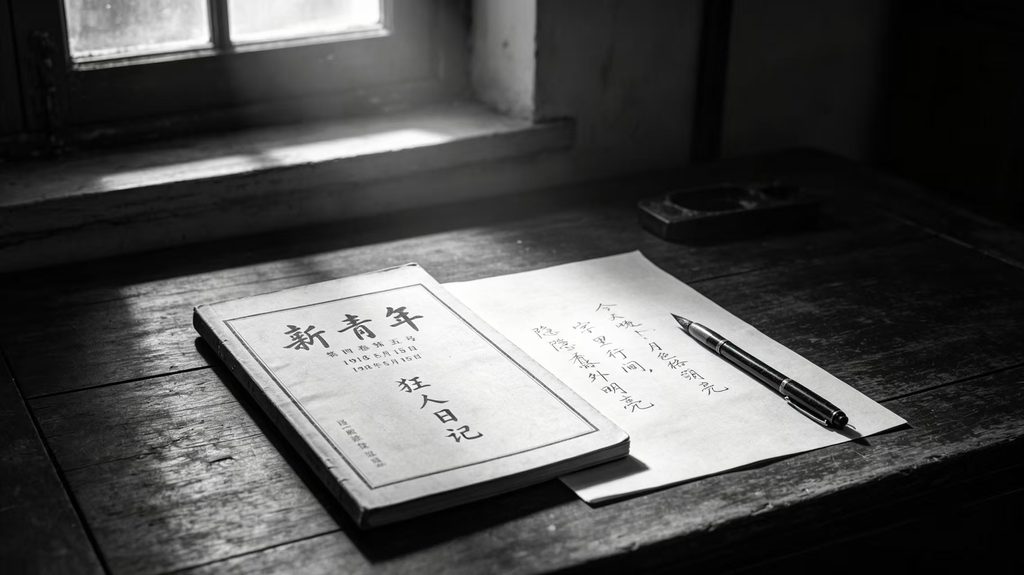
出版:1918年05月15日
收录集子:《呐喊》
创作背景:
本文首发于《新青年》第四卷第五号。
是中国现代文学史上第一篇白话短篇小说。
作品借一名被视作疯子的人的日记独白。
以荒诞、惊悚的主观视角,
揭露封建礼教“吃人”的内在本质。
承载新文化运动的启蒙诉求,
唤醒国人反思延续千年的封建文化弊病。
英文原文
Tonight the moon is very bright.
I have not seen it for over thirty years.
Today when I saw it,
my spirits were extraordinarily roused.
I realize that the past thirty years have been muddled.
But I must be extremely careful.
Otherwise, why should the Zhao family dog stare at me?
I have reason to be afraid.
Last night, the wolf-eyed villagers came to my house.
They looked at me strangely.
I know their glances hide a murderous thought.
I dare not look them straight in the eye.
Every face I meet seems to carry that secret intention.
When I walk along the street,
people draw back from me,
and they whisper to one another as I pass by.
Some children point their fingers at me and laugh.
Their cold eyes pierce my heart,
just like the eyes of the grown men.
I lock myself inside the room.
I examine the old history book piled on my desk.
Between every line of the text,
I can see two words written faintly: “Eat men.”
I read it again and again,
and the words glow clearer and clearer.
All the stories, all the principles,
are wrapped within this cruel truth.
Page after page, chapter after chapter,
the writers carefully arrange their words of virtue and righteousness.
Yet beneath those polished phrases,
the same dark purpose remains unchanged.
I turn to ask my elder brother.
He tells me that such customs have existed since ancient times.
He says it is the natural way of the world.
His calm tone chills me to the bone.
He is one of them.
He too accepts this terrible rule without question.
I try to argue with him,
to tell him what I have discovered in those ancient books.
He only sighs,
shakes his head,
and decides that I have fallen deeper into madness.
Children pass by the window.
They also stare at me with cold eyes.
They have not learned this by themselves.
Adults have taught them silently.
The poison passes down from generation to generation.
No one suspects that they are trapped in the same evil system.
Even the little boys who once ran to play with me
now shrink away at the sight of my face.
They have already absorbed the hidden hatred
that binds the whole village together.
I think of the young woman who cried for her son.
I think of the farmer who beat his wife.
I think of the man who was dragged away and punished last month.
Every incident that once puzzled me
now fits into this terrible pattern.
All these people,
whether knowingly or unknowingly,
participate in this ancient cannibalistic ritual.
They punish those who break the old rules,
and they feed on the weak without guilt.
Am I the only one who can see it?
If I speak out,
they will call me mad.
They will isolate me, restrain me,
and make me disappear quietly.
Yet I cannot close my eyes to what I have discovered.
This society devours the weak,
and covers its cruelty with moral doctrines.
The so-called ethics, loyalty and filial piety,
are nothing but fine wrappings for the old crime.
Even my own brother may eat me.
I am his younger brother.
That fact does not protect me.
Blood ties cannot defeat the long-standing custom.
I pace back and forth in the dim room.
My mind races,
and terror rises endlessly in my chest.
He has raised me, cared for me,
and yet he would not hesitate to sacrifice me
to keep the old order undisturbed.
I think of myself.
Perhaps I have unconsciously eaten several pieces of human flesh in the past,
through the food I shared with the others.
Now I understand the horror of it.
I cannot continue to be part of this cycle.
I must break away from it,
even if the whole world stands against me.
But hope has not vanished completely.
Among countless people,
there must be some who have not eaten human flesh.
Can we find a way to break this vicious cycle?
Can we stop this ancient crime once and for all?
I cry out in the darkness.
Save the children.
Perhaps only the young generation
can escape the curse of the old world.
We must break the chain of this cannibalistic tradition.
We must build a world where human beings do not devour one another.
译文
今天晚上,月色格外明亮。
我已经三十余年不曾见过这样的月亮。
今夜望见月色,
我的心绪异常激荡。
我才明白,过去三十多年全都混沌度日。
但我必须万分小心。
不然,赵家的狗为何一直盯着我?
我的恐惧并非没有缘由。
昨夜,那些眼如饿狼的乡人来到我家。
他们看我的神情十分怪异。
我清楚,他们的目光里藏着害人的心思。
我不敢直视他们的双眼。
我遇见的每一张面孔,仿佛都藏着这个隐秘的企图。
我走在街上的时候,
路人纷纷躲开,
在我经过的时候交头接耳。
有的孩子伸手指着我讥笑。
他们冰冷的目光刺进我的心底,
和成年人的眼神一模一样。
我把自己锁在屋内。
翻看堆放在案头的旧史书。
字里行间,
我隐隐看见两个字:吃人。
我反复研读,
这两个字愈发清晰刺眼。
所有的典故、所有的纲常礼教,
全都包裹在这残酷的真相之下。
一页一页,一章一章,
写书人精心铺陈仁义道德的字句。
可在这些修饰妥当的文字之下,
那黑暗的目的从来没有改变。
我转头询问兄长。
他告诉我,这种习俗自古已然。
他说这本就是世间常态。
他平静的语调令我浑身发冷。
他也是他们当中的一员。
他同样毫无质疑地接纳这套可怕的规则。
我试着和他争辩,
告诉他我在古籍之中看到的真相。
他只是叹息,
摇着头,
认定我的疯病愈发严重。
孩童从窗边走过。
他们同样用冰冷的目光望向我。
这份恶意并非天生。
是成年人在无声之中教会了他们。
这种毒害代代相传。
没有人察觉,自己也深陷这套恶的体系之中。
就连从前跑来和我玩耍的小男孩,
如今看见我也慌忙躲闪。
他们早已染上潜藏的敌意,
而这份敌意,把整个村庄牢牢捆绑在一起。
我想起那个为儿子哀哭的妇人。
想起殴打妻子的农夫。
想起上个月被拖走受罚的那个人。
从前所有令我费解的事情,
此刻全都契合这可怕的逻辑。
这些人,
无论自知或是懵懂,
都参与这场延续千年的吃人仪式。
他们惩罚打破旧规的人,
心安理得地吞噬弱者。
难道只有我看清了真相?
倘若我当众说出,
他们便会认定我疯癫。
他们会孤立我、禁锢我,
让我悄无声息地消失。
可我无法对亲眼所见的一切视而不见。
这个社会吞噬弱者,
还用道义纲常掩盖自身的残忍。
那些所谓的伦理、忠孝,
不过是给古老罪行裹上精致外衣。
就连我的兄长,也可能吃掉我。
我是他的弟弟。
这层身份并不能保护我。
血缘亲情,敌不过沿袭已久的陋习。
我在昏暗的屋中来回踱步。
思绪翻涌,
恐惧在心底不断蔓延。
他养育我、照料我,
可为了维持旧秩序不受动摇,
他会毫不犹豫地牺牲我。
我开始思索自身。
或许从前,在和众人一同进食的时候,
我也在无意识之间吃下过人肉。
此刻我才知晓其中的可怖。
我不能继续身处这个循环之中。
我必须挣脱出去,
哪怕全世界都与我为敌。
可希望并未彻底消亡。
千千万万人之中,
一定还有未曾吃过人的人。
我们能否找到办法打破这个恶性循环?
我们能否彻底终止这桩古老的罪孽?
我在黑暗之中呐喊。
救救孩子。
或许只有年轻一代,
能够挣脱旧世界的诅咒。
我们必须斩断吃人的传统锁链。
我们要建立一个人不再吃人的世界。
🔍长难句赏析与拆解
原句一
If I speak out,
they will call me mad.
They will isolate me, restrain me,
and make me disappear quietly.
句式解读
本句包含if引导真实条件状语从句,
遵循“主将从现”的语法规则。
主句由三个并列的谓语动词构成排比结构,
层层递进,清晰呈现狂人预判自身将要承受的迫害。
句式简洁有力,节奏紧凑,
以外在的威胁反衬主人公内心的清醒与孤独,
是心理独白文体典型的表达范式。
句子主干
They will call me mad.
原句二
Between every line of the text,
I can see two words written faintly: “Eat men.”
句式解读
本句为地点状语前置的主谓宾句式。
介词短语Between every line of the text置于句首,
起到强调作用,突出真相潜藏于典籍文字之中。
written faintly为过去分词后置定语,
修饰two words,表被动状态。
冒号用于引出核心宾语内容。
文字表层陈述视觉所见,
深层具备强烈象征寓意,
以极简句式承载全文核心隐喻。
句子主干
I can see two words.
📖全篇句式特点
文本采用第一人称日记独白体。
句式长短错落,节奏跟随人物心理起伏变化。
心理猜忌、紧张惊惧之处多用短句,短促有力。
思辨、追问与反思段落搭配长句铺展思绪。
大量使用宾语从句、条件状语从句、
地点状语前置结构、分词后置定语。
叙事摒弃第三人称客观叙述,
全部依托狂人的主观感知推进情节。
语言克制凝练,表层是疯人呓语,
深层承载严肃的社会批判主题。
适合开展文学象征手法研读、第一人称叙事、
英语议论文思辨句式仿写训练。
核心词汇
1. extraordinarily
/ɪkˈstrɔːdnrəli/
异常地,格外
副词(adv.)
2. muddled
/ˈmʌdld/
混沌的,糊涂的
形容词(adj.)
3. stare
/steə(r)/
凝视,盯着看
动词(v.)
4. murderous
/ˈmɜːdərəs/
蓄意害人的,凶残的
形容词(adj.)
5. restrain
/rɪˈstreɪn/
约束,禁锢
动词(v.)
6. faintly
/ˈfeɪntli/
隐约地,微弱地
副词(adv.)
7. cannibalistic
/ˌkænɪbəˈlɪstɪk/
食人的
形容词(adj.)
8. vicious
/ˈvɪʃəs/
恶性的,邪恶的
形容词(adj.)
9. curse
/kɜːs/
诅咒,灾祸
名词(n.)
10. doctrine
/ˈdɒktrɪn/
教义,信条
名词(n.)
📜文学赏析
本篇节选为《狂人日记》核心段落。
作者借狂人的非正常视角构建叙事框架。
狂人并非纯粹的疯子,
而是混沌世间唯一清醒的观察者。
文中“吃人”是全文核心象征意象。
它不指代肉体上的吞噬,
隐喻封建礼教对个体精神的压抑、摧残与同化。
史书、伦理、习俗,
全部成为这套吃人体系的载体。
作品逐层铺展迫害链条:
从乡人、兄长,一直延伸到懵懂孩童。
表明这种毒害具备代际传递的特征。
整个社会在潜移默化之中,
共同维护这套残酷的秩序。
鲁迅没有直接发表长篇议论,
而是依托疯人的碎片化内心独白。
以幻觉、猜疑、惊惧的感受,
撕开传统文明温情脉脉的外衣。
冷静的文字之下,饱含沉痛的启蒙焦虑。
结尾“救救孩子”是全文的呐喊落点。
寄寓作者打破历史循环、
重塑民族精神的启蒙理想。
这篇作品形式创新、立意尖锐,
奠定中国现代白话文学启蒙批判的基调。
💡主旨品读
选文以狂人日记的第一人称视角展开。
主人公在月色之下惊醒自省,
翻阅古籍,从中读出“吃人”二字。
逐步意识到身边所有人,
都身处这套延续千年的封建吃人秩序之内。
文章揭示封建礼教的欺骗性与破坏性。
这套秩序依靠习俗、伦理、教化代代延续,
泯灭独立人格,吞噬个体价值。
身处其中之人,大多习以为常,
浑然不觉自身即是加害者。
狂人作为唯一觉醒者,
清醒却不被世人理解,
注定被贴上疯癫的标签。
这种反差,凸显先驱启蒙者的孤独处境。
作者将变革的希望寄托于尚未被旧习浸染的孩童,
发出“救救孩子”的呼告。
呼吁斩断吃人的文化锁链,
建立尊重人的价值的全新社会。
选文兼具象征深度与思想锋芒,
是新文化运动启蒙文学的标杆文本,
适合英语课堂开展跨文化文学对比研读。
©英语数字智库 版权所有
未经权利人许可,不得转载、摘抄、复制、
二次编辑或商用分发,违者将依法追究法律责任。
请点击返回首页收录经典目录