
 由 英语数字智库
了解更多:雅思:常规本意&熟词僻义目录
The Red and the Black《红与黑》
作者:Stendhal(司汤达)
法国首次出版:1830 年 11 月 13 日
巴黎 Levavasseur,独立长篇小说,初版扉页常标注为 1831
收录说明:后世多单独刊行,亦收录于司汤达全集,
是法国批判现实主义经典代表作
创作背景:
《红与黑》原题为《1830年纪事》,
创作于法国波旁复辟王朝时期。
拿破仑帝国覆灭之后,
旧贵族重回权力中心,
教会势力也借机扩张。
森严的等级壁垒,
牢牢困住底层青年上升的通道。
司汤达以青年于连的人生悲剧,
揭露复辟时代贵族、教会、资产阶级三方交织的虚伪,
写出底层个体在时代夹缝里,
野心、自尊与命运的激烈碰撞。
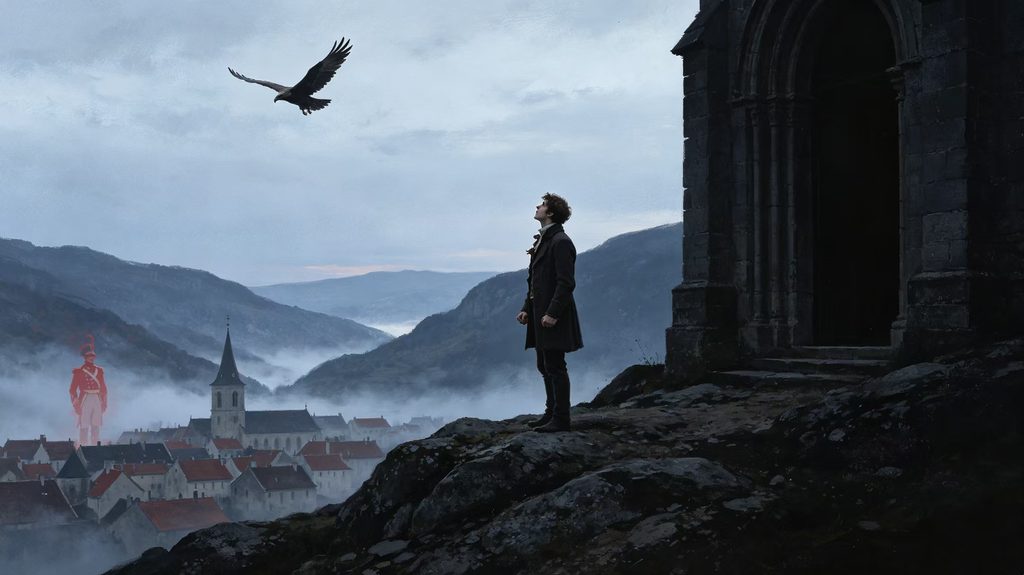
英文原文
Julien possessed both a fiery soul
and an extraordinary memory.
He had learned by heart
the whole volume of the New Testament,
and also the work of Monsieur de Maistre.
He believed in neither.
His memory served him solely
to make his words pass for sincere.
From his earliest childhood
he had dreamed of glory.
He envied Bonaparte
who, an unknown lieutenant,
had made himself master of the world.
At the age of fourteen,
he had seen the flag of the regiment
of dragoons pass through the town,
and from that moment,
his heart was set on a military career.
But soon,
when he saw the young priests
with their black cassocks,
and the respect they received,
his ambition changed its direction.
He would become a priest.
He worked hard at Latin,
and soon astonished the old priest,
who taught him theology.
The priest recommended him
to the mayor of Verrières,
Monsieur de Rênal,
as tutor for his children.
Julien accepted the offer,
and entered the house of the mayor.
Madame de Rênal,
the mayor’s wife,
was a woman of gentle and sensitive nature.
At first she feared the tutor,
thinking him a rough,
uncouth peasant.
But when she saw him,
pale and handsome,
with soft eyes,
her fear vanished.
Little by little,
she grew fond of him,
and Julien,
though he was always on his guard,
found himself drawn to her.
Their love began in secret,
but gossip spread through the small town.
Julien was forced to leave Verrières,
and entered the seminary in Besançon.
In the seminary,
he learned to hide his feelings,
and to play the part of a pious,
obedient student.
He won the favour of the director,
Father Pirard,
who sent him to Paris,
to serve the Marquis de la Mole.
In the marquis’s house,
Julien met Mathilde,
the marquis’s proud and brilliant daughter.
Mathilde was bored by the empty,
fashionable young men around her.
She was fascinated by Julien,
his strength,
his pride,
his strange,
wild soul.
They became lovers,
and Mathilde told her father
that she wished to marry him.
The marquis was furious at first,
but at last,
he gave way.
He gave Julien a title,
and a commission in the army.
Julien’s dream of glory seemed about to come true.
Then a letter arrived,
written by Madame de Rênal,
under pressure from her priest,
telling the marquis that Julien
was a schemer,
who had seduced her for money and position.
The marquis broke off the marriage.
Blinded by rage and despair,
Julien hurried back to Verrières.
He entered the village church,
where Madame de Rênal knelt in prayer,
and fired his pistol at her.
He did not kill her,
but the act sealed his fate.
He was arrested,
brought before the court.
He made no plea for mercy.
“I am a peasant,”
he said to the jury.
“My crime is simply this:
I dared to desire a station
that your society refuses to the poor.”
In prison,
his wild ambition faded away.
He saw clearly how much of his struggle
had been empty vanity.
Madame de Rênal visited him,
and at last they spoke without deceit,
without pride,
without calculation.
He calmly awaited execution.
He would not beg grace
from a world that had always scorned him.
When the end drew near,
his thoughts returned
to those eagles upon the hills,
to the fierce,
brief courage
of a man who refused to submit.
译文
于连拥有滚烫热烈的灵魂,
还有过目不忘的惊人记忆力。
他熟记整本《新约》,
也熟读迈斯特的著作。
可这两样,他全都不信。
他背诵这些,只为
让自己的言语看起来虔诚真心。
从幼年开始,
他就梦想着荣耀。
他羡慕波拿巴,
曾经只是无名少尉,
却征服了整个世界。
十四岁那年,
他看见龙骑兵团的旗帜
穿过小镇,
从那一刻起,
他一心想要从军。
但没过多久,
当他看见年轻教士
身着黑袍,
受人尊敬,
他的野心换了方向。
他决心成为一名教士。
他刻苦学习拉丁文,
很快让教他神学的老神父惊叹。
神父把他举荐给维里埃尔市长,
德·雷纳尔先生,
做孩子们的家庭教师。
于连接受了这份工作,
走进市长的宅邸。
市长夫人德·雷纳尔夫人,
性情温柔又敏感。
一开始她害怕这位家庭教师,
以为他是粗鄙的乡下人。
可当她看见他,
面色白净,容貌俊秀,
眼神柔和,
心中的恐惧消散了。
慢慢的,
她对他心生好感,
而于连,
时刻保持戒备,
却也不由自主被她吸引。
他们的爱恋在暗中滋生,
流言很快传遍这座小城。
于连被迫离开维里埃尔,
进入贝藏松神学院。
在神学院里,
他学会掩藏本心,
扮演虔诚顺从的学子。
他得到院长皮拉尔神父的赏识,
神父安排他去往巴黎,
给拉莫尔侯爵做事。
在侯爵府邸,
于连遇见玛蒂尔德,
侯爵骄傲又聪慧的女儿。
玛蒂尔德厌烦身边那些
空洞浮华的贵族青年。
她被于连吸引,
欣赏他的力量,
他的自尊,
他那独特又桀骜的灵魂。
二人相恋,
玛蒂尔德告诉父亲,
想要和他成婚。
侯爵起初勃然大怒,
最后还是松了口。
他赐予于连头衔,
还给了他军队的委任状。
于连的荣耀之梦眼看就要成真。
就在这时,一封信寄来了。
德·雷纳尔夫人在神父逼迫下写下信件,
告诉侯爵,于连是个投机者,
当初引诱她,只为钱财与地位。
侯爵取消了婚约。
愤怒与绝望冲昏头脑,
于连匆匆赶回维里埃尔。
他走进乡村教堂,
德·雷纳尔夫人正跪在那里祈祷,
他举枪向她射击。
他没能杀死她,
可这件事注定了他的结局。
他被捕,
站上法庭。
他没有乞求宽恕。
“我是农民之子,”
他对陪审团说道。
“我的罪名很简单:
我敢于去追求一个位置,
而你们这个社会,
不肯留给穷人。”
牢狱之中,
狂热的野心慢慢消散。
他终于看清,
自己大半的挣扎,
都只是虚妄的虚荣。
德·雷纳尔夫人来狱中探望他,
这一刻,
他们坦诚交谈,
没有伪装,
没有骄傲,
没有算计。
他平静等待行刑之日。
他不会向这个素来轻视他的世界乞求怜悯。
终点将近之时,
思绪回到山间的雄鹰,
想起这个不肯屈服的人,
那热烈而短暂的勇气。
🔍长难句赏析与拆解
原句一
He dreamed of entering the army,
of wearing the red uniform
that had made Napoleon’s soldiers
masters of Europe.
句式解读
that引导定语从句修饰red uniform。
红色军装是全书核心意象,
代表拿破仑时代
凭个人才华打破阶级的理想。
于连所有的向往都寄托于此,
但是时代变迁,这条路已经断绝,
埋下悲剧根源。
文字平静,
藏着少年滚烫的渴望,
和冰冷现实之间的冲突。
以意象托内心,
不直白抒情。
句子主干
He dreamed of entering the army and wearing the red uniform.
原句二
“My crime is simply this:
I dared to desire a station
that your society refuses to the poor.”
句式解读
that引导定语从句修饰station。
这是全书高潮台词,
是于连精神的顶点。
他承认开枪的行为,
但是直指真正的矛盾:
社会剥夺底层人向上的权利。
短句锋利克制,
没有激烈控诉,
却力量厚重,
契合司汤达冷静写实的风格。
句子主干
My crime is this: I dared to desire a station.
📖全篇句式特点
文本长短句交错,
贴合原著冷静内敛的文风。
多用定语从句,
修饰人物、环境意象。
描写雄鹰、山野、教堂的时候,
句子舒展开阔,
烘托于连内心的向往;
法庭独白、狱中沉思部分,
句子简短凝练。
作者依靠景物意象承载人物情绪变化,
很少直接评价于连对错。
于连的野心、自卑、骄傲、醒悟,
全部藏在场景与情节之中。
核心词汇
1. fiery
/ˈfaɪəri/
炽热的;激烈的
形容词(adj.)
2. obscure
/əbˈskjʊə(r)/
卑微的,无名的
形容词(adj.)
3. contempt
/kənˈtempt/
轻视,鄙夷
名词(n.)
4. condescension
/ˌkɒndɪˈsenʃn/
居高临下,傲慢
名词(n.)
5. inferior
/ɪnˈfɪəriə(r)/
低等的,下位的
形容词(adj.)
6. eagle
/ˈiːɡl/
雄鹰
名词(n.)
7. despair
/dɪˈspeə(r)/
绝望
名词(n.)
8. prison
/ˈprɪzn/
监狱
名词(n.)
9. vanity
/ˈvænəti/
虚荣
名词(n.)
10. submit
/səbˈmɪt/
屈服,顺从
动词(v.)
📜文学赏析
《红与黑》是现实主义小说里程碑。
书名里的红色,
象征拿破仑时代的军功理想、热血;
黑色,
象征教会黑袍、虚伪保守的统治秩序。
于连是一个矛盾的底层青年:
他憎恶上流社会的虚伪不公,
却又拼命想要挤进这个圈子;
他自尊敏感,
不肯接受天生低人一等的命运,
在爱情、权欲里不断挣扎。
司汤达没有把他写成单纯的好人或者坏人,
而是用山野雄鹰、幽暗教堂、囚室这些意象,
一步步展现他心境变化。
前期雄鹰是自由理想;
到最后狱中醒悟,幻想破灭。
小说冷静揭露波旁复辟时代僵化的阶级壁垒:
出身决定上限,
底层青年向上的道路被堵死,
宗教、贵族、上层联手维护这套不公秩序。
💡主旨品读
小说借于连短暂又惨烈的一生,
探讨野心、尊严、阶级、理想与现实。
红色的理想早已无路可走,
黑色的道路满是虚伪陷阱。
一个聪慧不甘平庸的底层青年,
拼尽全力抗争,
最终走向毁灭。
作品告诉我们:
个体的才华与不甘,
在固化的阶级体系面前十分脆弱。
同时也引导读者思考:
当社会不给普通人公平上升的通道,
这份挣扎本身,
就自带悲剧力量。
司汤达不做道德说教,
只把人物的挣扎和结局摆在读者眼前,
让我们自行体会这份沉重。
©英语数字智库 版权所有
未经权利人许可,不得转载、摘抄、复制、
二次编辑或商用分发,违者将依法追究法律责任。
请点击返回首页收录经典目录