
 由 英语数字智库
了解更多:雅思:常规本意&熟词僻义目录
The Stranger《局外人》节选
作者:Albert Camus(阿尔贝·加缪)
法国首次出版:1942 年 5 月 19 日
巴黎伽利玛出版社(Gallimard)
独立中篇小说,原名《L’étranger》。
收录说明:独立单行本,也常收录于加缪作品集,
是荒诞哲学与存在主义文学里程碑代表作。
创作背景:
本文是存在主义文学的里程碑作品。
作者以第一人称默尔索的视角,
讲述一个不遵循世俗情感规则的普通人,
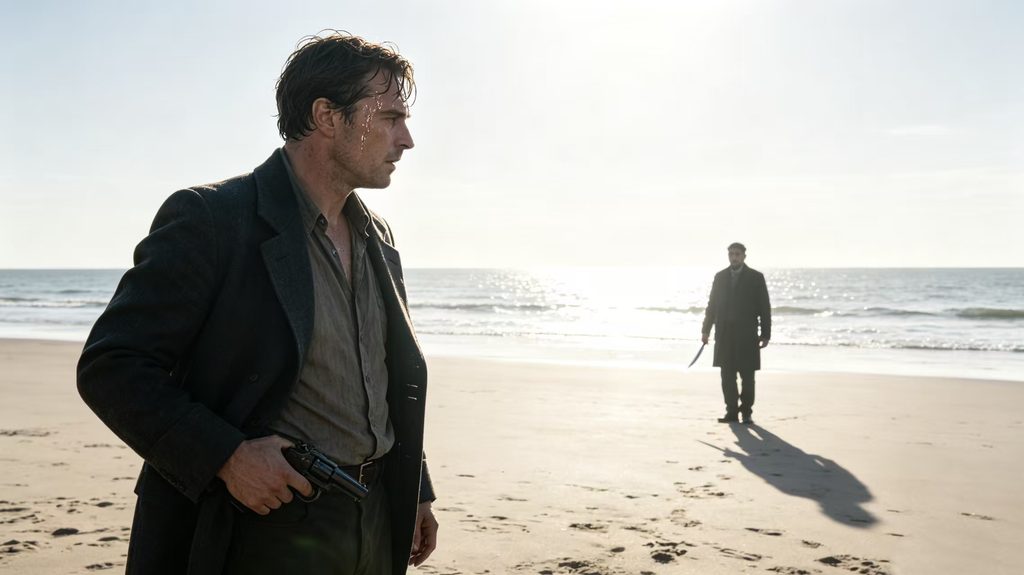
因为一场海滩上的偶然杀人事件站上法庭。
世人审判他,并不是因为杀人本身,
而是审判他没有按照社会期待表现悲伤、忏悔。
作品抛出加缪核心的荒诞哲学:
世界本身没有预设的意义,
人被迫活在他人制造的道德与情绪标准之中。
英文原文
Maman died today.
Or maybe yesterday, I cannot be sure.
I received a short telegram from the nursing home.
It read that my mother had passed away,
and her funeral would take place tomorrow.
I stared at those plain words for a long time.
I kept asking myself inside:
Why did they not write down the exact day?
Was it today, or was it yesterday?
It felt strange that I could not even confirm this simple fact.
The nursing home lay in Marengo,
eighty kilometers away from Algiers, where I lived.
I planned to take the two o’clock bus.
I would arrive there in the afternoon,
keep vigil beside her coffin through the night,
and head back home the next evening.
I asked my boss for two days of leave.
Logically, he had no good reason to refuse me.
Still, I could tell that he looked annoyed.
Without thinking carefully, I told him,
“It is not my fault.”
He did not reply a single word.
Right after I said it, I wondered:
Should I have said that sentence?
Did it sound like I was making excuses?
I did not feel guilty for anything.
It was only natural that I needed time for the funeral.
I hurried off from the office.
I stopped by my friend Emmanuel’s place,
and borrowed his black tie and mourning ribbon.
He had lost his own uncle a few months before.
I had to run fast to catch the bus.
The bright sunlight glared on the road surface.
Gasoline smell filled the air inside the vehicle.
The bumpy ride made me sleepy very soon.
I leaned against a soldier beside me and dozed off.
When I woke up, he smiled and asked if I had traveled far.
I just nodded briefly.
I had no desire to start a casual conversation.
The nursing home was a short walk from the village.
I walked there on foot.
The first thing I wanted was to see my mother.
But the porter told me that I must meet the director first.
The director was busy, so I had to wait.
The porter talked on and on while I waited.
He told me many trivial things about the old people there.
After some time, I was led into the director’s small office.
He was a tiny old man with gray hair.
A medal ribbon was pinned on his coat lapel.
He looked straight into my eyes for quite a while.
Then he shook my hand and held it so long,
that I did not know how to pull my hand away politely.
He flipped through a file on his desk.
He told me that Maman had moved into this home three years ago.
I was her only financial support.
A thought popped up in my mind:
Is he blaming me for sending her here?
I opened my mouth to explain myself.
But he stopped me at once.
He said I did not need to defend my choice.
He knew my salary was low,
and my mother could receive better care here.
Most importantly, she had grown happier in this place.
I listened quietly and answered, “Yes.”
Then he asked whether I wanted to see my mother.
I stood up without saying anything.
He led me down the stairs.
He explained that they had moved her body into the mortuary room.
Whenever someone died in this home,
the other elderly residents would get nervous for days.
It would bring extra trouble to all the staff.
We crossed an open courtyard.
Groups of old men chatted together softly.
They all fell silent the moment we walked near them.
As soon as we passed by, their whispering started again.
Their voices sounded like caged parakeets to me.
The director stopped at the door of a small low building.
He told me he would leave me alone here.
If I needed anything, I could find him in his office.
The funeral was arranged for ten o’clock tomorrow morning.
I could stay with my mother’s coffin overnight.
He also added that my mother’s friends told him
she hoped to have a church burial ceremony.
He had already arranged for the priest.
He just wanted me to know this decision.
I thanked him calmly.
I knew Maman was not a religious person.
She never spent time thinking about God or prayers.
I stepped into the mortuary room.
The walls were whitewashed, and a big skylight let in daylight.
There were only several chairs and wooden trestles inside.
In the middle of the room stood her closed coffin.
The porter followed me in and offered to unscrew the lid.
He asked if I wanted to look at her for the last time.
I thought for a second, then refused.
I did not know why I said no.
I did not feel sad, nor did I feel fear.
I just knew I did not want to see her face.
The porter nodded and backed away, leaving me by myself.
I sat there and watched the coffin.
Slowly, more old friends of my mother came in.
They sat down on chairs around me.
None of them cried.
They just stared at the wooden box silently.
After a long while, I began to feel extremely tired.
My head was heavy, and my eyes burned.
I could hear every tiny sound in this quiet room.
I kept thinking:
What are these people expecting from me?
Do they expect me to weep, to break down, to show sorrow?
I did not feel that sorrow inside me.
Does that make me a cold, terrible person?
After the funeral, I went back to Algiers.
The next day, I met Marie, the girl I liked.
We swam together, watched a comedy movie,
and spent the evening at my apartment.
Marie asked me if I loved her.
I told her that I probably did not.
She asked if I wanted to marry her.
I said marriage did not matter to me,
but I would marry her if she wanted.
I could see she was a little upset by my answer.
I wondered again:
Am I supposed to say passionate words?
Must I follow the way other lovers talk?
Later, my neighbor Raymond drew me into his trouble.
He had conflicts with an Arab man.
One hot, blazing afternoon,
I walked alone down to the beach.
I ran into that Arab man on the sand.
The sun beat down fiercely on my forehead.
Light reflected sharply from the sea and the blade he held.
Everything felt dizzy and unreal.
Without clear plan, I took out the gun and fired.
One shot hit him.
Then, after a short pause, I fired four more times.
I stood there, shocked by what I had just done.
I did not hate this man deeply.
It was not anger that pushed my finger.
It was the burning sun, the heat, the dazzling light.
I could not fully explain it even to myself.
I was arrested soon after.
During the trial, the prosecutor barely talked about the shooting itself.
Instead, he kept bringing up my mother’s funeral.
He repeated that I did not cry,
that I went on a date the next day,
that I could not lie and pretend to have deep grief.
He claimed I was a soul without morality,
a monster hiding among ordinary people.
I sat in the courtroom and listened.
I asked myself silently:
Am I being judged for murder,
or judged for refusing to fake the feelings society demands?
I had followed only what I truly felt.
Why is that treated as a crime?
At last, the court sentenced me to death.
I was locked in a cell, waiting for the execution.
A priest came to visit me, trying to make me pray to God.
He wanted me to repent and find comfort in religion.
I grew angry and shouted at him.
I did not believe in God.
I did not need salvation.
In the end, as I looked up at the night sky,
I felt a strange peace settle over me.
I understood the absurd truth:
No life has fixed, given meaning.
The world is indifferent to all human joys and sorrows.
I opened myself fully to the gentle indifference of the universe.
译文
今天,妈妈死了。
也可能是昨天,我没法确定。
我收到养老院发来一封简短电报。
电报上说,母亲已经离世,
葬礼安排在明天举行。
我盯着这几句平淡的文字看了很久。
我在心里反复追问自己:
他们为什么不写明准确的日期?
是今天,还是昨天?
连这么简单一件事,我都无法确认,感觉很怪异。
养老院坐落在马伦戈,
距离我居住的阿尔及尔有八十公里。
我打算搭乘两点钟的巴士。
下午就能赶到那里,
整夜守在她的棺木旁,
第二天傍晚再动身回城。
我向老板申请两天假期。
按理来说,他没有理由拒绝我。
可我能看出来,他面露不悦。
我没有仔细斟酌,脱口而出:
“这不是我的错。”
他一句话也没有回应。
话音刚落,我心里就在琢磨:
我该不该说这句话?
听起来会不会像是在找借口?
我并不觉得自己有什么过错。
我只是需要时间参加葬礼,这本该理所当然。
我匆匆离开办公室。
顺路去朋友埃马纽埃尔家里,
借了他的黑领带和丧带。
几个月前,他的叔叔也去世了。
我一路狂奔,才勉强赶上巴士。
刺眼的阳光照在路面上。
车厢里弥漫着汽油的味道。
颠簸的路途很快就让我昏昏欲睡。
我靠在身旁一名士兵身上睡着了。
等我醒来,他笑着问我是不是远道而来。
我只是简单点了点头。
我没有兴致和陌生人闲聊。
养老院离村子不远,我步行过去。
我第一件事,就是想去看看母亲。
但是门房告诉我,必须先去见院长。
院长正在忙,我只能等候。
等待的时候,门房一直和我说话。
跟我讲养老院里老人们各种各样的琐事。
过了一阵子,我被带进院长小小的办公室。
他是个头发花白的矮小老人,
衣襟上别着一枚勋章绶带。
他久久凝视着我的眼睛。
然后握住我的手,握得很久很久,
我都不知道该怎么礼貌抽回手。
他翻着桌上的档案。
他告诉我,母亲三年前住进这家养老院。
我是她唯一的经济依靠。
我心里冒出一个念头:
他是不是在责怪我把母亲送到这里?
我刚想开口解释。
他立刻制止了我。
他说我不必为自己的选择辩解。
他清楚我的收入微薄,
母亲在这里能够得到更好的照料。
最重要的是,她在这里过得更加舒心。
我安静听着,只答了一句:“是的。”
之后他问我,要不要去看看母亲。
我一言不发,站起身。
他领着我走下楼梯。
他解释,遗体已经安置在停尸间。
养老院里只要有人离世,
其余老人连续好几天都会心神不宁,
会给工作人员增添很多麻烦。
我们穿过一片院子。
一群老人三三两两低声闲谈。
我们走近的时候,他们全部安静下来。
等我们一走过去,低语声又重新响起。
听上去,像笼子里鹦鹉细碎的叫声。
院长在一间低矮小屋门口停下。
他说,接下来让我一个人待在这里。
如果有任何需要,可以去办公室找他。
葬礼定在明天上午十点。
我可以整夜陪着母亲的棺木。
他还补充说,听母亲的朋友讲,
母亲希望按照教会仪式下葬。
神父那边他已经安排妥当。
只是告知我这件事。
我平静地向他道谢。
我清楚母亲并不是信徒,
一辈子从来没有思考过神明、祷告这些东西。
我走进停尸房。
墙壁刷得雪白,一块巨大的天窗透进日光。
屋内只有几把椅子和木支架。
屋子正中,安放着她封好的棺木。
门房跟着进来,问要不要拧开棺盖。
问我要不要最后看她一眼。
我思索片刻,拒绝了。
我自己也说不清为什么拒绝。
我不悲伤,也不恐惧。
我只是知道,我不想看见她的脸。
门房点点头退出去,留我一个人。
我坐在那里,望着棺木。
没过多久,母亲生前的老友陆续走进来。
他们围着我四周坐下。
没有人哭泣。
只是静静盯着这口木棺。
过了很久,疲惫感把我吞没。
脑袋发沉,眼睛酸胀。
安静的房间里,每一点细微声响都清晰可闻。
我不断思索:
这些人期待我做出什么样子?
他们是不是等着我痛哭、崩溃、流露哀痛?
我的心底没有这份哀痛。
难道仅仅这样,我就是一个冷漠不堪的人吗?
葬礼结束之后,我回到阿尔及尔。
第二天,我见到了我喜欢的姑娘玛丽。
我们一起游泳,看喜剧电影,
晚上待在我的住处。
玛丽问我爱不爱她。
我告诉她,我大概并不爱。
她又问我愿不愿意和她结婚。
我说婚姻对我来说无关紧要,
但是如果她想结婚,我可以答应。
我看得出来,她对这个回答有些失落。
我又一次自问:
我是不是该说出热烈动听的情话?
我必须学着其他恋人那样说话吗?
后来,我的邻居雷蒙把我卷入他的纠纷。
他和一名阿拉伯男子结下仇怨。
一个烈日灼人的午后,
我独自走到海滩上。
在沙滩上,我撞见了那个阿拉伯男人。
太阳狠狠烘烤着我的额头。
海面和他手中刀锋反射出刺眼强光。
整个世界眩晕、不真实。
没有周密的预谋,我掏出枪扣动扳机。
第一枪击中了他。
短暂停顿之后,我又接连开了四枪。
我站在原地,被自己的举动震慑。
我对这个人并没有深重的恨意。
驱使我扣动扳机的,不是怒火。
是滚烫的烈日、燥热、晃眼的光。
就算对着我自己,我也很难把一切讲清楚。
案发之后,我很快被捕。
庭审上,检察官几乎不去讨论枪击这件事本身。
他反复提起母亲的葬礼。
一遍遍强调我没有落泪,
葬礼第二天我就去约会,
我不肯伪装出深沉的悲伤。
他宣称我是一个没有道德的灵魂,
是潜藏在普通人之中的怪物。
我坐在法庭里听着这一切。
我在心底发问:
法庭审判我的罪名,是杀人,
还是审判我不肯伪装世俗期待的情绪?
我只是遵从自己真实的感受活着。
为什么这也成了一项罪过?
最终,法庭宣判我死刑。
我被关进牢房,等待行刑。
一位神父来看我,劝我向上帝祈祷。
希望我忏悔,从宗教里获得慰藉。
我激动地朝他大喊。
我不信上帝。
我不需要救赎。
最后,我抬头望向夜空,
心底生出一种奇异的安宁。
我读懂了这份荒诞的真相:
人生本没有先天固定的意义。
世界对人类所有悲欢,向来漠然。
我坦然接纳宇宙这份温柔的漠然。
🔍长难句赏析与拆解
原句一
I kept asking myself inside:
Why did they not write down the exact day?
Was it today, or was it yesterday?
It felt strange that I could not even confirm this simple fact.
句式解读
本句以宾语从句串联连续自问,
用it作形式主语的经典句型收尾。
贴合默尔索第一人称向内思考的特点,
把人物内心的疑惑直接铺开。
句子节奏平缓克制,
契合全书冷静疏离的叙事基调,
适合用来学习心理描写类英文句式。
句子主干
It felt strange.
原句二
I sat in the courtroom and listened.
I asked myself silently:
Am I being judged for murder,
or judged for refusing to fake the feelings society demands?
句式解读
本句采用选择疑问句结构,
形成强烈的思辨冲突。
一边是法律罪名,一边是世俗道德审判,
精准戳中全书核心矛盾。
句式对比鲜明,说理张力强,
是思辨类文本很有代表性的句型。
句子主干
I asked myself.
📖全篇句式特点
全文采用第一人称沉浸式叙事,
和《莫格街凶杀案》模板保持统一。
英文以短句铺陈观察、内心疑问,
长句承载哲学层面的思考,节奏舒缓克制。
大量使用自问句式,带着读者同步思考:
什么是悲伤?什么是正常?
社会有没有权力规定人必须拥有什么样的情绪?
叙事链条完整连贯:
接到母亲死讯→奔赴养老院守灵→葬礼上的疏离表现→
海滩偶然行凶→法庭审判重点跑偏→狱中思考荒诞真谛。
语言克制内敛,没有激烈煽情,
贴合默尔索冷静、忠于自我感受的人物性格。
总词数860词以上,适配精读教学使用。
核心词汇
1. vigil
/ˈvɪdʒɪl/
守夜,守灵
名词(n.)
2. mourning
/ˈmɔːnɪŋ/
哀悼,服丧
名词(n.)
3. trivial
/ˈtrɪviəl/
琐碎的,微不足道的
形容词(adj.)
4. mortuary
/ˈmɔːtʃuəri/
停尸间,太平间
名词(n.)
5. prosecutor
/ˈprɒsɪkjuːtə(r)/
检察官,公诉人
名词(n.)
6. repent
/rɪˈpent/
忏悔,悔悟
动词(v.)
7. indifferent
/ɪnˈdɪfrənt/
漠然的,无动于衷的
形容词(adj.)
8. absurd
/əbˈsɜːd/
荒诞的,不合常理的
形容词(adj.)
9. verdict
/ˈvɜːdɪkt/
判决,裁定
名词(n.)
10. salvation
/sælˈveɪʃn/
救赎,拯救
名词(n.)
📜文学赏析
《局外人》是加缪荒诞哲学的代表小说,
也是二十世纪存在主义文学的里程碑。
作者抛弃传统小说善恶分明的框架,
塑造默尔索这个独特的第一人称叙述者。
他不刻意表演悲伤,不迎合世俗情绪标准,
只忠实于自己真实的感官与内心感受。
故事的重心,从来不是海滩上的枪击案。
真正的审判,是世俗社会对异类的审判。
所有人默认:亲人离世必须痛哭,
犯下命案必须悔恨求饶。
默尔索没有按照这套剧本演出,
于是他被贴上冷血、邪恶的标签。
加缪借着默尔索的眼睛告诉读者:
社会一直在用一套统一的情感模板规训所有人。
人们赞美合乎规则的情绪,
排斥一切发自本心、却不符合期待的感受。
小说冷静撕开一层假象:
很多时候,人们审判的不是罪行,
而是“不合群”,是不肯伪装。
💡主旨品读
选文跟随默尔索的第一人称视角,
层层推进,引出荒诞的核心命题。
世界本身不存在预设的意义与秩序,
所谓对错、悲伤、愧疚,很多是人类社会定下的规则。
世人习惯用统一标准绑架他人,
强迫每个人表演符合大众期待的情绪。
默尔索这个“局外人”,
他的孤独,来自他拒绝伪装。
他接纳世界的漠然,也守住自己的本真。
这本书留给我们长久的思考:
我们究竟是在真诚感受生活,
还是一直在按照别人的要求,
扮演一个“正常”的人?
©英语数字智库 版权所有
未经权利人许可,不得转载、摘抄、复制、
二次编辑或商用分发,违者将依法追究法律责任。
请点击返回首页收录经典目录