
 由 英语数字智库
了解更多:商务英语词汇目录
Quality《品质》节选
作者:John Galsworthy(约翰·高尔斯华绥)
首次出版:1912 年 10 月 24 日
首次收录于:《The Inn of Tranquility: Studies and Essays》
收录说明:该篇目无独立单行本,随文集首版刊行,
常收录于高尔斯华绥短篇小说集与英语阅读教材,是考试高频阅读篇目。
创作背景:
本文是英国诺贝尔文学奖得主高尔斯华绥的经典短篇小说。
文章聚焦伦敦老鞋匠格斯拉,
他坚守手工制鞋的极致匠心与职业尊严。
在工业流水线量产泛滥、人心逐利浮躁的时代,
他拒绝粗制滥造、拒绝敷衍盈利,
一生只做结实、贴合、完美的手工皮鞋。
小说以小人物的一生,
对比匠心品质与商业功利,
歌颂纯粹、坚守、诚恳的匠人精神,
也叹息传统手工业在时代洪流中的落幕与消亡。
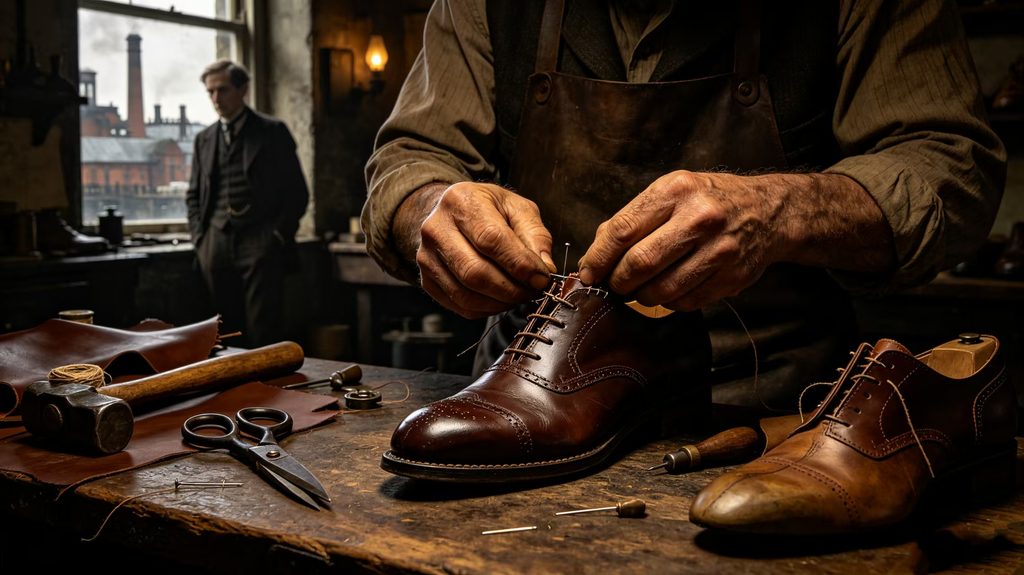
英文原文
I remember well the little shop in a quiet London street.
It stood between two large and fashionable stores,
small, plain, and almost unnoticed by passers-by.
The shop belonged to two brothers, Gessler and Gessler,
old shoemakers who made nothing but hand-made leather shoes.
There was no bright sign, no fancy advertisement outside.
Only a simple wooden board with their family name faded over time.
The narrow shop window held just a few pairs of fine leather boots,
neatly arranged, smooth, solid, and perfectly shaped.
They were quiet, dignified, and full of handmade warmth.
I had known the Gessler brothers since I was a child.
Whenever I needed new shoes,
I would walk to their humble little shop without hesitation.
Other shops sold cheap machine-made shoes,
which were fashionable and easy to buy.
Yet I always believed that no shoes could compare with theirs.
Mr. Gessler, the elder brother, was thin and serious.
His face was pale, his hair greying early,
and his hands were rough and firm from years of hard work.
He seldom spoke extra words and never smiled casually.
All his attention was fixed on the leather and the stitching.
Shoemaking was never a job for him;
it was a serious belief, a lifelong sacred duty.
When I ordered shoes,
he would observe my feet carefully and patiently.
He would press the leather gently, check the texture,
choose the most suitable material for my walking habits.
He did not pursue speed or profit at all.
He only pursued perfect fitting, durable quality and fine craft.
His shoes always lasted far longer than ordinary shoes.
They never broke easily, never deformed, never made noise.
Every stitch was neat, every curve was precise.
He once told me in a low and steady voice:
“We make shoes to fit people’s feet, not to earn quick money.
Bad shoes are a shame for a real shoemaker.”
As time went by, the world began to change rapidly.
Large shoe factories appeared everywhere in London.
Machine-made shoes flooded the whole market.
They were cheap, stylish, and updated very fast.
Most customers chased new styles and low prices.
Few people cared about durability and true craft anymore.
Big stores made huge profits through mass production.
The small handmade shoe shop gradually fell out of favour.
The Gessler brothers refused to follow the trend.
They refused to use inferior leather to cut costs.
They refused to rush production for more orders.
They refused to sacrifice quality for commercial benefits.
Their business became worse and worse day by day.
Fewer customers stepped into their quiet old shop.
The two brothers still stuck to their old principles silently.
They worked longer hours but earned almost nothing.
Their faces grew thinner, their hair turned whiter,
and their shop looked older and lonelier than ever before.
Once I visited the shop after many months.
I found the elder brother alone inside the dim room.
His figure was weaker than I had remembered.
There were almost no new shoes displayed in the window.
He still treated every order with the same rigorous attitude.
His love for shoemaking never faded with time.
He told me softly that his younger brother had passed away.
Stress, poverty and tiredness had taken his life.
Yet he still held on to this small old shop stubbornly.
He would not give up his craft, his belief and his quality.
I ordered a new pair of boots that day.
When I received the shoes weeks later,
they were still perfect, solid and extremely comfortable.
It was hard to imagine such fine work came from a poor old man.
Not long after, I heard the final news.
Mr. Gessler had starved to death in his little shop.
He died with his lifelong craft in his hands.
The small wooden board was removed soon after.
The quiet shop was taken over by a new fashionable store.
The world kept chasing speed, profit and novelty.
No one remembered the old shoemaker and his noble quality.
But those hand-made shoes still remained in my memory.
They represent the most precious quality of human nature:
persistence, sincerity, dedication and unyielding dignity.
译文
我深深记得伦敦一条僻静街道上的那家小店。
它坐落于两家华丽新潮的大商铺之间,
店面狭小、朴素,几乎不会被路人留意。
这家店属于格斯拉兄弟二人,
两位只做手工真皮皮鞋的老鞋匠。
店外没有亮眼的招牌,没有花哨的广告。
只有一块老旧木牌,上面的姓氏早已褪色。
狭小的橱窗里只摆放着几双精致皮靴,
摆放整齐、鞋面光滑、质地结实、版型完美。
安静端庄,满是手工打磨的温度。
我从小就认识格斯拉兄弟。
每当我需要新鞋子,
我都会毫不犹豫走进这家朴素的小店。
别的店铺售卖廉价的机器量产皮鞋,
款式时髦、购买便捷。
但我始终坚信,没有鞋子能比得上他们的手艺。
年长的格斯拉先生身形瘦削、神情严肃。
面色苍白,头发早早花白,
常年劳作让他的手掌粗糙却有力。
他寡言少语,从不随意说笑。
所有心思,全部倾注在皮革与针脚之上。
做鞋对他而言,从不是一份谋生工作,
而是一份虔诚的信仰、一生神圣的坚守。
我订鞋的时候,
他会耐心观察、仔细丈量我的脚型。
轻轻按压皮革、查看纹理质感,
根据我的走路习惯挑选最合适的原料。
他从不追求速度,从不贪图利润。
只求版型贴合、品质耐用、工艺极致。
他做的鞋子,远比普通鞋子耐穿得多。
不易破损、不易变形、走路安稳无声。
每一针走线整齐,每一处弧度精准细腻。
他曾用低沉沉稳的声音告诉我:
“我们做鞋,是为贴合人的双脚,不是为赚快钱。
劣质的鞋子,是真正鞋匠的耻辱。”
时光流转,世界飞速改变。
伦敦遍地兴起大型制鞋工厂。
机器量产的鞋子席卷整个市场。
价格低廉、款式新潮、更新极快。
大部分顾客追逐新款与低价。
再也少有人在乎鞋子的耐用度与真正工艺。
大厂依靠批量生产赚取巨额利润。
这家手工老店渐渐被时代冷落。
但格斯拉兄弟绝不随波逐流。
他们拒绝用劣质皮革降低成本。
拒绝赶工接单、粗制滥造。
拒绝为了商业利益,牺牲半分品质。
小店生意一日比一日萧条。
进店的客人越来越少。
兄弟二人依旧默默坚守初心。
干活的时间越来越长,收入却寥寥无几。
面容愈发憔悴,头发愈发花白,
老店也愈发陈旧、冷清、孤寂。
时隔数月,我再次到访小店。
昏暗的店铺里,只剩哥哥一人。
他的身形比往日更加孱弱。
橱窗里几乎没有新款鞋子陈列。
可他对待每一份订单,依旧严苛较真。
他对制鞋的热爱,从未被岁月消磨。
他轻声告诉我,弟弟已经离世。
压力、贫困与劳累,夺走了弟弟的生命。
可他依旧执拗守着这间老店。
不肯放弃手艺、放弃信仰、放弃毕生坚守的品质。
那天我再次订了一双皮靴。
数周后拿到鞋子,
依旧版型完美、质地坚实、穿着无比舒适。
很难想象这般精良的工艺,出自一位贫苦老人之手。
没过多久,我听到了最后的消息。
格斯拉先生在自己的小店里活活饿死。
他握着一生坚守的手艺,离开了人世。
不久之后,老旧的木牌被摘除。
安静的老店,被新潮商铺取而代之。
世间依旧追逐速度、利益、新鲜感。
无人再记得这位老鞋匠,和他高贵的品质。
可那些手工皮鞋,永远留在我的记忆里。
它们象征着人性最珍贵的底色:
坚守赤诚、专注奉献、永不妥协的尊严。
🔍长难句赏析与拆解
原句一
He did not pursue speed or profit at all.
He only pursued perfect fitting, durable quality and fine craft.
Shoemaking was never a job for him;
it was a serious belief, a lifelong sacred duty.
句式解读
本句采用对比并列句式,
否定功利追求,肯定精神坚守。
分号衔接两个分句,升华人物内核,
把普通职业上升为信仰与使命。
句式工整、情感克制但力量极强,
精准塑造老鞋匠纯粹、高尚的匠人形象。
句子主干
He did not pursue speed or profit.
He pursued fitting, quality and craft.
Shoemaking was a belief and duty.
原句二
They refused to use inferior leather to cut costs.
They refused to rush production for more orders.
They refused to sacrifice quality for commercial benefits.
句式解读
排比句式,三层递进强化人物立场。
三次 refused 重复,
层层凸显兄弟二人绝不妥协的职业底线。
句式节奏规整,适合精读仿写,
极具文学感染力。
句子主干
They refused to use leather, rush production and sacrifice quality.
📖全篇句式特点
全文采用第一人称回忆式叙事,
短句铺陈画面、长句升华主旨,
句式舒缓克制、平实深刻。
以店铺、鞋子、人物变化、时代对比为线索,
完整串联人物一生与时代变迁。
用普通小人物的命运,
反衬工业时代功利浮躁的社会现状,
文风质朴、立意深远,是典型英式现实主义短篇。
核心词汇
1. fashionable
/ˈfæʃnəbl/
时髦的,流行的
形容词(adj.)
2. handmade
/ˌhændˈmeɪd/
手工制作的
形容词(adj.)
3. texture
/ˈtekstʃə(r)/
纹理,质地
名词(n.)
4. durable
/ˈdjʊərəbl/
耐用的,持久的
形容词(adj.)
5. stitch
/stɪtʃ/
针脚,缝纫
名词(n.)
6. mass production
/mæs prəˈdʌkʃn/
批量生产
名词短语
7. inferior
/ɪnˈfɪəriə(r)/
劣质的,低劣的
形容词(adj.)
8. rigorous
/ˈrɪɡərəs/
严谨的,严格的
形容词(adj.)
9. stubbornly
/ˈstʌbənli/
执拗地,坚守地
副词(adv.)
10. dignity
/ˈdɪɡnəti/
尊严,高贵
名词(n.)
📜文学赏析
《品质》是高尔斯华绥最经典的现实主义短篇。
作者不写宏大的英雄故事,
只写伦敦街头一个平凡老鞋匠的一生。
格斯拉兄弟手艺精湛、品行纯粹,
一生坚守品质大于利益、匠心大于流量的底线。
工业时代到来后,
效率、低价、速成成为市场主流。
所有人向金钱与时代妥协,
唯独老鞋匠固守初心、绝不敷衍。
他贫穷、落魄、直至饿死,
却守住了最高贵的职业尊严与人性品质。
作者用强烈的时代对比:
手工匠心 vs 工业功利、
纯粹坚守 vs 世俗浮躁,
歌颂小人物干净、赤诚、执着的一生,
也暗含对时代逐利、初心陨落的惋惜与批判。
💡主旨品读
这篇文章的核心,从来不是“做鞋子”,
而是做人的品质。
格斯拉兄弟用一生告诉我们:
真正的高贵,不是财富与名气,
是无论环境如何浮躁、世人如何逐利,
依旧守住底线、守住真诚、守住初心。
时代淘汰了老店、淘汰了手工手艺,
却永远无法淘汰坚守、敬业、纯粹的品质。
小人物虽渺小卑微、结局悲凉,
却用一生的执着,
活成了时代最珍贵、最高贵的模样。
这就是《品质》跨越百年的核心力量。
©英语数字智库 版权所有
未经权利人许可,不得转载、摘抄、复制、
二次编辑或商用分发,违者将依法追究法律责任。
请点击返回首页收录经典目录