
 由 英语数字智库
了解更多:专升本英语主题词汇与短语总目录
The Cherry Orchard《樱桃园》节选
作者:Anton Chekhov(安东·契诃夫)
首次出版:1904 年
首次收录于:《Znaniye》第二册
出版背景:俄国圣彼得堡,以文集收录形式推出
收录说明:同年另发行独立单行版本
备注:无权威资料精确到月、日
补充:舞台首演为 1904 年 1 月 17 日,地点莫斯科艺术剧院。
创作背景:
本文是俄国批判现实主义文学的压轴戏剧作品。
创作于19世纪末20世纪初社会剧烈变革的俄国。
农奴制废除之后,传统贵族的土地特权彻底瓦解。
旧贵族阶级日渐衰败,新兴资产阶级迅速崛起。
契诃夫以一座美丽的樱桃园为核心意象。
见证旧家族的落幕、新阶层的登场、时代浪潮的更迭。
用平淡克制的日常对话,暗藏时代变革的苍凉与无奈。
折射俄国社会新旧交替、命运浮沉的宏大时代主题。
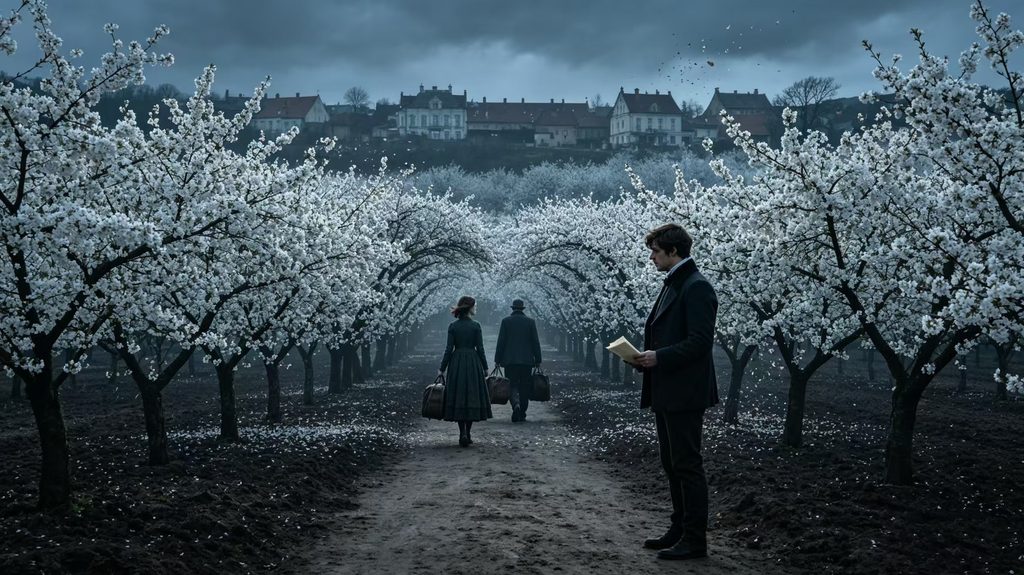
英文原文
The cherry orchard stands quietly on the quiet country estate,
blooming white and tender every spring, pure and beautiful.
It has stood here for decades,
witnessing the growth and decline
of the old aristocratic family
that has lived here for generations.
For the former owners,
the cherry orchard is never merely land and trees.
It carries childhood memories,
noble glory and past prosperity.
It represents the elegant and leisurely life
of the old Russian gentry,
a warm and perfect world
that belongs exclusively to the old era.
Madame Ranevskaya, the hostess of the estate,
is born with sentimental temperament and noble manners.
She loves beauty, cherishes memories,
and indulges in past glory.
After experiencing emotional setbacks
and financial failure abroad,
she returns to her hometown,
hoping to seek comfort in the familiar orchard.
She refuses to face the harsh reality
and dares not accept decline.
She lingers in beautiful illusions
and refuses to make practical changes.
The family’s financial situation
has long been on the verge of collapse.
The old estate is heavily in debt
and cannot maintain its former style.
Lopakhin, a rising businessman
of new bourgeois origin,
puts forward a practical and effective solution
again and again.
He suggests cutting down the cherry orchard
and renting out the land,
building summer villas for urban people
to relieve financial crisis.
This plan can completely save the family
from bankruptcy and ruin.
However, Ranevskaya and her family
firmly resist the proposal.
They regard felling cherry trees
as rude, cruel and unforgivable.
They are accustomed to noble life
and disdain commercial profits.
They cling to the outdated dignity
and empty vanity of the old era.
They would rather sink into decline
than compromise with the new times.
They spend money recklessly,
delay decisions blindly,
and watch their destiny slide into destruction
step by step.
Every character in the orchard
has different attitudes towards change.
The old servant still rigidly abides
by the old aristocratic rules.
The young generation vaguely feels
the arrival of a new era,
but lacks courage and ability
to take action and grasp the future.
Only Lopakhin keeps a clear and rational
understanding of the times.
He knows the old world is doomed to disappear,
and the new commercial era
will completely dominate the land.
As time goes by,
the final auction day comes inevitably.
The ancient cherry orchard
is finally sold to Lopakhin.
The beautiful blooming forest
no longer belongs to the old noble family.
The decadent aristocrats pack their luggage
and leave their hometown sadly.
They abandon their memories,
their homeland and their past glory.
The moment they walk out of the gate,
an old era is completely over.
At the end of the play,
the sound of cherry trees being felled echoes.
The clear and cold sound
spreads across the empty countryside.
It is the funeral dirge
of the old aristocratic era,
and also the solemn announcement
of the arrival of a new era.
No one can stop the progress of the times
and the replacement of fate.
The beautiful cherry orchard,
once full of vitality and warmth,
becomes the most beautiful and desolate
sacrifice of the times.
译文
美丽的樱桃园,
静静伫立在乡间庄园之中。
每至春日,
满树白花柔嫩皎洁、纯粹绚烂。
它伫立此地数十载,
见证着这片土地上,
古老贵族家族几代人的兴盛与凋零。
对于庄园旧主而言,
樱桃园从来不止是林木土地。
它承载着童年岁月、
贵族荣光与昔日繁华。
象征着旧俄国绅士
优雅闲适的生活方式,
是专属于旧时代、
温暖圆满的精神故土。
庄园女主人郎涅夫斯卡雅,
天性感性温柔,举止优雅高贵。
她热爱美好、眷恋过往、
沉溺旧日繁华。
在海外遭遇情感挫败、
家业破败之后,
她重返故乡,
期盼在熟悉的樱桃园中寻得慰藉。
她不愿直面残酷现实,
不敢接受家族的衰落。
沉溺于美好的虚幻过往,
拒绝做出务实的改变。
这个家族的财务状况,
早已濒临崩溃。
古老庄园负债累累,
再也维系不住昔日体面。
出身新兴资产阶级的商人洛帕金,
一次次提出切实可行的自救方案。
他建议砍掉樱桃园、
将土地对外出租,
修建避暑别墅,
以此缓解巨额债务危机。
这套方案,
本可以彻底挽救濒临破产的家族。
可郎涅夫斯卡雅一家,
坚决抵触这一提议。
他们认为砍伐樱桃树,
粗鲁残忍、罪无可恕。
固守贵族姿态,
鄙夷功利的商业利益。
死守旧时代过时的体面,
与空洞的虚荣。
宁可任由家业衰败,
也不愿向新时代妥协。
他们肆意挥霍、
犹豫不决、消极拖延,
眼睁睁看着自己的命运,
一步步走向毁灭。
樱桃园中的每个人,
都对时代变革持有不同态度。
老仆人刻板守旧,
固守早已过时的贵族规矩。
年轻一代隐约感知,
新时代的来临,
却缺乏行动的勇气与能力,
去把握未来。
唯有洛帕金,
对时代有着清醒理性的认知。
他深知旧世界注定消亡、
无可挽留,
全新的商业时代,
终将彻底主宰这片土地。
时光流转,
拍卖之日如期而至。
这座古老美丽的樱桃园,
最终落入洛帕金手中。
繁花满枝的美好林地,
从此不再属于旧贵族。
没落的贵族一行人收拾行囊,
黯然离开故土。
告别毕生的回忆、
家园与曾经的无上荣光。
当他们踏出庄园大门的那一刻,
一个旧时代彻底落幕。
剧终之际,
樱桃树被砍伐的声响悠悠回荡。
清冷沉闷的声响,
响彻空旷的乡野。
这是旧贵族时代落幕的挽歌,
也是新时代轰然降临的庄严宣告。
时代更迭、命运交替,
从来无人可以阻挡。
这片曾经生机盎然、
温柔美好的樱桃园,
最终沦为时代,
最绚烂、也最苍凉的祭品。
🔍长难句赏析与拆解
原句一
It carries childhood memories, noble glory and past prosperity.
It represents the elegant and leisurely life of the old Russian gentry.
句式解读
本句采用并列排比简单句。
句式工整对称。
前后两句层层递进。
由具象景物上升为时代象征。
前句点明樱桃园的情感承载意义。
后句拔高意象价值。
赋予景物时代属性。
语言简洁凝练、表意深刻。
快速奠定全文怀旧、悲凉、沧桑的整体基调。
是全文铺垫核心意象的经典句式。
句子主干
It carries memories, glory and prosperity.
It represents the life of the old gentry.
原句二
They cling to the outdated dignity and empty vanity of the old era.
They would rather sink into decline than compromise with the new times.
句式解读
本句前半句为主谓宾基础句式。
刻画人物性格。
后半句运用would rather…than…经典取舍结构。
精准刻画旧贵族固执、惰性、逃避现实的本质。
句式对比强烈、态度鲜明。
一针见血点出旧阶级衰败的根本原因。
并非时代无情。
而是人物固守虚荣、拒绝革新。
兼具语法考点、人物塑造、主题深化三重价值。
句子主干
They cling to dignity and vanity.
They would rather decline than compromise.
📖全篇句式特点
全文采用标准文学叙事句式。
长短错落、节奏舒缓。
以景物意象开篇。
以人物矛盾铺陈情节。
以时代更迭升华主旨。
结构完整、逻辑闭环。
大量运用并列句、排比句、取舍句式。
语言克制细腻、意蕴悠长。
贴合契诃夫平淡悲凉的文风。
行文脉络:
景物铺垫—人物矛盾—阶级冲突—时代落幕。
没有激烈冲突,却处处暗藏宿命悲凉。
行文严谨规范。
适配文学精读、句法赏析与教学。
核心词汇
1. decline
/dɪˈklaɪn/
衰落,衰败
名词(n.)/动词(v.)
2. aristocratic
/ˌærɪstəˈkrætɪk/
贵族的,高贵的
形容词(adj.)
3. sentimental
/ˌsentɪˈmentl/
感性的,多愁的
形容词(adj.)
4. bankruptcy
/ˈbæŋkrʌptsi/
破产,倒闭
名词(n.)
5. resist
/rɪˈzɪst/
抵制,抗拒
动词(v.)
6. outdated
/ˌaʊtˈdeɪtɪd/
过时的,陈旧的
形容词(adj.)
7. vanity
/ˈvænəti/
虚荣,浮华
名词(n.)
8. inevitably
/ɪnˈevɪtəbli/
不可避免地
副词(adv.)
9. dominate
/ˈdɒmɪneɪt/
主宰,支配
动词(v.)
10. sacrifice
/ˈsækrɪfaɪs/
祭品,牺牲
名词(n.)
📜文学赏析
《樱桃园》是契诃夫一生戏剧创作的巅峰之作。
作者抛弃传统戏剧激烈的冲突、刻意的反转。
以平淡的日常对话与生活细节书写时代悲剧。
全文没有绝对的恶人。
也没有惨烈的结局。
却弥漫着无力挽回、悄然落幕的苍凉宿命感。
作品以樱桃园为核心象征载体。
它是旧时代贵族精神、体面、荣光与美好的集合体。
郎涅夫斯卡雅代表腐朽、温柔、怯懦的旧贵族阶级。
沉溺过往、逃避现实、空有风雅、毫无行动力。
洛帕金代表务实、理性、进取的新兴资产阶级。
顺应时代、打破旧规、掌控新时代的话语权。
新旧阶级的博弈,没有硝烟。
却彻底颠覆时代格局。
契诃夫不刻意批判,不刻意褒贬。
只是冷静记录一场温柔又残酷的时代更迭。
让读者在景物消逝、人事离散之中。
体会时代洪流面前个体的渺小与无力。
💡主旨品读
本文的核心主旨,
绝非简单讲述一座庄园的兴衰。
它揭示一条永恒的时代规律:
固守过往,终将被淘汰。
旧贵族的毁灭,
不是命运的不公,
而是性格与时代的必然。
他们贪恋虚无的体面,
沉溺逝去的繁华,
拒绝现实的改变。
在时代飞速前进的浪潮中原地踏步、自我消耗。
最终亲手葬送自己的家园与人生。
樱桃园的倒下,
象征旧时代温柔外壳的彻底破碎。
美好终将落幕,
陈旧终将淘汰,
变革永远不可逆。
作品给予世人深刻的启示:
所有的荣光与安稳,
都无法依靠回忆固守。
唯有正视现实、接纳改变、顺势而为。
才能不被时代抛弃,拥有长久的新生。
©英语数字智库 版权所有
未经权利人许可,不得转载、摘抄、复制、
二次编辑或商用分发,违者将依法追究法律责任。
请点击返回首页收录经典目录