
 由 英语数字智库
了解更多:英语四六级词汇按首字母A – Z检索目录
Crime and Punishment《罪与罚》节选
作者:Fyodor Dostoevsky(费奥多尔·陀思妥耶夫斯基)
首次出版:1866 年 1 月至 12 月(连载)
首次收录于:《The Russian Messenger》
出版背景:俄国莫斯科,以期刊分月连载形式推出
收录说明:连载完成后,1867 年另行发行单行本
备注:无权威资料锁定精确单日出版时间
创作背景:
《罪与罚》是俄国文学巅峰级心理小说作品。
创作于19世纪俄国社会剧烈动荡的转型时期。
农奴制改革后,社会贫富差距极端分化。
圣彼得堡底层贫民长期深陷饥饿、贫困与屈辱。
青年知识分子被社会压迫、理想破碎、无路可走。
主人公拉斯柯尔尼科夫身处极致贫困的生存绝境。
长期的精神压抑催生极端的“超人哲学”认知。
他妄图以极端罪行验证自我的特殊与超越性。
小说以一桩谋杀案件为表层线索。
深度剖开人性、罪恶、良知、惩罚与灵魂救赎的本质。
揭露时代弊病,拷问人类永恒的道德与人性命题。
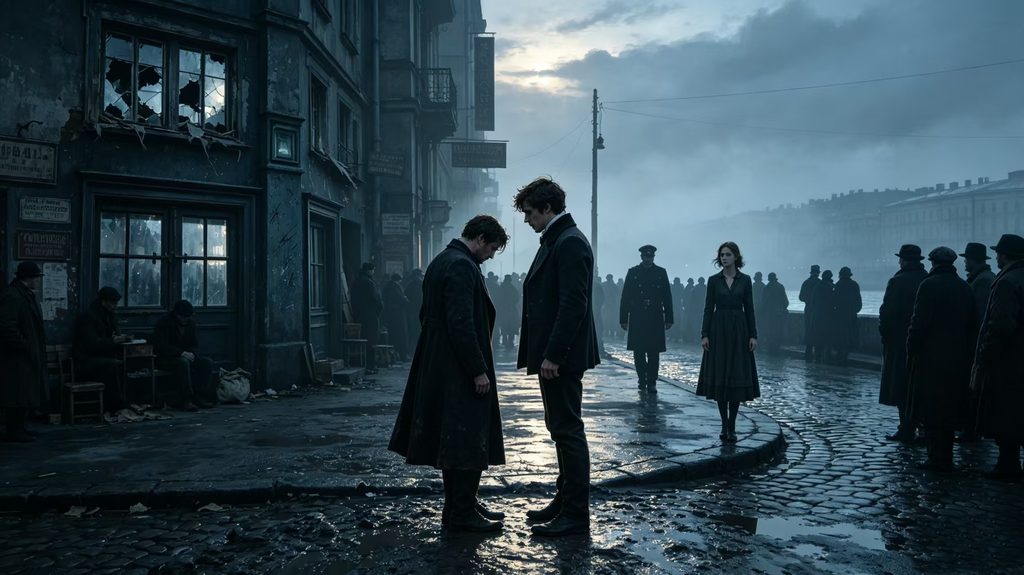
英文原文
On an exceptionally hot evening early in July,
a young man issued from the garret
where he lodged in one of the poor tenements
of Semyonovsky Place,
and walked slowly,
as though in hesitation,
towards Katerinsky Bridge.
He had successfully evaded his landlady
on the narrow staircase.
His dwelling was a tiny garret under the roof,
scarcely large enough for a human habitation.
It resembled a cramped cupboard
more than a proper living room.
The landlady who supplied him with lodging
and simple meals resided directly below.
Every exit forced him to pass her open kitchen door.
The young man suffered acute unease each time he passed.
He sank into gloom and shame
at the thought of facing her.
He was deeply in arrears with rent,
trapped in helpless poverty.
Yet his fear was not born of cowardice.
For months,
he had endured extreme mental tension
and chronic irritability.
He slipped into a state of morbid self-isolation.
He cut himself off from all social contact.
He dreaded meeting every stranger on the street.
Poverty crushed his body and spirit.
Gradually,
he abandoned all practical life responsibilities.
He abandoned hope and daily striving.
Material hardship no longer troubled his mind.
Only trivial human communication disturbed his fragile nerves.
He chose to creep down stairs silently.
He fled like a cat to avoid trivial conversation,
payment demands and meaningless quarrels.
On this sweltering evening,
his inner anxiety surged uncontrollably.
He questioned his own timidity with bitter self-mockery.
He understood a simple cruel truth.
All human failure stems from cowardice.
People fear new steps, new changes and new choices.
Excessive empty talk replaces practical action.
His month-long seclusion bred wild dangerous thoughts.
The summer heat of St. Petersburg was suffocating.
The air was stagnant, dusty and densely crowded.
Construction debris filled every street corner.
The unique stench of the slums permeated the whole district.
Numerous taverns emitted unbearable foul odors.
Even on working days,
drunken wanderers flooded the narrow streets.
The bleak scene filled his heart with intense disgust.
He possessed an extraordinarily handsome appearance.
Tall, slender, with delicate features and dark eyes.
Yet his beautiful appearance was covered in weariness.
He fell into a trance-like deep meditation.
He walked forward aimlessly,
ignoring all noisy surroundings.
He constantly murmured to himself alone.
Confusion weighed heavily on his tired heart.
His limbs trembled from hunger and mental exhaustion.
He had barely eaten anything for two whole days.
A vague yet firm thought gradually took shape.
The idea haunted his mind day and night.
It grew clearer, sharper and more urgent.
He divided humanity into two absolute categories.
Ordinary people obey laws, morality and social rules.
They exist merely to maintain social order.
Extraordinary geniuses transcend worldly restrictions.
Great men possess the right to break trivial rules
for lofty and progressive purposes.
He desperately desired to test his own identity.
He longed to confirm whether he belonged to the elite few.
He planned to kill the greedy old pawnbroker.
She bullied the poor and exploited countless civilians.
She brought no goodness to the world.
He convinced himself the murder was not a sinful crime.
It was a bold experiment of self-verification.
It was a breakthrough from trivial mortal morality.
This dangerous thought rooted deeply in his soul.
It drove him toward irreversible destruction.
译文
七月初一个酷热难耐的傍晚,
一名青年从谢苗诺夫广场的贫民阁楼走出。
他步履迟缓、犹豫不决,
朝着卡特林斯基大桥缓缓走去。
他刻意避开狭窄楼梯上的房东太太。
他居住的阁楼狭小逼仄、身居楼顶。
空间简陋局促,
与其说是居室,不如说是狭小储物间。
提供食宿的房东住在楼下,
他每次出门必经敞开的厨房门口。
每一次路过,
他都会心生惶恐、满心阴郁羞愧。
他拖欠巨额房租,深陷绝境贫困。
但这份胆怯并非源于性格懦弱。
数月以来,
他精神紧绷、性情暴躁,
陷入病态的自我封闭状态。
他彻底隔绝所有人际交往,
畏惧遇见街上的任何陌生人。
贫穷摧残着他的身心,
他渐渐放弃所有现实生活的责任。
他放弃挣扎、放弃希望、放弃日常奔波。
物质的苦难已然麻木,
唯有琐碎的人际纠缠,刺痛他脆弱的神经。
他习惯轻手轻脚溜下楼梯,
像猫一样逃离,避开闲谈、催债与争执。
这个闷热的傍晚,
他心底的焦虑彻底翻涌失控。
他苦涩自嘲,质问自身的懦弱。
他看透一条残酷的道理:
人类所有失败,皆源于胆怯。
人永远畏惧新的脚步、新的改变。
空洞的空想,取代了所有实际行动。
长久的封闭独处,滋生了他危险的念头。
圣彼得堡的夏日燥热窒息,
空气浑浊凝滞、尘土飞扬、街巷拥挤。
建筑废料遍布街角,
贫民窟独有的恶臭弥漫整座城区。
遍地酒馆散发令人作呕的浊气。
即便工作日,
街头依旧挤满酗酒游荡的落魄之人。
荒芜破败的市井景象,让他心生厌恶。
他容貌俊朗、身形挺拔、眉眼深邃,
却满身疲惫、神色憔悴。
他陷入恍惚深沉的沉思,
漫无目的地前行,漠视周遭喧嚣。
他习惯性低声自语、喃喃不休。
迷茫压满疲惫的心底,
饥饿与心力交瘁让他四肢颤抖。
整整两天,他几乎滴水未进、颗粒未食。
一个模糊却坚定的念头逐渐成型。
这个想法日夜纠缠着他,
日渐清晰、愈发迫切。
他将人类粗暴划分为两个绝对类别:
普通人服从律法、道德与社会规则,
仅仅作为维系社会运转的平凡素材。
超凡的天才可以超越世俗束缚。
伟人有权为崇高目标打破平庸规则。
他迫切想要验证自我身份,
确认自己是否属于凌驾众生的少数精英。
他计划杀害贪婪刻薄的放高利贷老妇。
她欺压贫民、剥削底层、作恶无数,
从未为世间带来丝毫善意。
他自我催眠,这场杀戮并非罪恶,
而是验证自我的大胆实验,
是挣脱平庸世俗道德的自我突破。
这危险的思想深深扎根灵魂,
一步步将他推向无法挽回的毁灭。
🔍长难句赏析与拆解
原句一
He divided humanity into two absolute categories.
Ordinary people obey laws, morality and social rules.
句式解读
本句采用工整并列陈述句。
句式简洁直白、逻辑强硬。
精准还原主人公极端偏执的核心思想。
简单的二元划分,
是他所有罪恶行为的思想源头。
平淡句式暗藏疯狂的自我神化心理。
是全文推动剧情、塑造人物的关键句型。
句子主干
He divided humanity into two categories.
Ordinary people obey laws and rules.
原句二
Extraordinary geniuses transcend worldly restrictions.
Great men possess the right to break trivial rules
for lofty and progressive purposes.
句式解读
本句长短句结合,层层递进。
前半句点明核心观点,
后半句补充行为合理性。
完整复刻拉斯柯尔尼科夫的超人理论。
句式理性冷静,
却反衬思想的扭曲与偏执。
精准解释主人公行凶的心理借口。
句子主干
Geniuses transcend restrictions.
Great men possess the right to break rules.
📖全篇句式特点
全文采用经典心理小说叙事句式。
长短错落、节奏压抑沉稳。
以环境描写铺垫底层苦难氛围。
以心理独白展现人物思想畸变。
以递进句式推进人物从迷茫到偏执的转变。
行文脉络清晰完整:
环境压迫 → 生活绝境 → 心理扭曲 → 思想异化 → 滋生恶念。
语言克制写实、无华丽修饰。
贴合陀思妥耶夫斯基深挖人性、直面灵魂的文风。
核心词汇
1. garret
/ˈɡærət/
阁楼,陋室
名词(n.)
2. evade
/ɪˈveɪd/
规避,躲避
动词(v.)
3. cramped
/kræmpt/
狭窄的,局促的
形容词(adj.)
4. arrears
/əˈrɪəz/
欠款,拖欠
名词(n.)
5. irritability
/ˌɪrɪtəˈbɪləti/
易怒,烦躁
名词(n.)
6. isolate
/ˈaɪsəleɪt/
隔绝,孤立
动词(v.)
7. stagnant
/ˈstæɡnənt/
凝滞的,污浊的
形容词(adj.)
8. transcend
/trænˈsend/
超越,逾越
动词(v.)
9. category
/ˈkætəɡəri/
类别,分类
名词(n.)
10. progressive
/prəˈɡresɪv/
崇高的,进步的
形容词(adj.)
📜文学赏析
《罪与罚》是世界心理文学的巅峰之作。
小说跳出传统罪案小说的叙事框架。
不刻意渲染血腥的犯罪场面。
而是深挖罪恶诞生之前的心理畸变。
拉斯柯尔尼科夫的罪行,
不是单纯的恶人行凶,
而是时代压迫、贫困屈辱、思想偏激的综合悲剧。
19世纪俄国底层青年无路可走。
理想破碎、尊严扫地、生存艰难。
极致的苦难催生极致的扭曲思想。
主人公妄想以犯罪证明自我不凡。
妄图用打破道德的方式摆脱平庸命运。
作者深刻揭示:
人性一旦自我神化、脱离道德约束,
就会瞬间坠入毁灭的深渊。
小说没有绝对的坏人,只有崩坏的时代与灵魂。
用个体悲剧,折射整个社会的病态与荒芜。
💡主旨品读
本文核心主旨深刻且极具警示意义。
真正的惩罚,从来不止是外在的法律制裁。
真正的罪孽,始于人心的傲慢与偏执。
拉斯柯尔尼科夫的悲剧告诉世人:
众生平等,无人可以凌驾道德与生命之上。
任何看似崇高的借口,
都不能成为践踏生命、突破良知的理由。
自我神化、蔑视规则、标榜特殊,
是所有毁灭的开端。
贫穷可以磨砺人,也可以摧毁人。
真正的救赎,
从来不是超越人性,而是回归良知。
正视平凡、敬畏生命、接纳人性,
才是灵魂真正的解脱与新生。
©英语数字智库 版权所有
未经权利人许可,不得转载、摘抄、复制、
二次编辑或商用分发,违者将依法追究法律责任。
请点击返回首页收录经典目录