
 由 英语数字智库
了解更多:考研英语:伦理道德价值观词汇目录
A Midsummer Night’s Dream《仲夏夜之梦》节选
作者:William Shakespeare(威廉·莎士比亚)
首次出版:1600 年
首次收录于:首版四开本《A Midsommer Nights Dreame》
出版背景:英国伦敦,以单行四开本形式刊印
收录说明:后收录于 1623 年《第一对开本》;创作约在 1595 年
创作背景:
《仲夏夜之梦》是莎士比亚创作巅峰期的经典浪漫喜剧。
剧本以古希腊雅典为故事背景,
融合贵族婚礼、青年恋爱情仇、
市井工匠闹剧、森林精灵魔法四大线索。
16世纪英国社会恪守父权与包办婚姻制度,
女性没有婚恋自主权利。
莎士比亚借奇幻的森林梦境、魔法误会与爱情错位,
讽刺世俗礼教的刻板束缚,
歌颂自由、纯粹、勇敢的真挚爱情。
全文风格轻快诙谐、浪漫梦幻,
摆脱悲剧的沉重基调,
是西方文学史上最具代表性的浪漫喜剧作品。
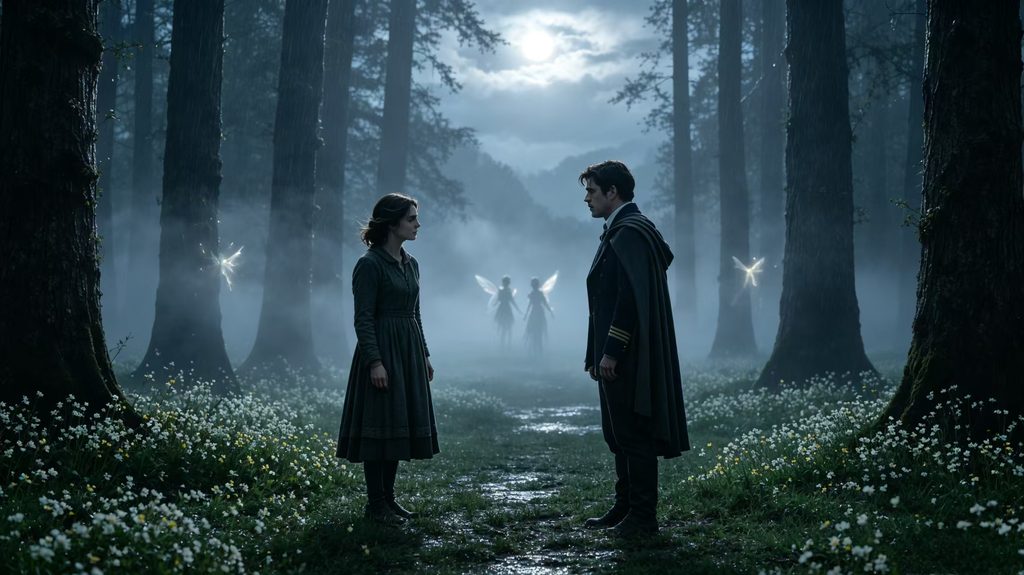
英文原文
THESEUS.
What say you, Hermia?
be advised fair maid:
To you your father should be as a god;
One that composed your beauties,
yea, and one
To whom you are but as a form in wax
By him imprinted and within his power
To leave the figure or disfigure it.
Demetrius is a worthy gentleman.
HERMIA.
So is Lysander.
THESEUS.
In himself he is;
But in this kind,
wanting your father’s voice,
The other must be held the worthier.
HERMIA.
I would my father look’d but with my eyes.
THESEUS.
Rather your eyes must with his judgment look.
HERMIA.
I do entreat your grace to pardon me.
I know not by what power I am made bold,
Nor how it may concern my modesty,
In such a presence here to plead my thoughts;
But I beseech your grace that I may know
The worst that may befall me in this case,
If I refuse to wed Demetrius.
THESEUS.
Either to die the death or to abjure
For ever the society of men.
Therefore, fair Hermia,
question your desires;
Know of your youth,
examine well your blood,
Whether,
if you yield not to your father’s choice,
You can endure the livery of a nun,
For aye to be in shady cloister mew’d,
To live a barren sister all your life,
Chanting faint hymns to the cold fruitless moon.
Thrice-blessed they that master so their blood,
To undergo such maiden pilgrimage;
But earthlier happy is the rose distill’d,
Than that which withering on the virgin thorn
Grows,
lives and dies in single blessedness.
HERMIA.
So will I grow,
so live,
so die,
my lord,
Ere I will yield my virgin patent up
Unto his lordship,
whose unwished yoke
My soul consents not to give sovereignty.
THESEUS.
Take time to pause;
and,
by the next new moon—
The sealing-day betwixt my love and me,
For everlasting bond of fellowship—
Upon that day either prepare to die
For disobedience to your father’s will,
Or else to wed Demetrius,
as he would;
Or on Diana’s altar to protest
For aye austerity and single life.
Exeunt THESEUS, HIPPOLYTA, EGEUS, DEMETRIUS.
LYSANDER.
How now,
my love!
why is your cheek so pale?
How chance the roses there do fade so fast?
HERMIA.
Belike for want of rain,
which I could well
Beteem them from the tempest of my eyes.
LYSANDER.
Ay me!
for aught that I could ever read,
Could ever hear by tale or history,
The course of true love never did run smooth;
But,
either it was different in blood,
Or else misgraffed in respect of years,
Or else it stood upon the choice of friends,
Or,
if there were a sympathy in choice,
War,
death,
or sickness did lay siege to it,
Making it momentary as a sound,
Swift as a shadow,
short as any dream;
Brief as the lightning in the collied night,
That,
in a spleen,
unfolds both heaven and earth,
And ere a man hath power to say “Behold!”
The jaws of darkness do devour it up:
So quick bright things come to confusion.
HERMIA.
If then true lovers have been ever cross’d,
It stands as an edict in destiny:
Then let us teach our trial patience,
Because it is a customary cross,
As due to love as thoughts and dreams and sighs,
Wishes and tears,
poor fancy’s followers.
LYSANDER.
A good persuasion:
therefore,
hear me,
Hermia.
I have a widow aunt,
a dowager
Of great revenue,
and she hath no child:
From Athens is her house remote seven leagues;
And she respects me as her only son.
There,
gentle Hermia,
may I marry thee;
And to that place the sharp Athenian law
Cannot pursue us.
If thou lovest me then,
Steal forth thy father’s house to-morrow night;
And in the wood,
a league without the town,
There will I stay for thee.
译文
忒修斯:
赫米娅,你作何答复?
美丽的姑娘,请三思。
你的父亲于你,如同神明。
是他赋予了你绝美的容貌,
你就像一枚由他亲手雕琢的蜡像,
他既可以保留你的完美模样,
也可以将其彻底损毁。
狄米特律斯是一位品行端正的绅士。
赫米娅:
莱桑德同样品性出众。
忒修斯:
他固然优秀,
但这场婚事未得到你父亲的应允,
狄米特律斯才是更合适的人选。
赫米娅:
但愿父亲,能拥有和我一样的眼光。
忒修斯:
应当让你的眼光,顺从他的决断。
赫米娅:
恳请殿下宽恕我的冒昧。
我不知自己何来的勇气,
也知晓当众袒露心声,有失端庄。
但我恳切祈求殿下告知我结局,
倘若我执意拒绝嫁给狄米特律斯,
等待我的最坏结果是什么。
忒修斯:
你要么接受死刑,
要么发誓终身禁欲、与世隔绝。
所以美丽的赫米娅,
审视你的本心与情欲。
倘若你执意违背父命,
你是否能够忍受修女的宿命。
终生幽闭在幽暗的修道院中,
孑然一身,孤苦终老,
对着清冷孤寂的明月,吟唱微弱的圣诗。
能克制情欲、坚守独身的人固然可敬,
但绽放后留存芬芳的玫瑰,
远比独自凋零、从未绽放的玫瑰更加幸福。
赫米娅:
我宁愿此生孤寂生长、安然赴死,
也绝不交出我贞洁的权利,
屈从于这桩我绝不甘愿的婚约,
我的灵魂绝不臣服于这般枷锁。
忒修斯:
你暂且静心思虑。
待到下一轮新月升起,
也就是我与希波吕忒缔结婚约之日,
你必须做出抉择:
要么为违抗父命坦然赴死,
要么顺从父命嫁给狄米特律斯,
要么在女神祭坛前宣誓,终身独身。
(忒修斯、希波吕忒、伊吉斯、狄米特律斯退场)
莱桑德:
我的爱人,你怎么了?
为何面色苍白?
你脸颊的娇艳为何转瞬凋零?
赫米娅:
大抵是缺少雨露滋养,
而我的泪水,足以浇灌这份憔悴。
莱桑德:
唉!
纵观所有书卷与传说,
世间真爱之路,从来坎坷崎岖。
真爱或是受制于门第悬殊,
或是受困于年岁差距,
或是被迫遵从亲友的安排。
即便两心相悦、情投意合,
战争、死亡与病痛也会悄然侵袭。
真爱如转瞬即逝的声响,
如飘忽不定的暗影,
如短暂虚幻的梦境。
如同黑夜骤然划破的闪电,
瞬间照亮天地万象,
世人尚未来得及惊叹,
便被无边黑暗彻底吞噬。
世间所有美好,皆转瞬湮灭。
赫米娅:
倘若磨难是真爱注定的宿命,
那便是命运既定的法则。
我们便坦然承受试炼,
坎坷磨难本就是爱情的常态,
如同思绪、幻梦、叹息、期许与泪水,
都是痴情爱意的常态附属。
莱桑德:
你说得极好。
听我一言,我的赫米娅。
我有一位富庶寡居的姑母,
无儿无女,视我如亲子。
她的居所远离雅典城邦,
严苛的雅典律法无法约束那里。
温柔的赫米娅,
我们可以在那里成婚相守。
倘若你真心爱我,
明晚便悄悄离开家门,
在城外一里的树林之中,
我会静静等候你的到来。
🔍长难句赏析与拆解
原句一
I know not by what power I am made bold,
Nor how it may concern my modesty,
In such a presence here to plead my thoughts;
句式解读
本句为并列否定宾语从句结构,
双重否定句式强化人物内心的忐忑与勇敢,
精准刻画赫米娅在王权与父权面前,
既怯懦又坚定的矛盾心理,句式典雅工整,贴合莎士比亚文风。
句子主干
I know not the power and the modesty concern.
原句二
The course of true love never did run smooth;
But, either it was different in blood,
Or else misgraffed in respect of years,
Or else it stood upon the choice of friends.
句式解读
either…or…并列排比句式,
层层列举真爱遭遇的阻碍,
排比增强语言韵律感与感染力,
是本剧流传千古的经典名句。
句子主干
The course of true love never ran smooth.
原句三
So quick bright things come to confusion.
句式解读
极简倒装短句,浓缩全文哲理,
以景物喻人情,凝练唯美,余味悠长,
是莎士比亚经典抒情短句。
句子主干
Bright things come to confusion.
📖全篇句式特点
全文采用莎士比亚经典无韵诗体,
长短句交错排布,韵律优美、节奏舒缓。
大量运用排比、比喻、对仗、倒装等修辞,
兼具叙事性与抒情性。
人物对白贴合身份,
贵族台词典雅庄重,恋人对白温柔深情。
文本以对话推进剧情,
从宫廷的礼教束缚,过渡到恋人的私密倾诉,
氛围从压抑刻板转为浪漫自由,
层层递进凸显爱情与世俗的冲突。
语言兼具古典文学美感与哲理深度。
核心词汇
1. abjure
/əbˈdʒʊə(r)/
发誓放弃,摒弃
动词(v.)
2. austerity
/ɒˈsterəti/
禁欲,简朴,克制
名词(n.)
3. misgraffed
/mɪsɡrɑːft/
错配的,不相称的
形容词(adj.)
4. siege
/siːdʒ/
包围,围困
名词(n.)
5. momentary
/ˈməʊməntri/
转瞬即逝的
形容词(adj.)
6. edict
/ˈiːdɪkt/
法令,天命
名词(n.)
7. persuasion
/pəˈsweɪʒn/
信念,说辞
名词(n.)
8. revenue
/ˈrevənjuː/
财富,收入
名词(n.)
📜文学赏析
《仲夏夜之梦》节选段落,
是全剧核心冲突的开篇。
作者以雅典宫廷为场景,
展现严苛的父权制度与冰冷的世俗律法。
少女赫米娅无权决定自己的婚姻,
必须遵从父亲的包办婚配,
否则将面临死刑或终身禁欲的残酷惩罚。
在绝对的强权礼教之下,
人性与爱意被彻底压制。
不同于悲剧的抗争毁灭,
本篇以浪漫温柔的方式展开反抗。
赫米娅不惧死亡、坚守真爱,
莱桑德与她共情共鸣,
道出“真爱之路从无坦途”的千古哲思。
莎士比亚以细腻的笔触,
刻画年轻人纯粹、热烈、勇敢的爱情,
用自由爱恋对抗僵化的世俗规矩。
宫廷的刻板现实、恋人的温柔赤诚形成鲜明对比,
为后续森林梦境、魔法闹剧的奇幻剧情铺垫,
虚实结合,讽刺世俗礼教的僵化与冷漠。
💡主旨品读
选文核心主旨鲜明深刻。
首先,文章歌颂自由真挚的爱情,
真爱不惧磨难、不畏强权,
敢于对抗世俗礼教与刻板规则。
其次,批判封建父权与包办婚姻制度,
揭露旧时代礼教对人性、自由与情感的残酷束缚,
彰显人性自由、婚恋自主的进步思想。
最后,文章传递人生哲理:
世间所有美好的事物皆非一帆风顺,
真爱注定历经坎坷试炼。
磨难是美好的底色,
坚守本心、勇敢奔赴,
方能守护珍贵的美好,
这也是跨越时代、永恒通用的人生真理。
©英语数字智库 版权所有
未经权利人许可,不得转载、摘抄、复制、
二次编辑或商用分发,违者将依法追究法律责任。
请点击返回首页收录经典目录